Caucasus Tour 2013: 6,500 Kilometres, Three Weeks and a Few Lessons Along the Way
What started as a Caucasus motorcycle adventure through Georgia, Armenia and Nagorno-Karabakh turned into three weeks of challenging roads, unforgettable encounters and a few lessons I hadn’t expected to learn.
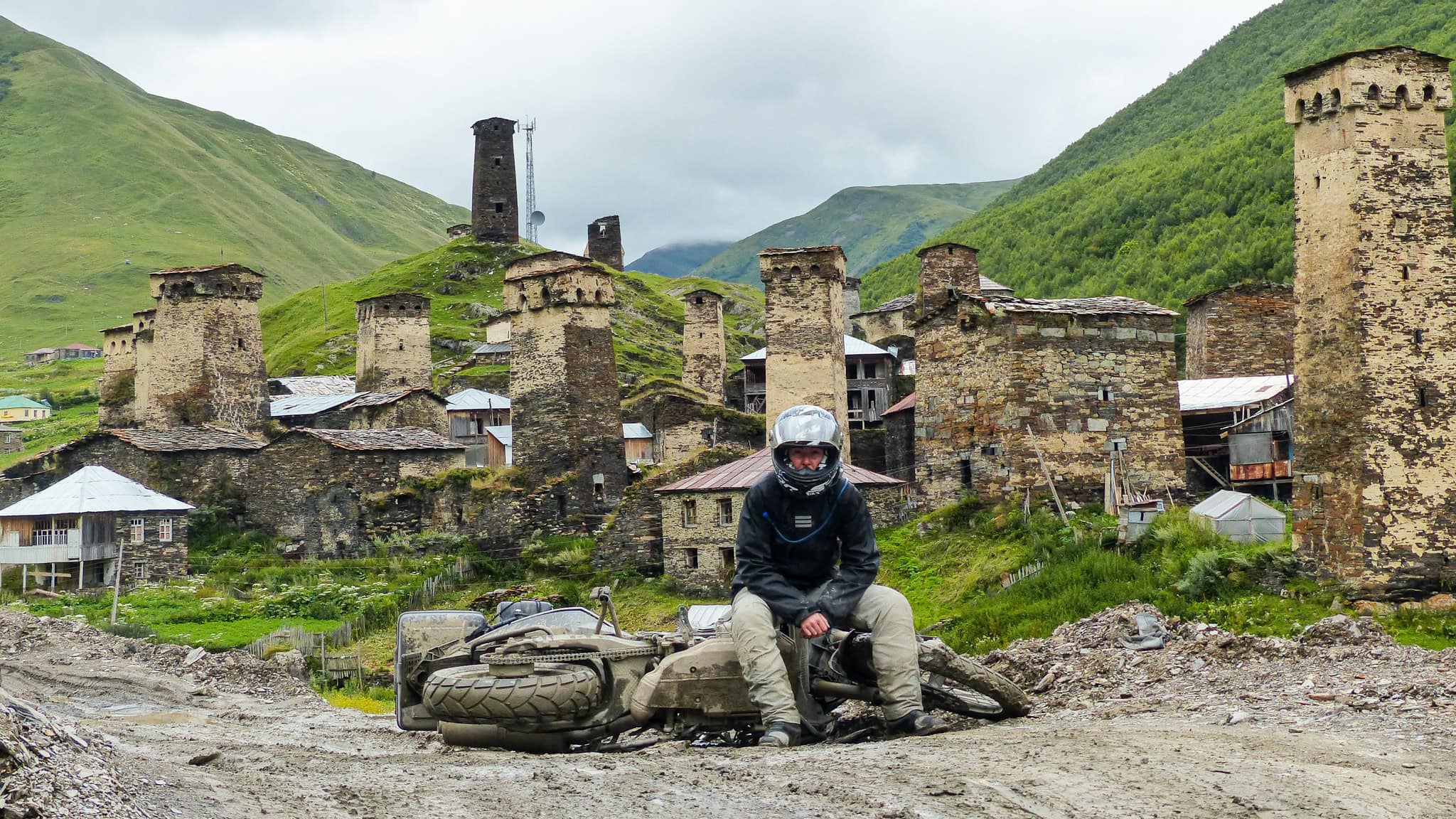
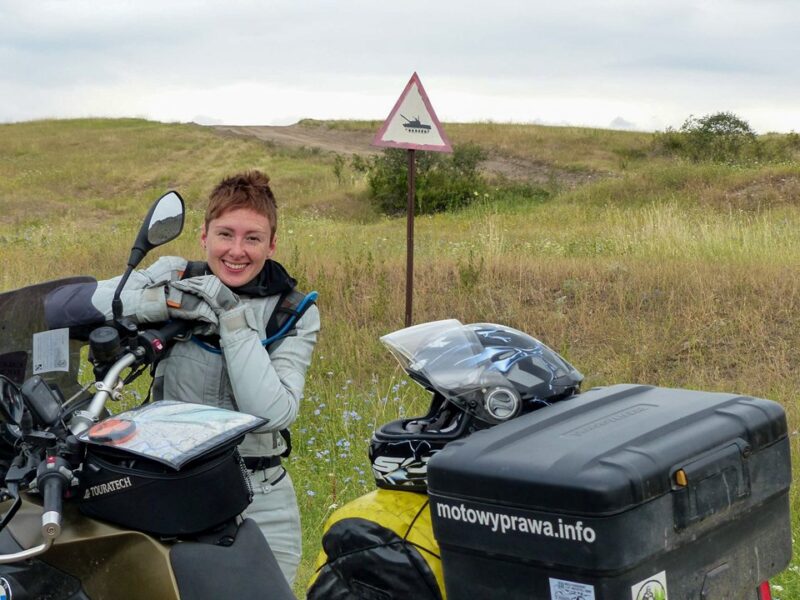
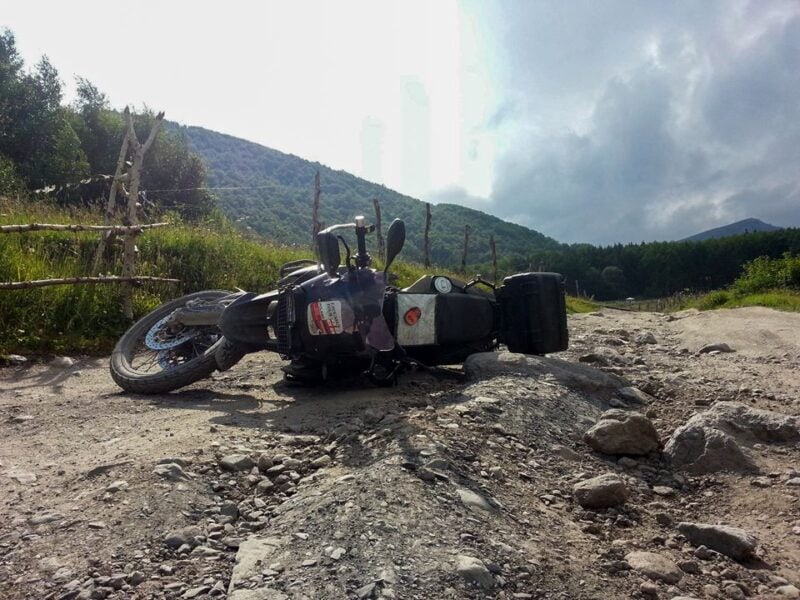
There I was, somewhere in the Georgian mountains, standing next to my motorcycle, which was lying in the mud. Again. I was tired, frustrated and increasingly convinced that I had seriously overestimated my riding abilities. The road ahead didn’t look particularly encouraging, either. There were deep ruts, slippery stones, enormous puddles and plenty of opportunities to make another mistake.
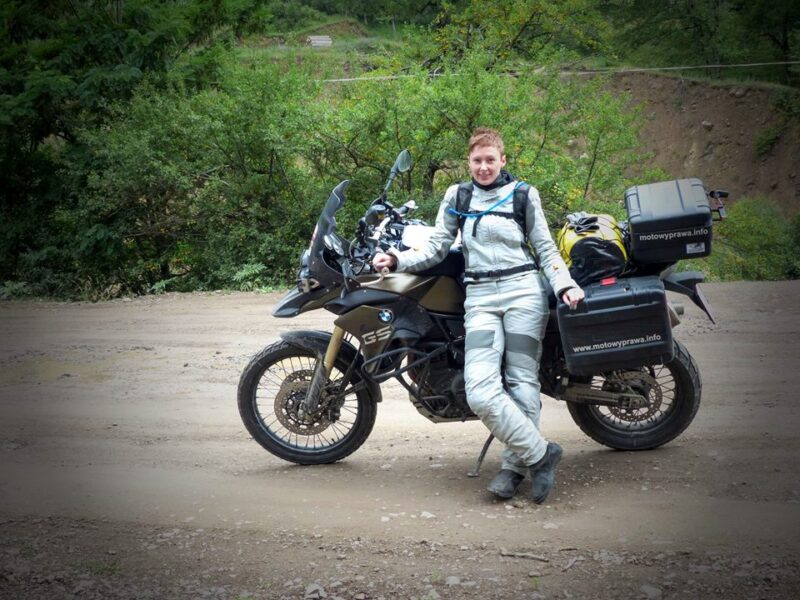
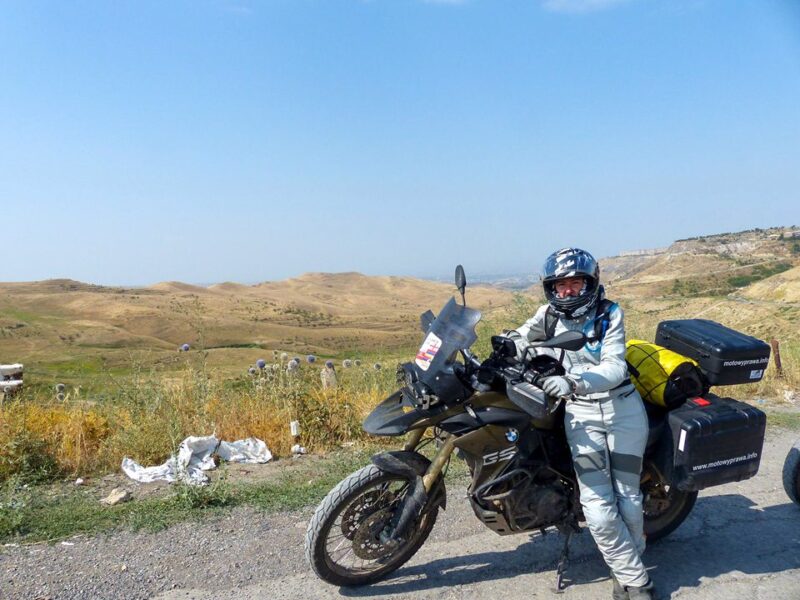
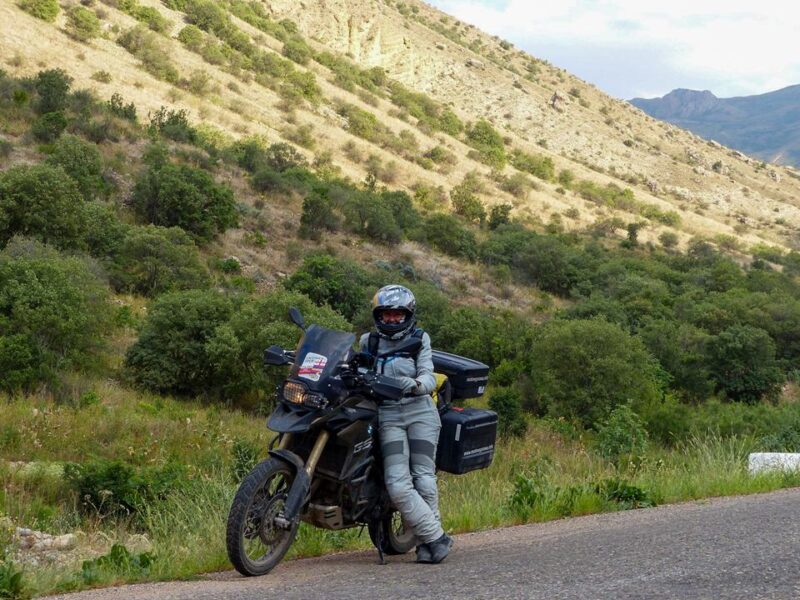
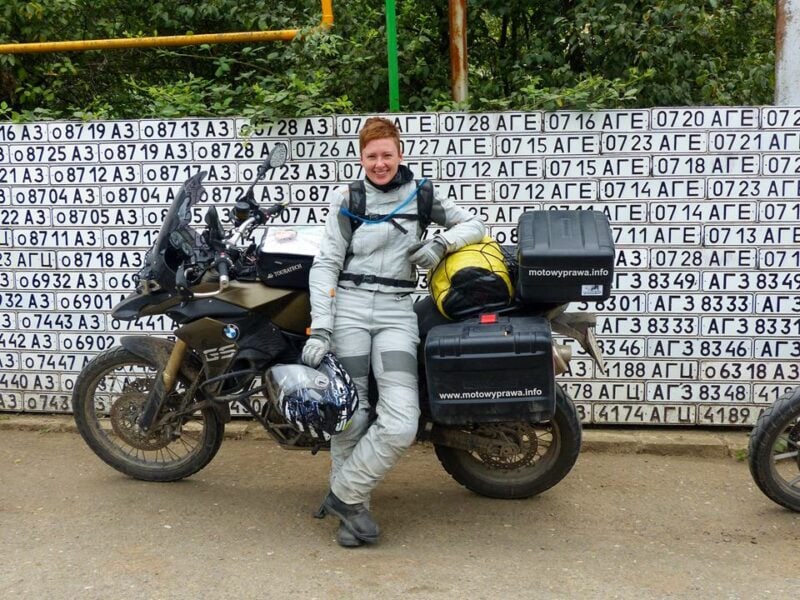
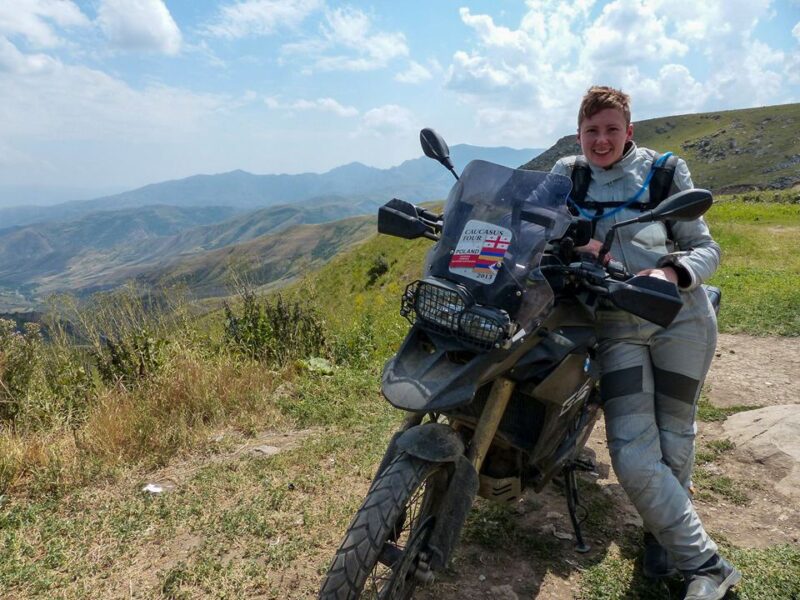
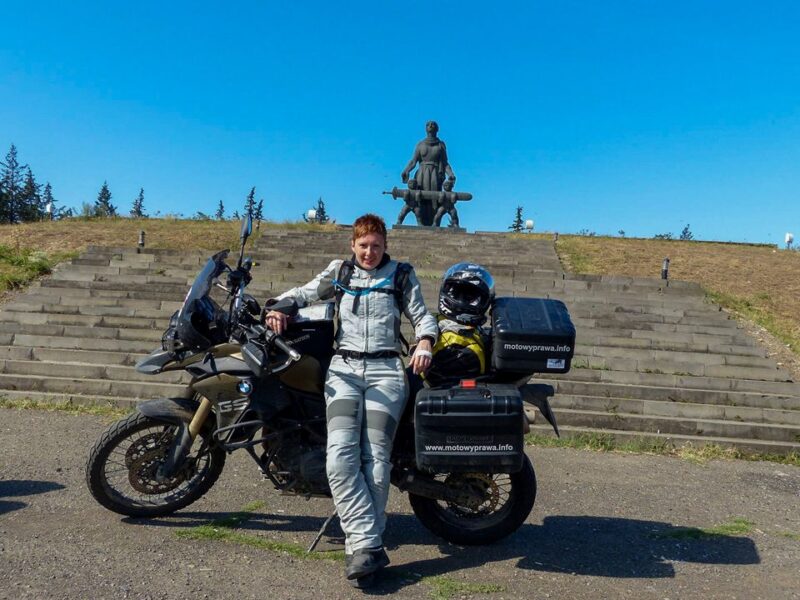
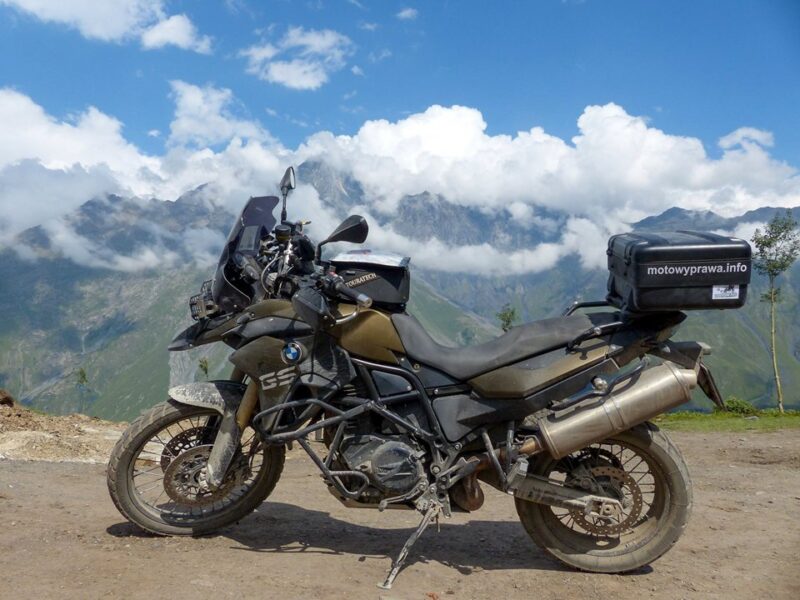
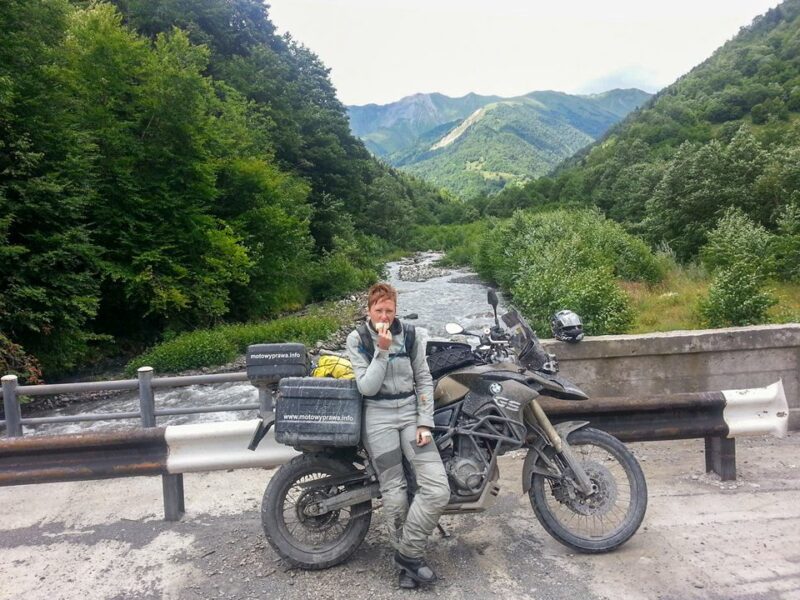
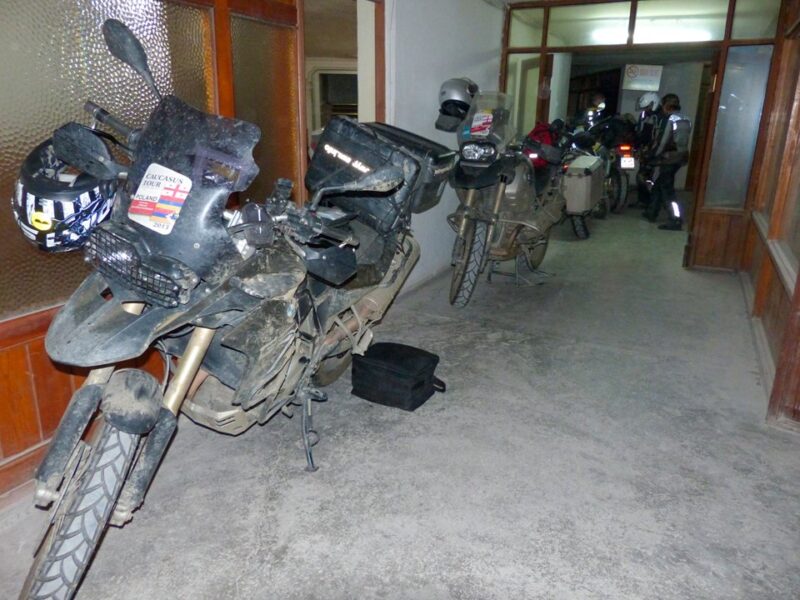
My BMW F800GS, Olivier, was carrying more luggage than was probably sensible for this kind of terrain. And I was discovering that riding a fully loaded adventure bike through the mountains was very different from what I’d imagined while planning the trip. At some point, I had to admit that I couldn’t manage one of the muddy sections myself. Witek offered to ride my motorcycle through it. I was grateful, of course, but also furious with myself. This was supposed to be an adventure. And it certainly was. Just not always the kind I had pictured.
But I’m getting ahead of myself. To understand how I ended up in that particular muddy corner of Georgia, we need to go back a few weeks.
Plan B: Somewhere East
The original idea had been to ride around the Black Sea. Unfortunately, that plan had fallen apart for the second year in a row. So I needed another one. When the opportunity came to join a motorcycle trip through Georgia, Armenia and Nagorno-Karabakh, I didn’t need much convincing. The destination sounded exciting, the route promised plenty of adventure, and somehow I managed to rearrange my holidays, including borrowing three days of leave from my employer.
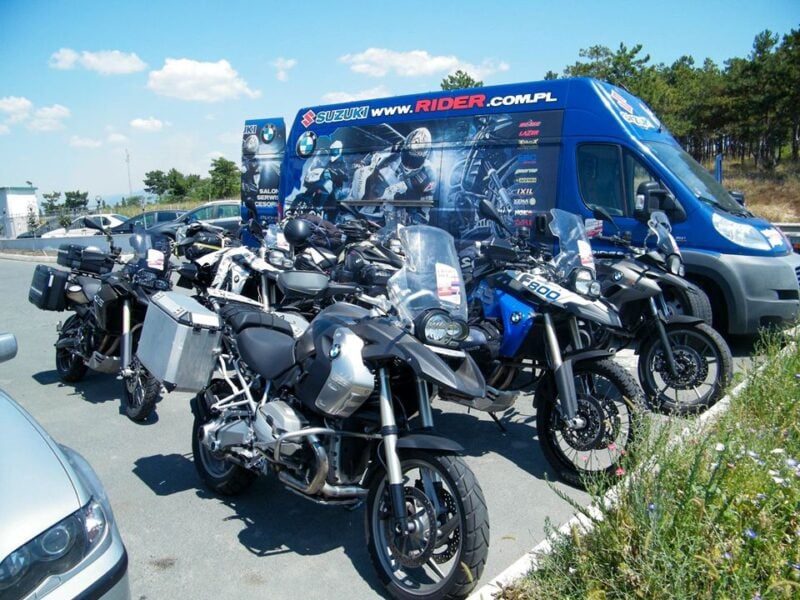
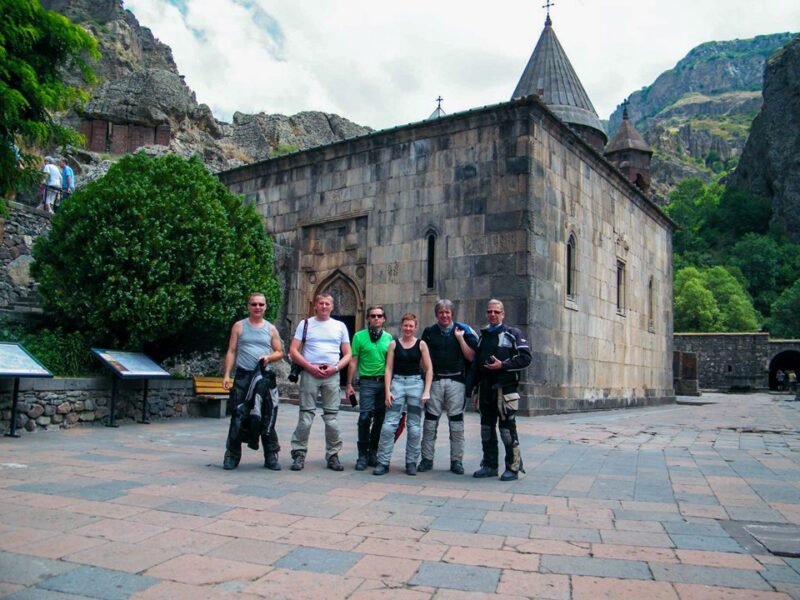
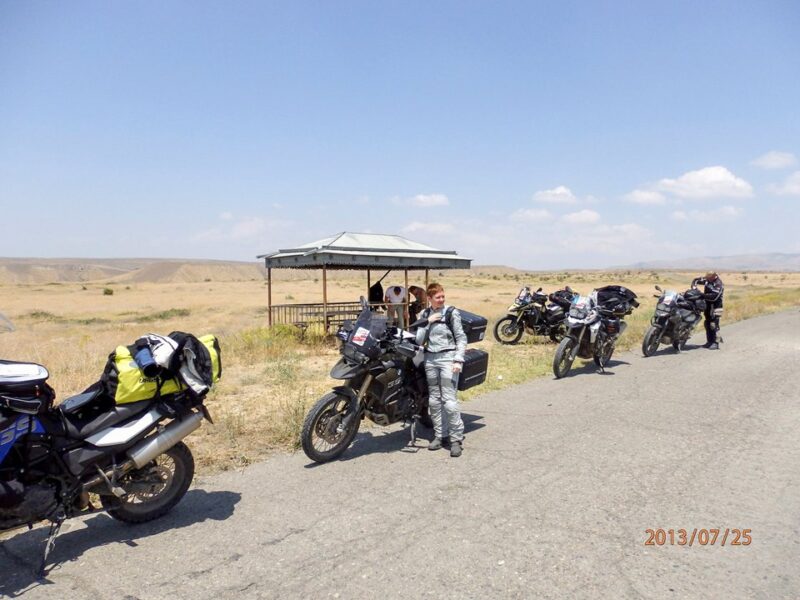
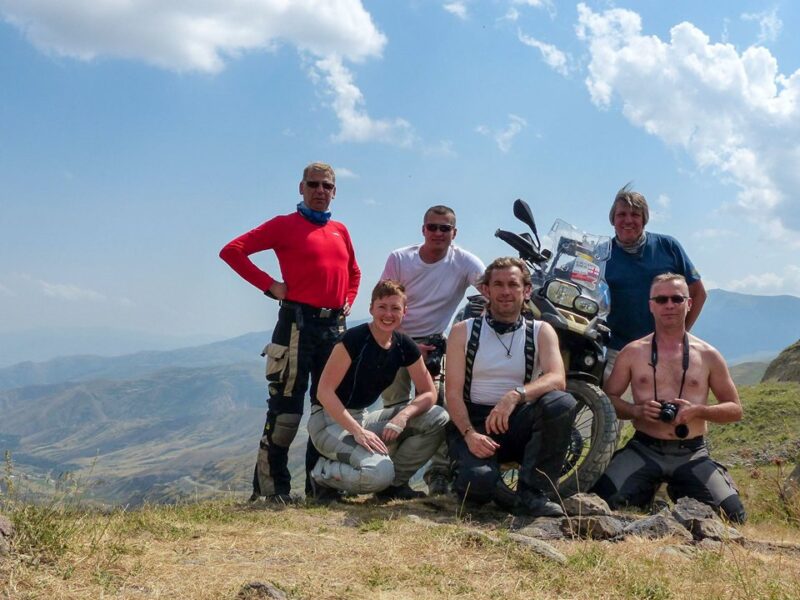
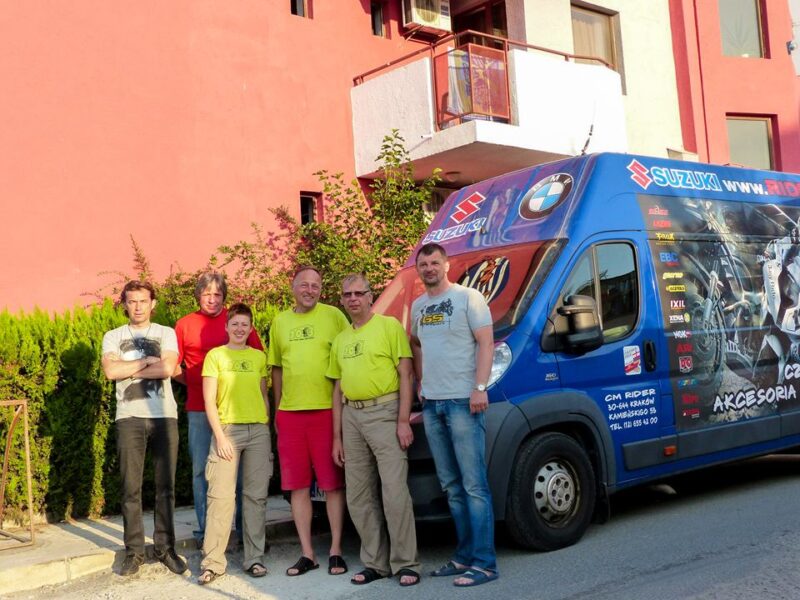
There was just one small detail. I didn’t actually know the people I was going to travel with. We would be six riders on six motorcycles, mostly BMW GSs. I had met none of them in person before the preparations began, but that didn’t seem like a good enough reason to miss the opportunity. I was, however, slightly concerned about my abilities. The guys seemed experienced, and I knew that our route would include some off-road riding. I’d been practising my skills, including some training, but there was still that familiar question somewhere in the back of my mind: Would I be able to keep up?
To make things more interesting, I’d undergone minor surgery on my left hand just a couple of weeks before departure. Fortunately, the wound was healing well, and a quick test confirmed that operating the clutch wasn’t a problem.
Olivier was ready, the luggage was packed, and there was really nothing left to do but go.
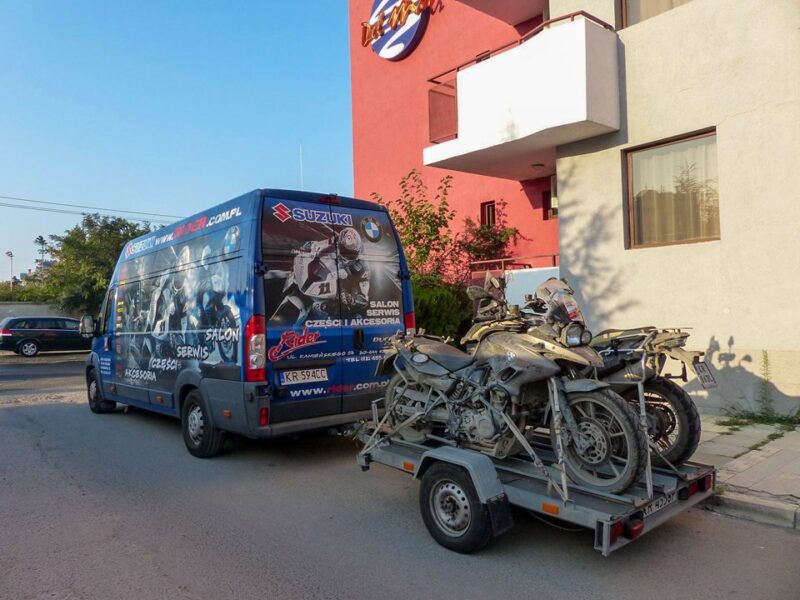
The motorcycles travelled by van to Bulgaria while we flew to Burgas. From there, we would ride across Turkey to Georgia, explore the Caucasus for a couple of weeks, and return the same way. Three weeks on the road.
Turkey: The Long Way to the Adventure
Our journey began in the middle of a Bulgarian summer, with temperatures high enough to make getting dressed in motorcycle gear an unpleasant experience. The first kilometres were fairly straightforward, although the road surface became increasingly questionable as we approached the Turkish border.
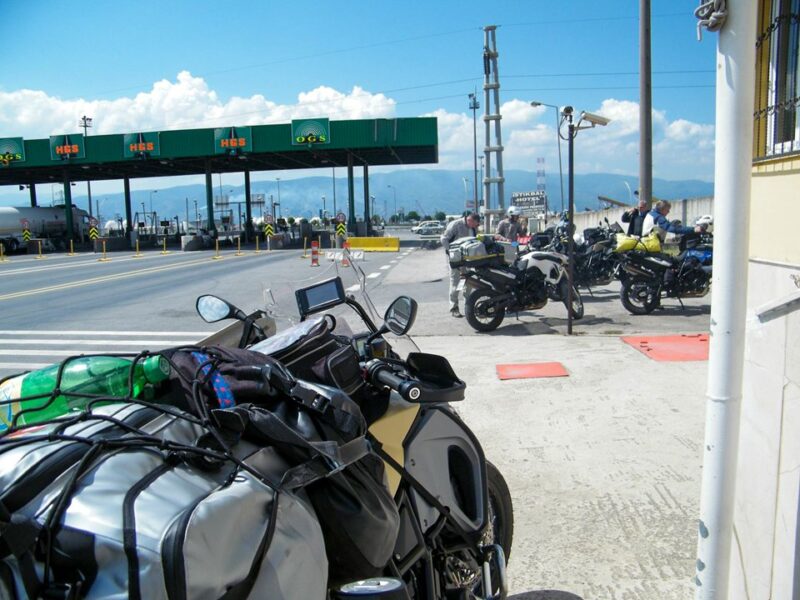
Once in Turkey, we were rewarded with beautiful, winding roads and excellent asphalt. For a while, everything felt easy. Then Istanbul happened. By the time we reached the city, it was dark. We found ourselves on a massive motorway, surrounded by traffic, desperately trying to work out which toll lanes we were supposed to use. There were different electronic systems, plenty of signs and absolutely no obvious solution for a group of foreign motorcyclists without the required payment devices. So we did what seemed most reasonable at the time. We rode through. The toll gates beeped in protest. Then they beeped again at the next motorway section.
Eventually, at 21:53, I passed a sign welcoming us to Asia. That was a moment worth remembering. Crossing the Bosphorus at night, with the city illuminated all around us, felt like a proper beginning to the journey.
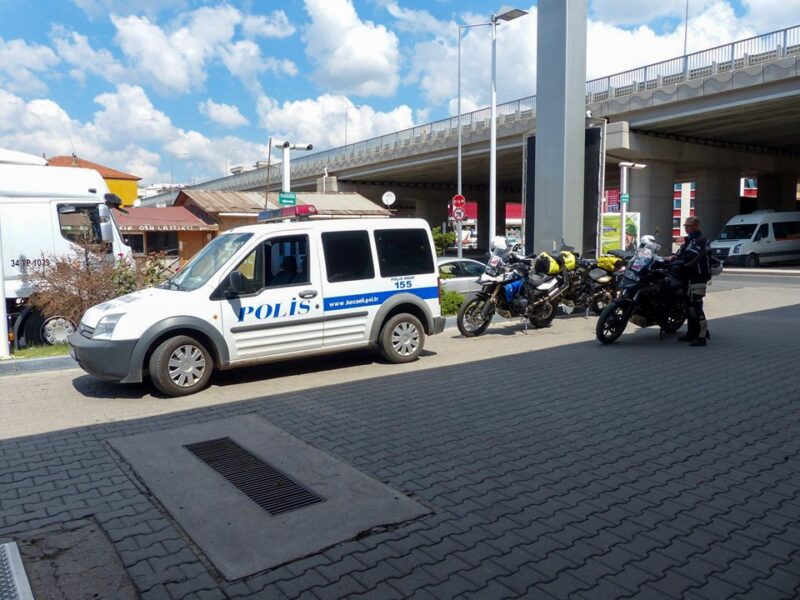
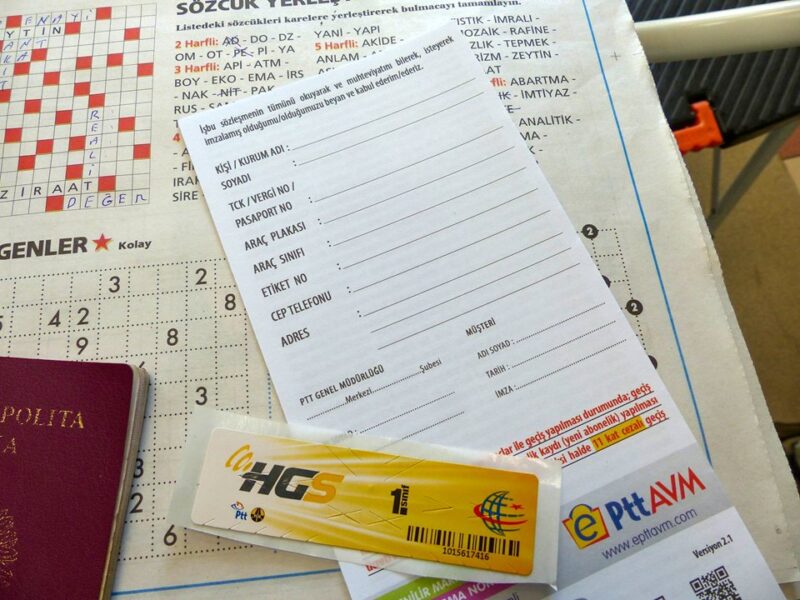
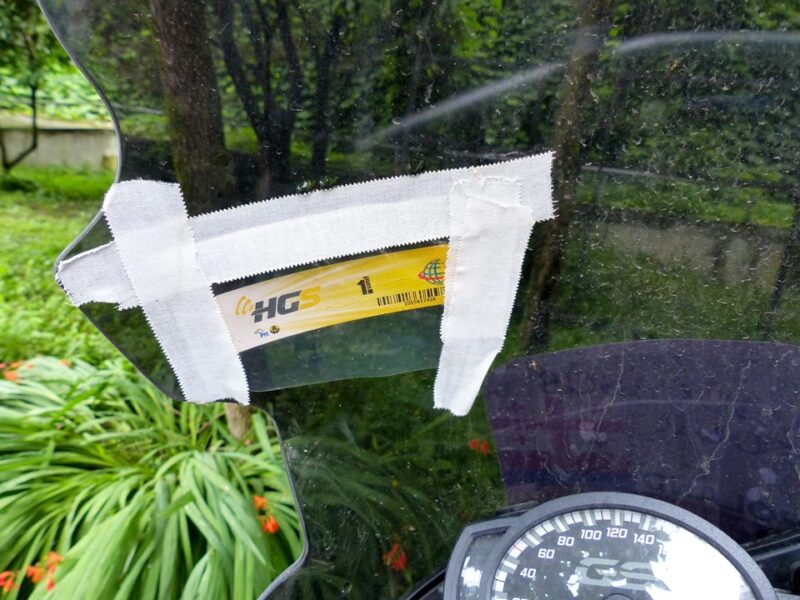
Our motorway payment situation, however, remained unresolved. The following morning, Istanbul seemed determined not to let us leave. Roadworks, detours and confusing signs sent us around in circles. Eventually, we approached a couple of police officers for help. They called over more colleagues. Nobody seemed entirely sure how we were supposed to pay for the motorway. What followed was one of the more unusual encounters of the trip. The officers decided to help us personally. We were instructed to follow their police car as they drove from one petrol station to another, searching for somewhere that could issue the correct electronic toll stickers. They eventually found a place, helped with the paperwork and even gave us some sightseeing recommendations before escorting us back to our route. It was a rather impressive level of customer service. The next challenge was the stickers themselves. They were meant to go on the inside of a windscreen and weren’t waterproof. An excellent solution for motorcycles, obviously.
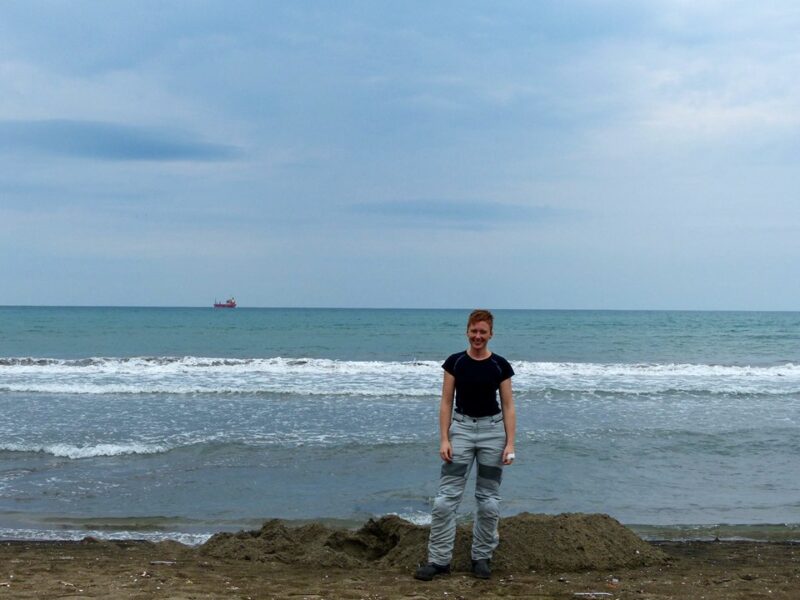
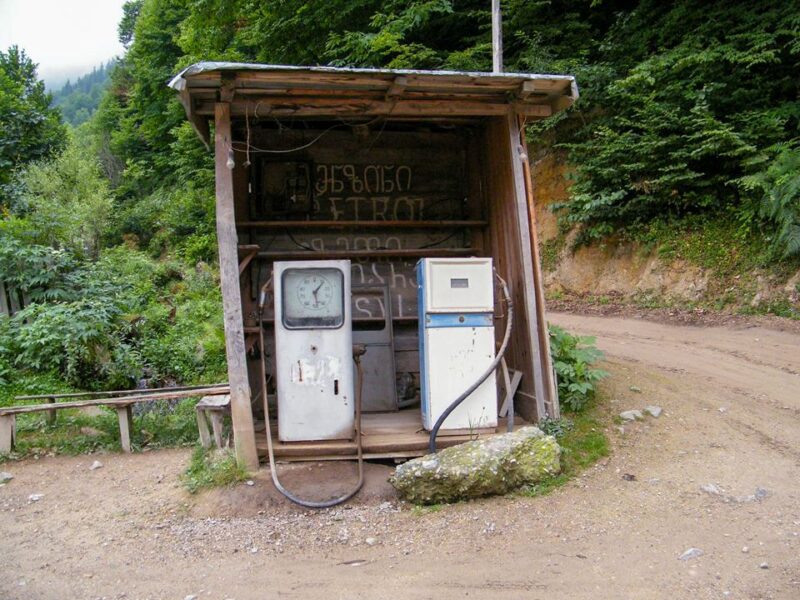
With that adventure behind us, we continued east along Turkey’s Black Sea coast. The kilometres were disappearing, although not always quickly enough. There were long stretches of motorway, endless fuel stops, roadside meals and increasingly unpredictable weather. At first, the heat was almost unbearable. Then came rain, more rain, and temperatures that made me wonder whether I’d accidentally travelled to the wrong country. At least the landscape was interesting. Mountains rose to our right, the Black Sea stretched out to our left, and occasionally the air filled with the wonderful smell of tea from the factories along the coast.
There were also dogs. Lots of dogs. I was beginning to suspect that roadside dogs would become a recurring theme of this adventure.
Three days after arriving in Bulgaria, we finally crossed into Georgia. We celebrated with Georgian food, wine, beer and a birthday cake for Bułek, one of the guys in our group. The cake was decorated with glitter, which somehow ended up everywhere. Our Caucasus adventure had officially begun.
Welcome to Georgia. Watch Out for the Cows.
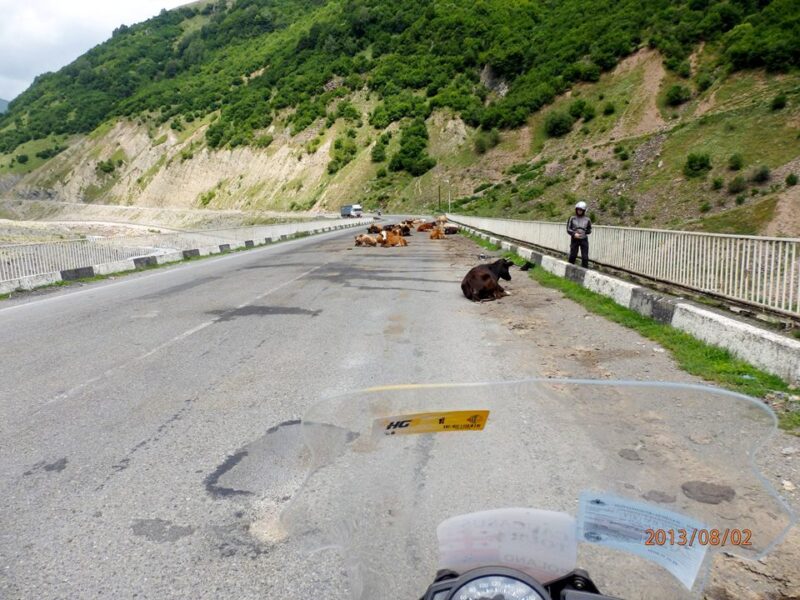
My first impressions of Georgia were a mixture of fascination and mild disbelief. The roads were chaotic, the traffic unpredictable, and apparently everybody had their own interpretation of the rules. Overtaking on blind corners? Why not. Passing three vehicles at once? Perfectly acceptable. Cows standing in the middle of the road? Completely normal. And the dogs, of course, were still there.
It quickly became obvious that paying attention to the road wasn’t enough. You had to watch absolutely everything around you, because a seemingly empty corner might reveal a cow, a pedestrian, a horse, a badly driven van or a truck with wheels that looked ready to fall off. I was used to a slightly more organised approach to road traffic. Georgia was going to test my patience. Fortunately, it also offered some spectacular riding.
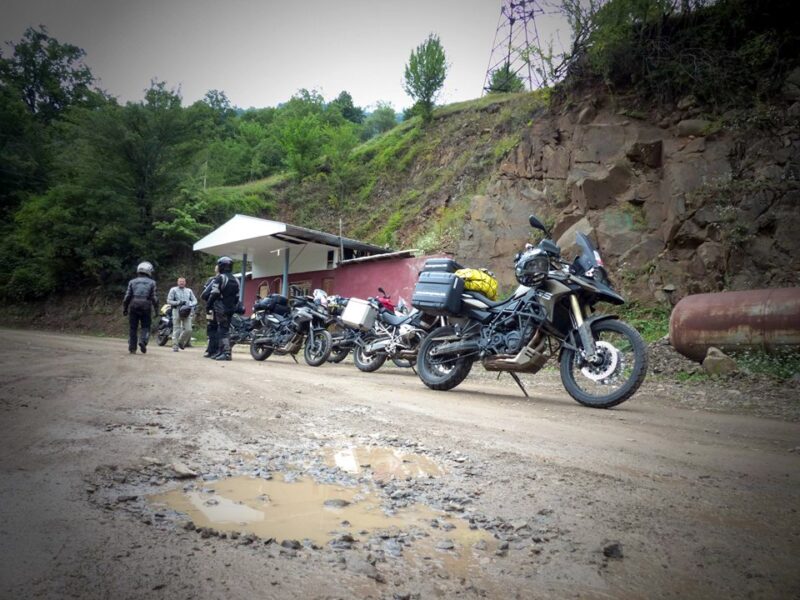
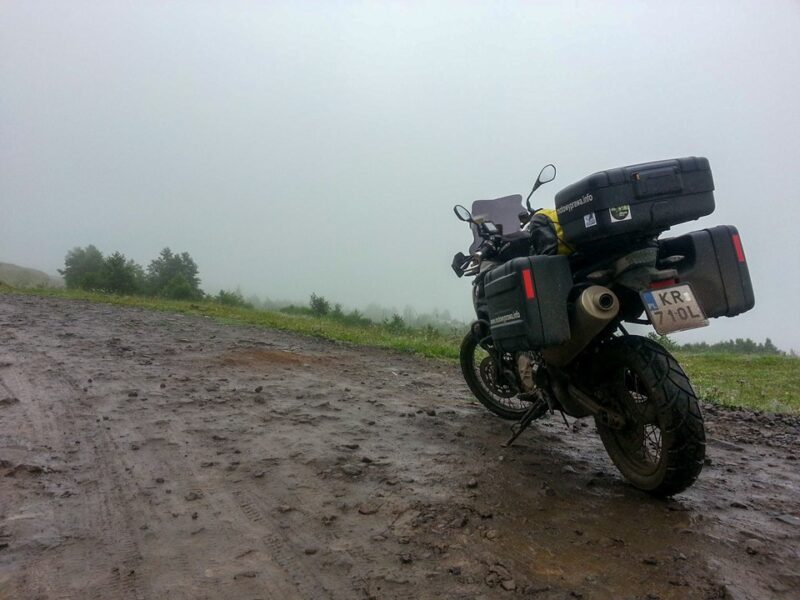
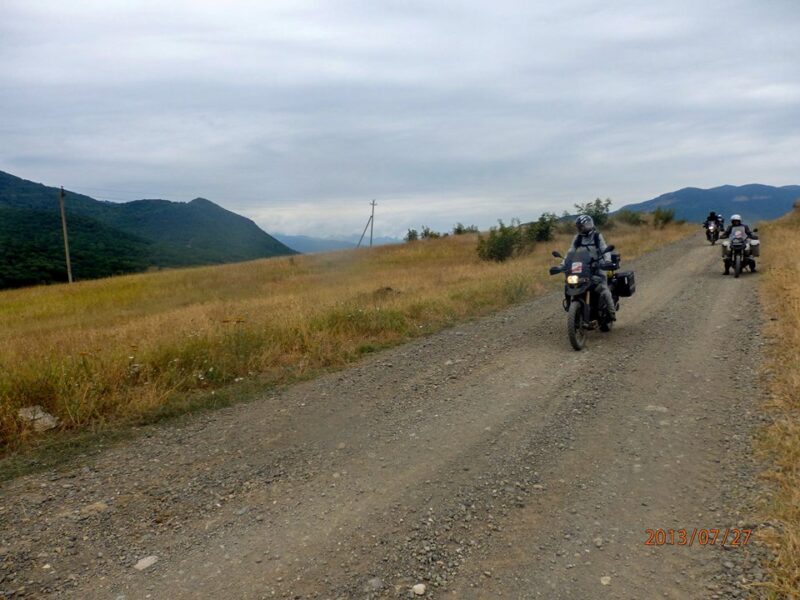
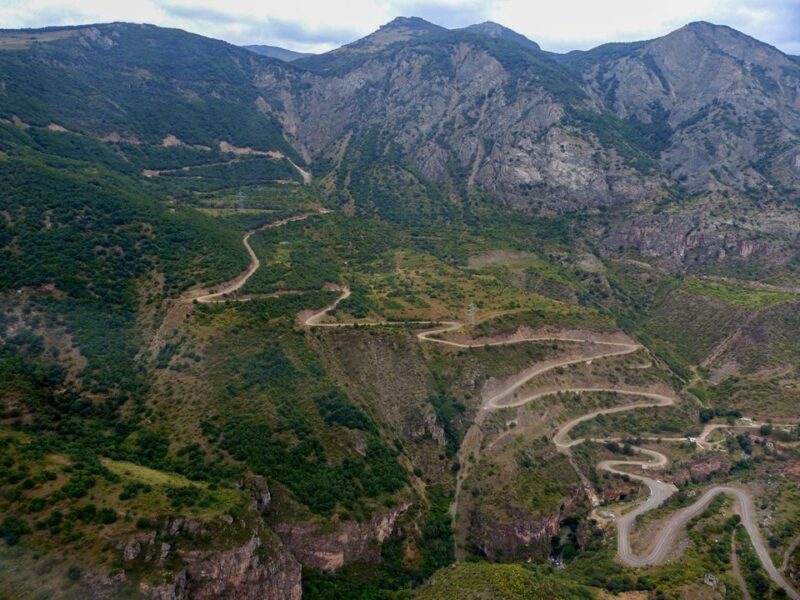
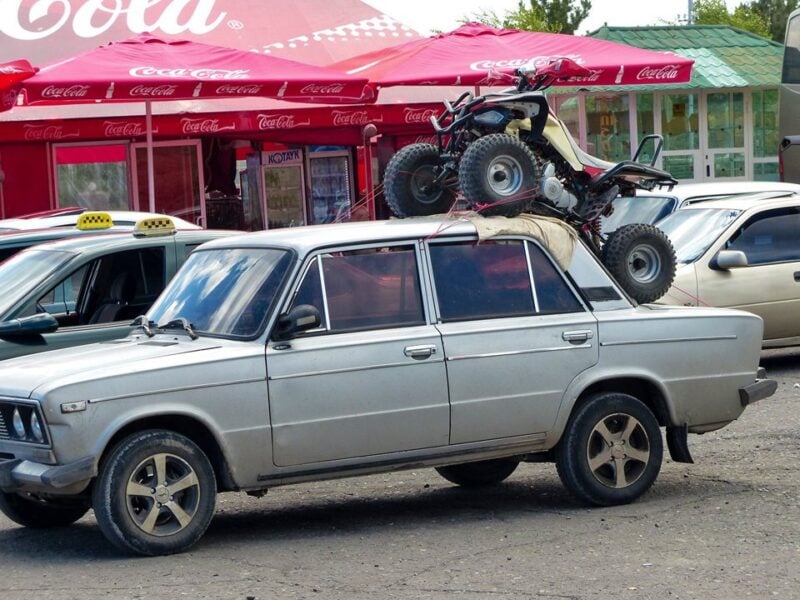
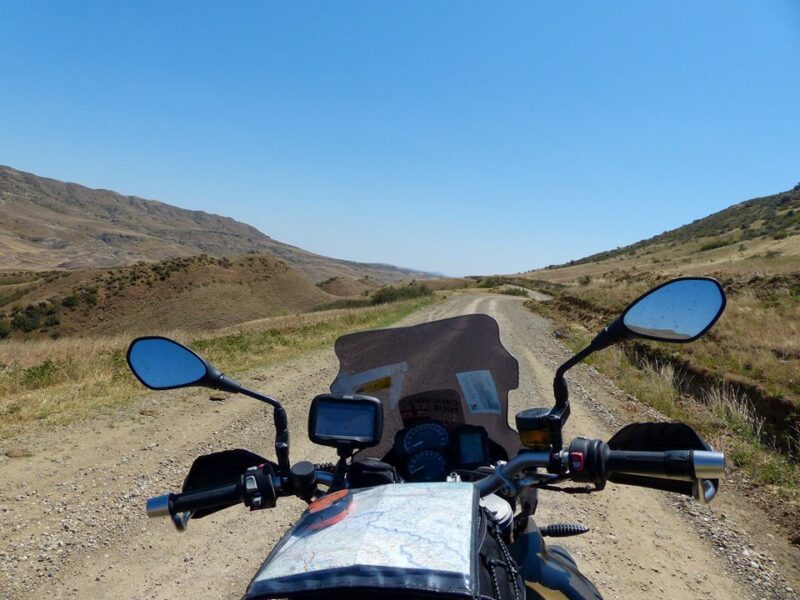
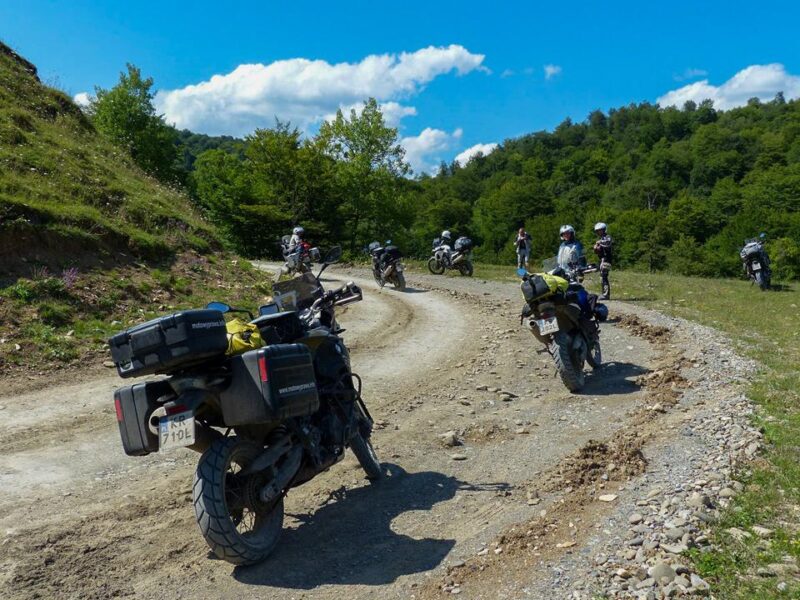
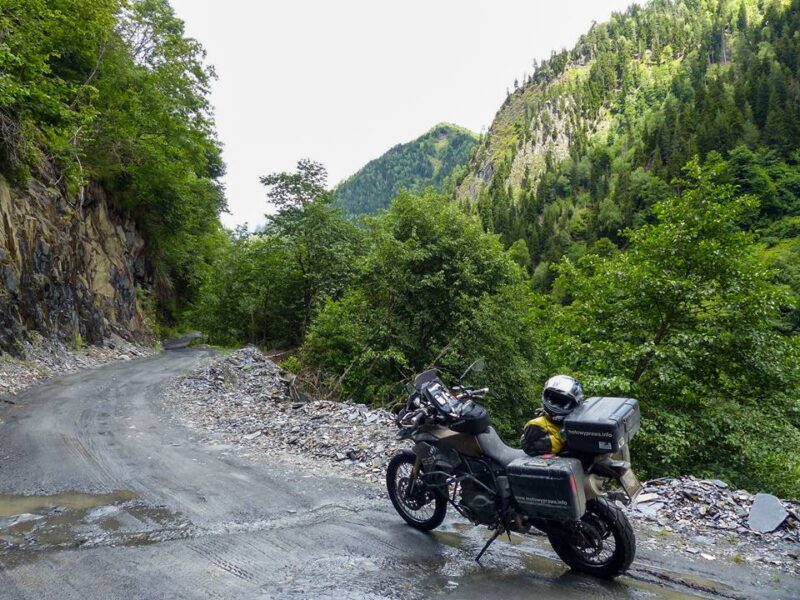
Our first proper mountain crossing took us from the Batumi area towards Vardzia. The asphalt eventually disappeared, replaced by wet gravel, mud and loose stones. The rain hadn’t helped. The road wound through the mountains, climbing towards a pass hidden in mist. Occasionally, local vans and Ladas appeared from the opposite direction, their drivers seemingly unaware that a fully loaded motorcycle might need a little space. I concentrated on keeping Olivier upright.
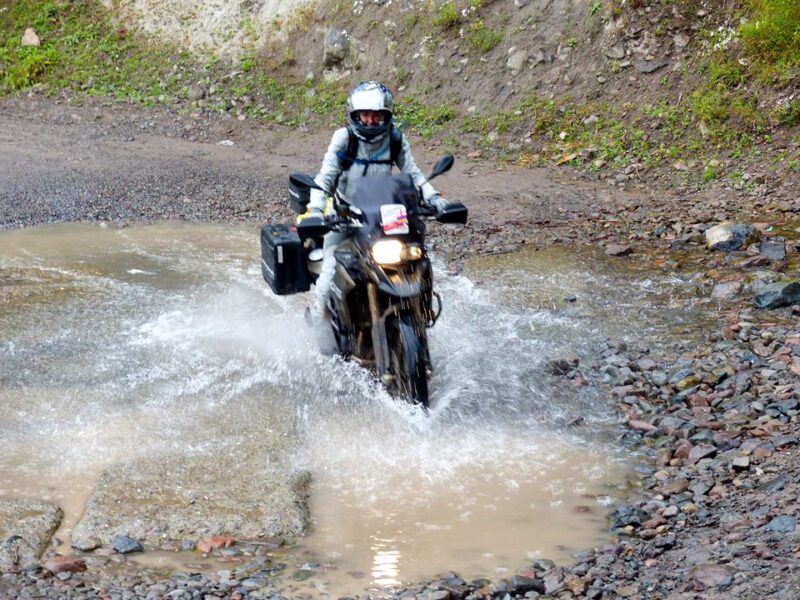
The conditions were demanding for me, but the route was fantastic. There were mountain views, winding tracks, streams, waterfalls and enough mud to cover our motorcycles almost completely. At one water crossing, I enjoyed myself so much that I rode through twice. And after several dozen kilometres of challenging terrain, I’d managed to stay on the bike. A small victory, perhaps, but one I was perfectly happy to celebrate.
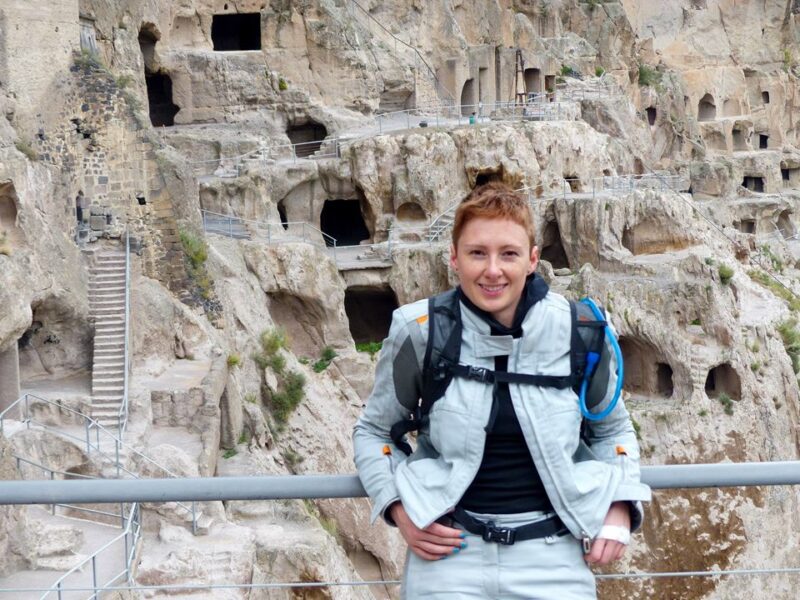
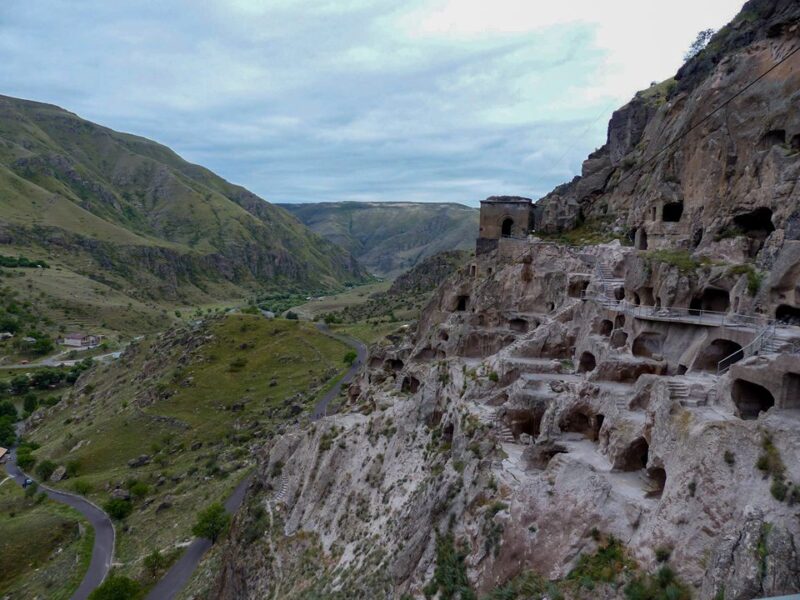
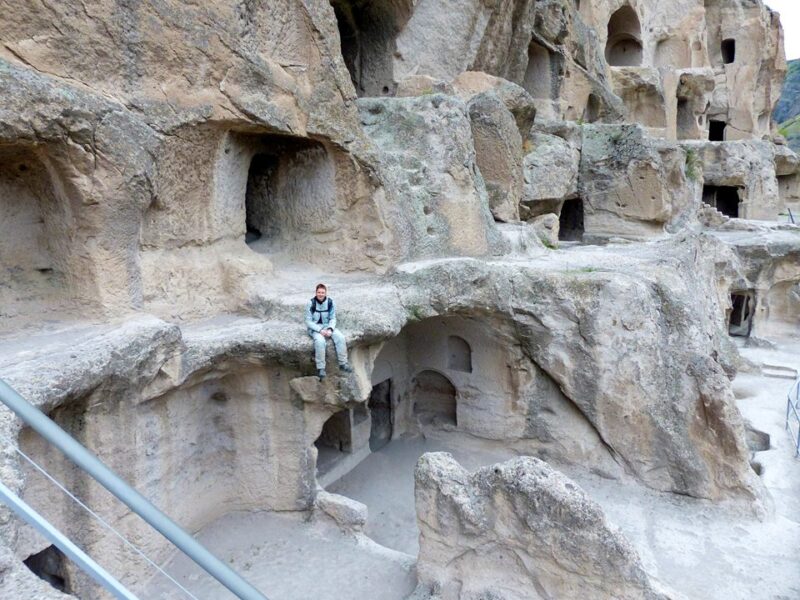
We reached Vardzia, the extraordinary cave city carved into the mountainside, late in the afternoon. The place was impressive, although we didn’t have as much time to explore as I would have liked.
Finding somewhere to sleep turned out to be another adventure. A local man offered us accommodation, so we followed him into the countryside. The route became increasingly suspicious: narrow tracks, pastures, horses and finally a rather uninviting collection of buildings. Two of the guys went to investigate while the rest of us remained on our motorcycles. Their verdict was quick. We were not staying there. Back through the dark countryside we went, negotiating wet roads decorated with generous quantities of cow dung. Eventually, we found a perfectly decent hotel near Vardzia. It had clean rooms, proper facilities and even someone who spoke Polish. After the previous option, it felt rather luxurious.
Armenia: A Different World
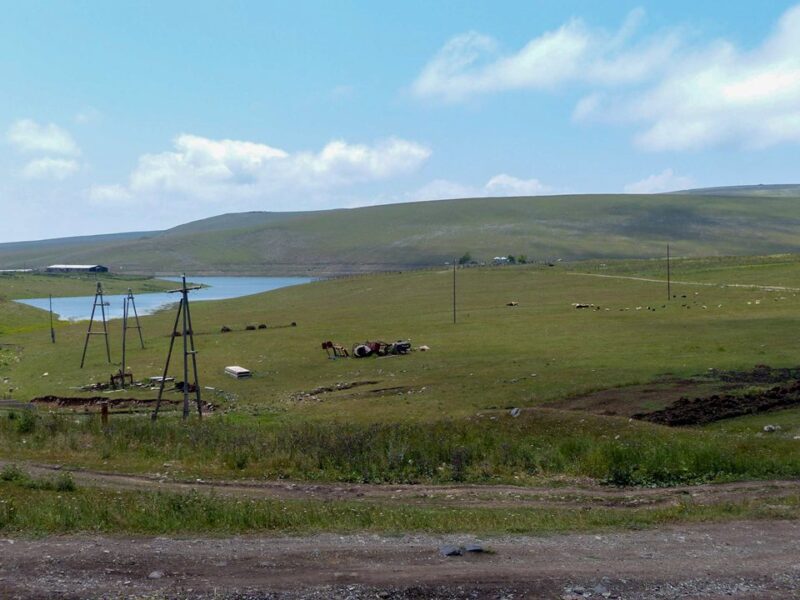
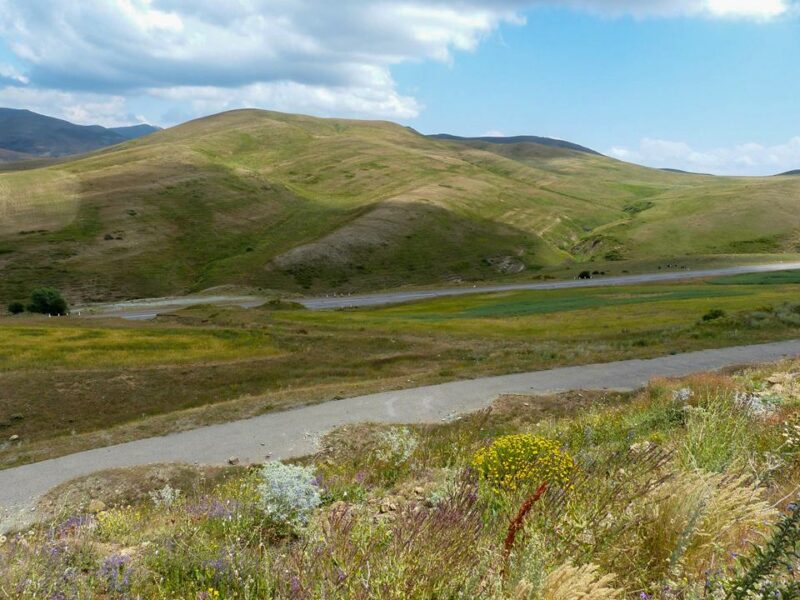
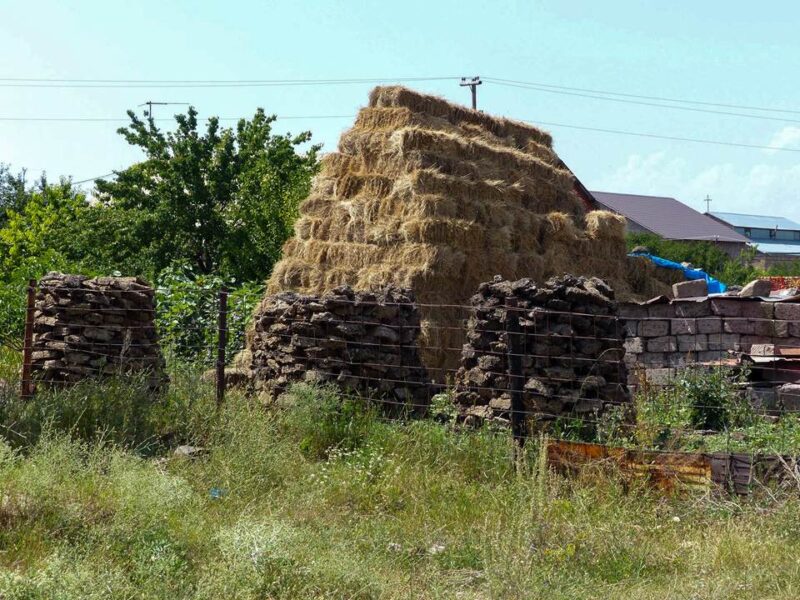
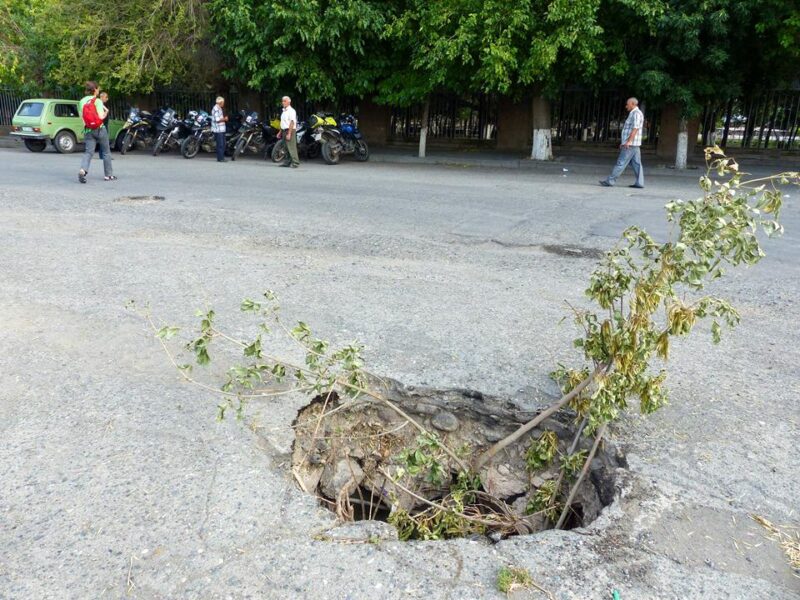
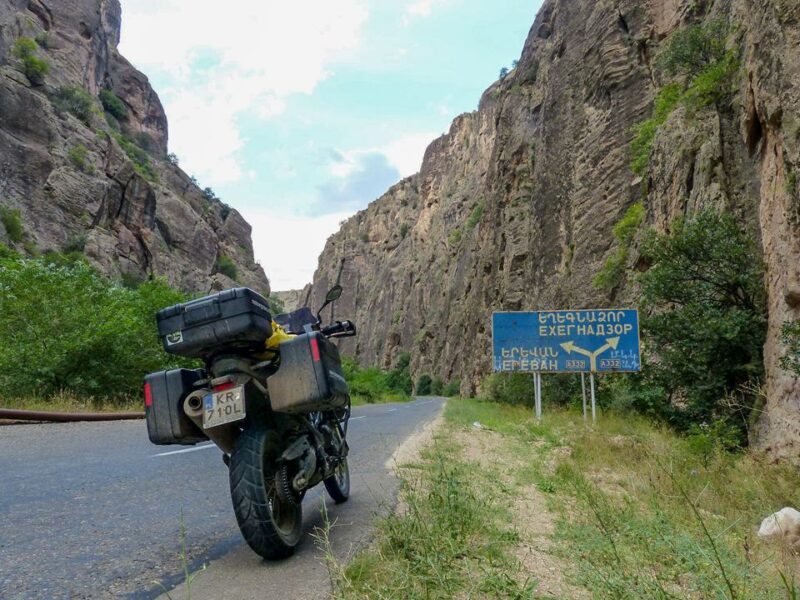
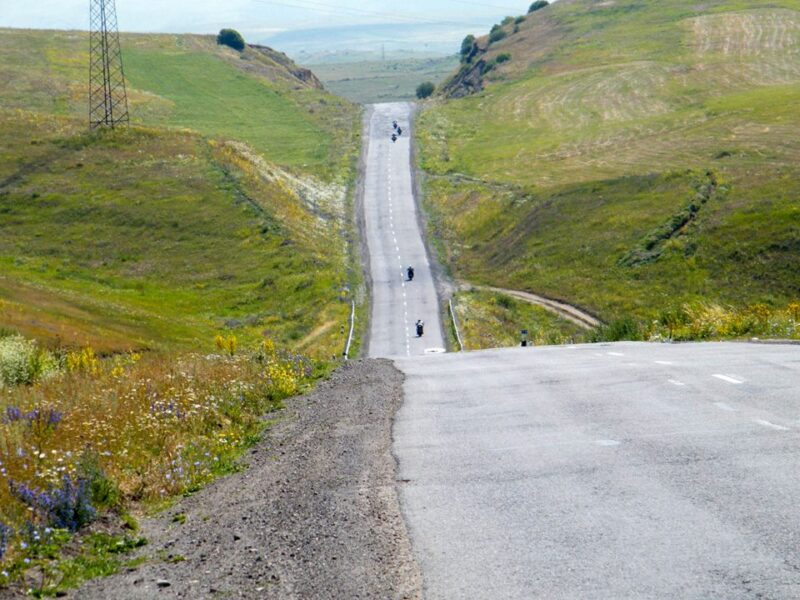
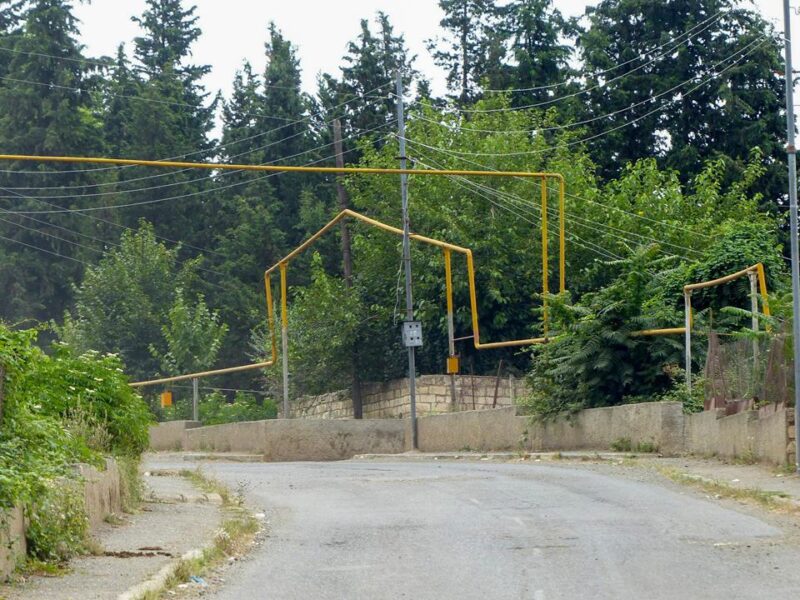
Crossing from Georgia into Armenia brought an immediate change of scenery. The landscape opened into enormous, almost empty highlands. At around 2,000 metres above sea level, the temperature dropped significantly, and the villages seemed poorer than anything we’d encountered so far. Small houses, corrugated metal roofs held down with stones, abandoned-looking buildings and exposed gas pipelines gave some settlements a rather depressing appearance. It wasn’t what I had imagined Armenia would look like. And yet, within a short distance, the country could surprise me completely. There were vast mountain landscapes, beautiful winding roads, ancient monasteries and occasional stretches of asphalt that could easily compete with some of the best roads in Europe. The contrasts were enormous.
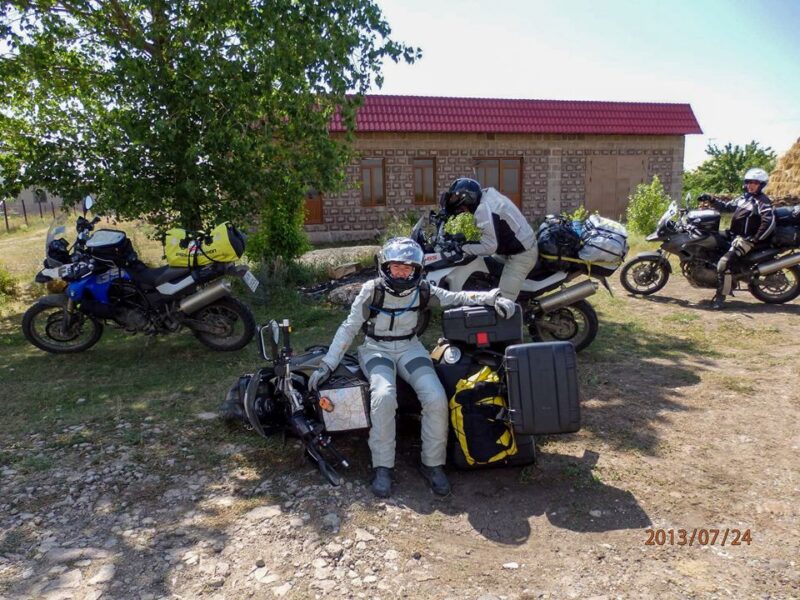
In Gyumri, we stopped to buy food for a roadside picnic. As usual, finding a good place to park my tall motorcycle wasn’t entirely straightforward. I stopped, put my foot down and discovered that the ground was lower than expected. Olivier went over. Once again, I was reminded that my legs were not getting any longer. Our picnic was saved by a lovely woman in a small shop who gave us a handful of salt when we discovered we’d forgotten to buy any. She refused to take money for it. It was such a small gesture, but exactly the sort of thing I remember from travelling.
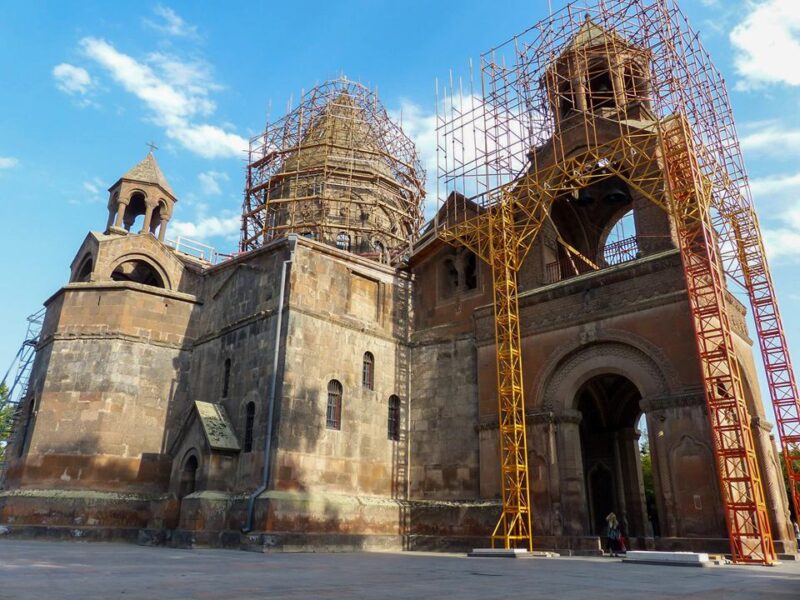
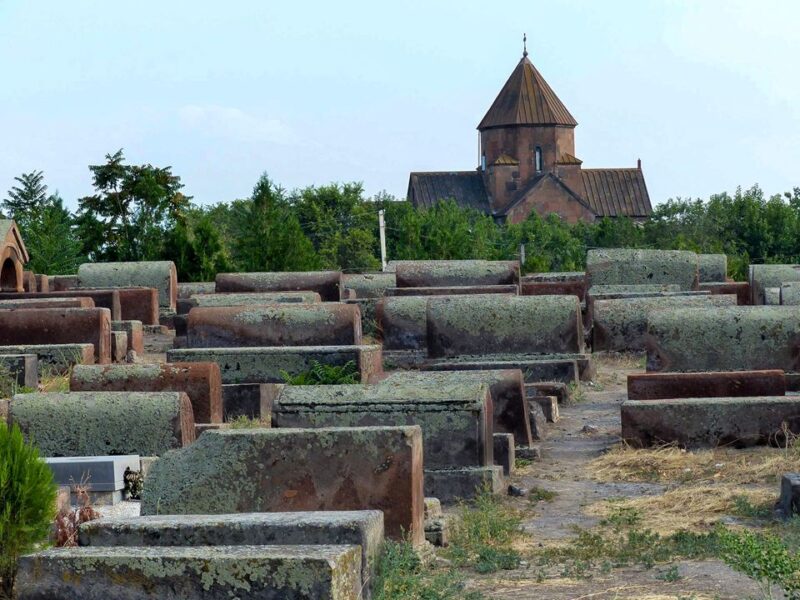
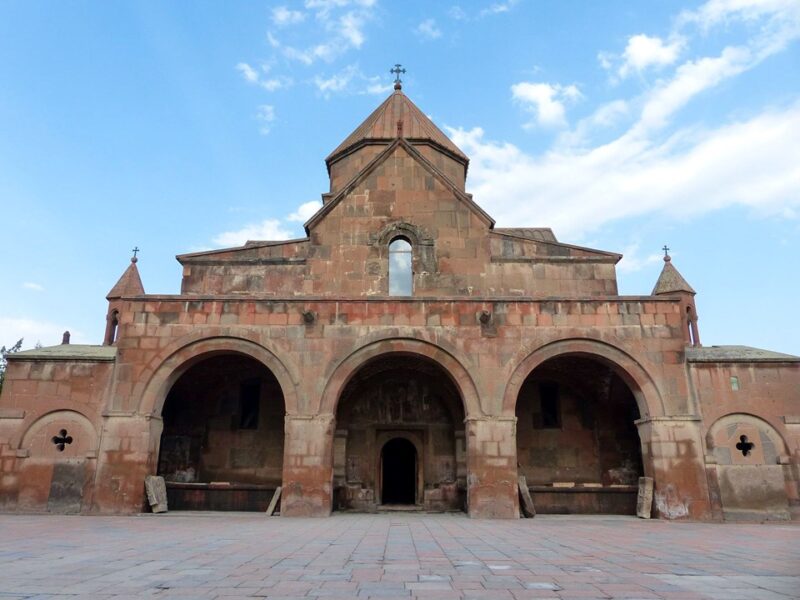
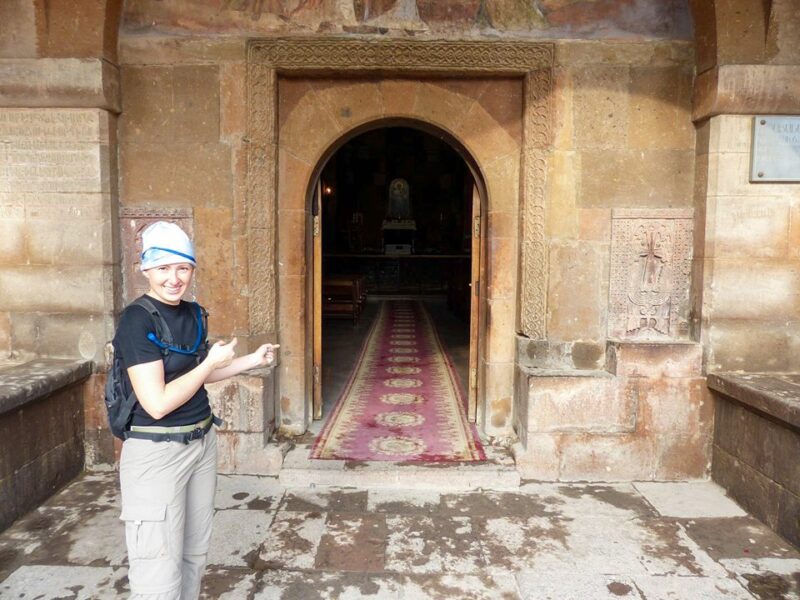
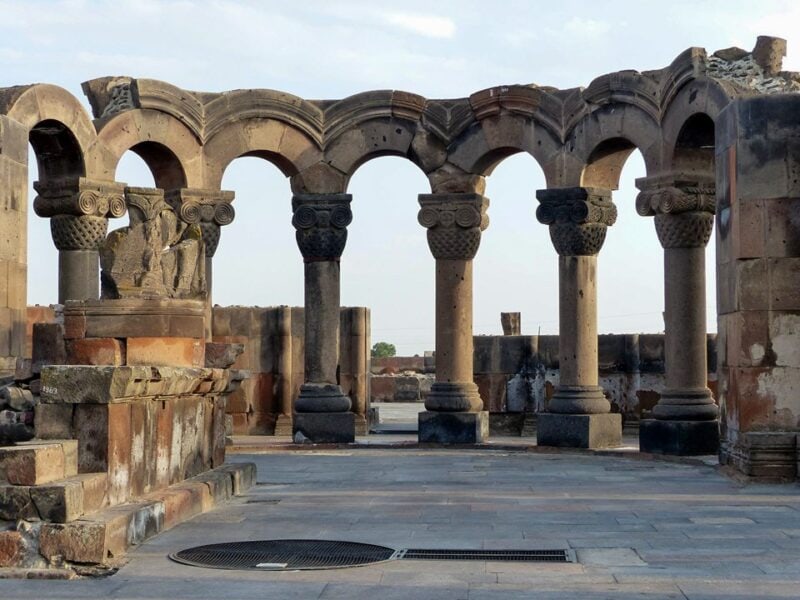
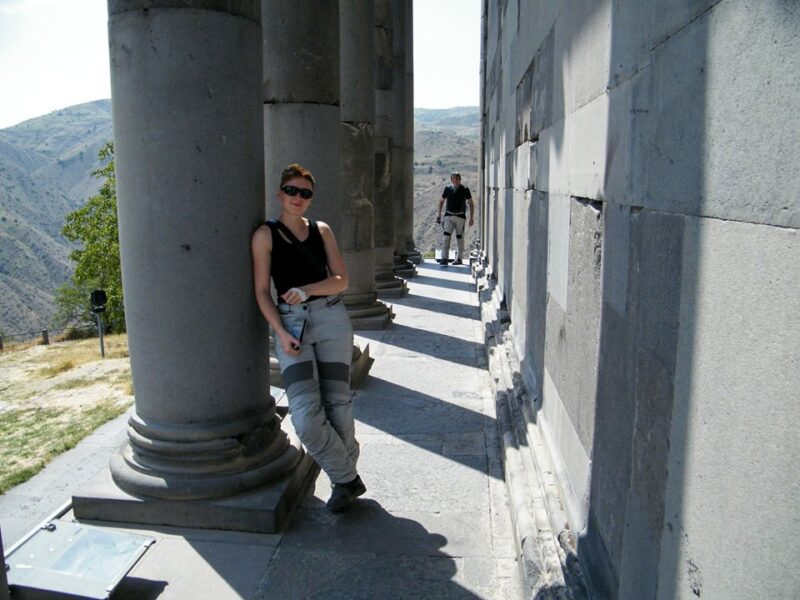
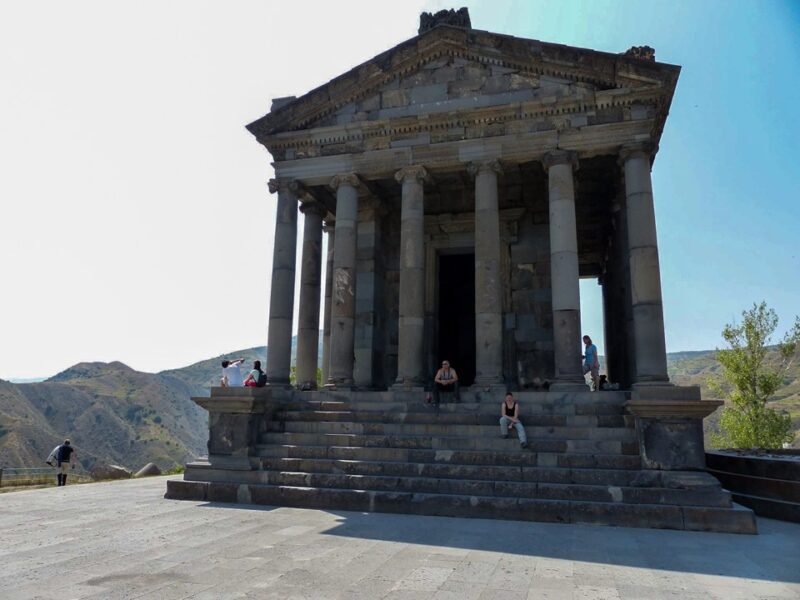
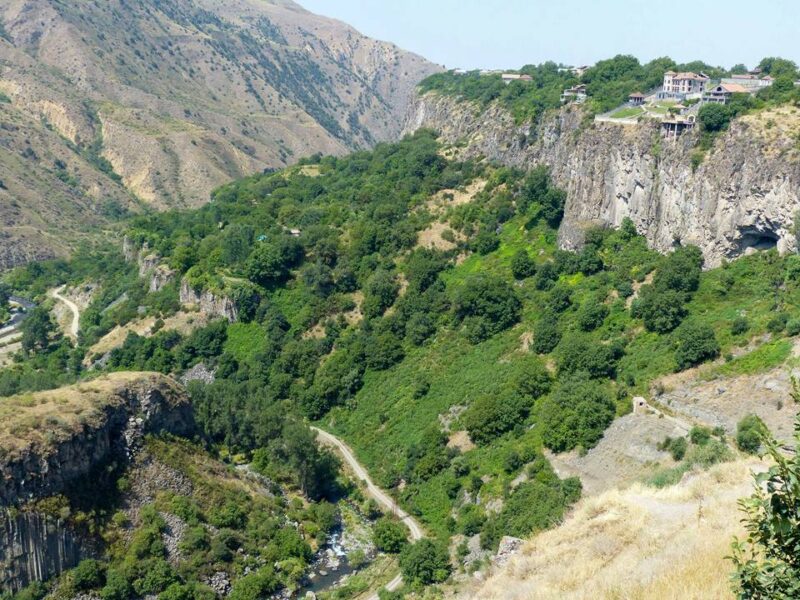
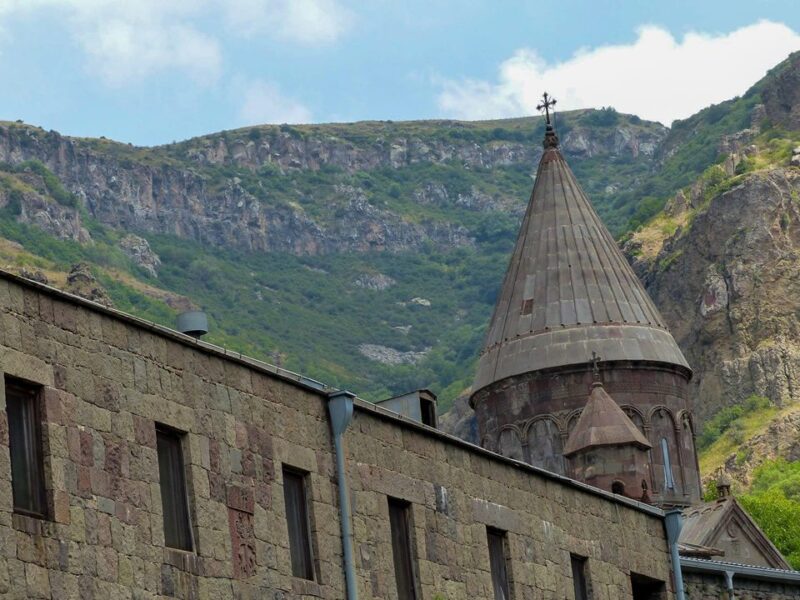
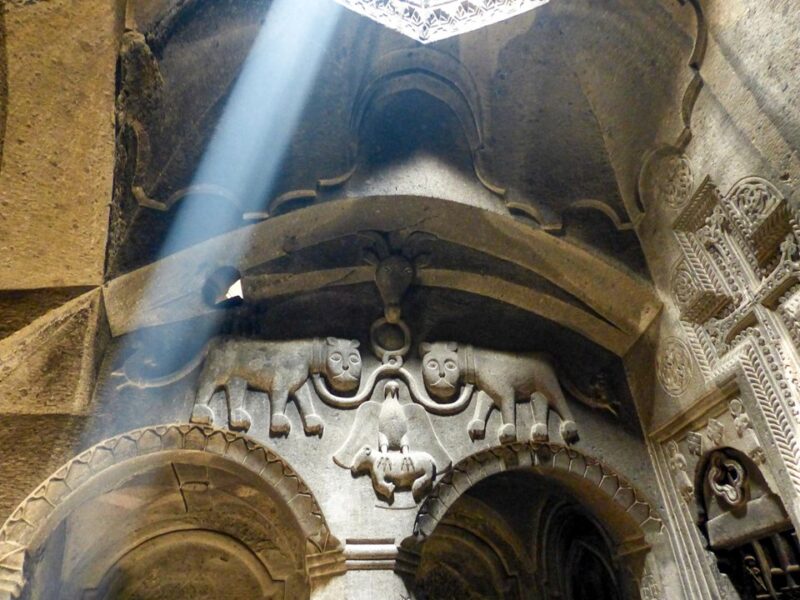
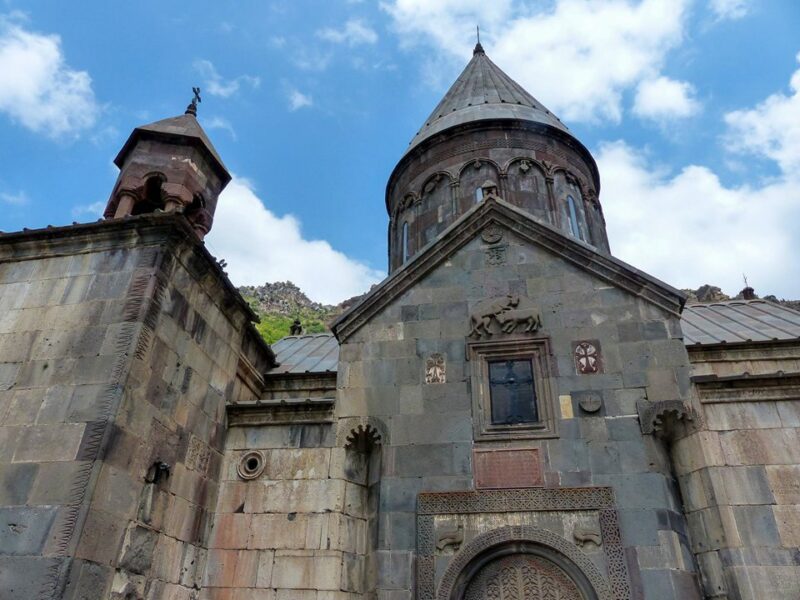
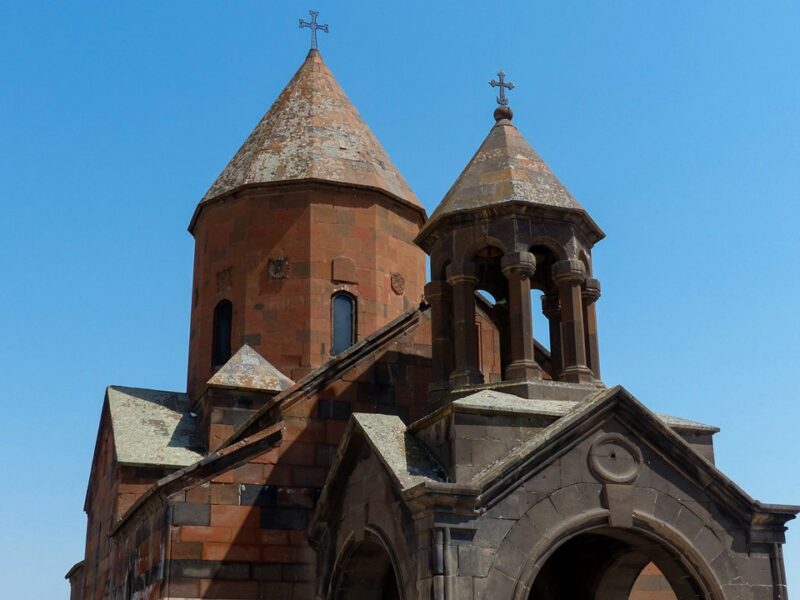
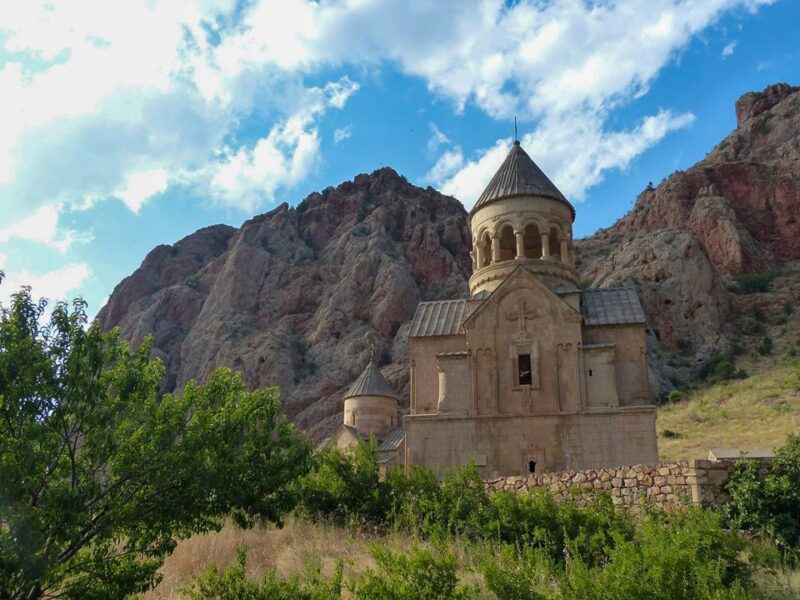
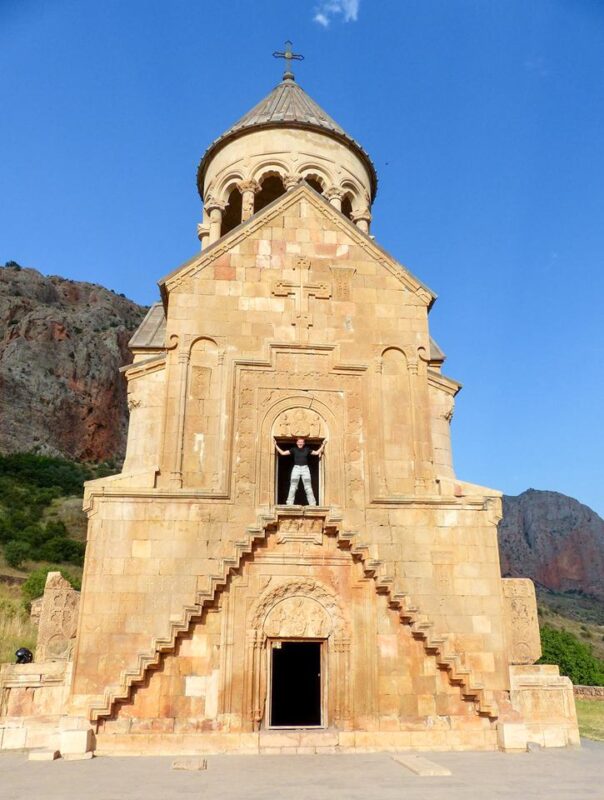
Armenia also introduced me to a remarkable collection of ancient religious sites. We visited Echmiadzin, Garni, Geghard, Khor Virap, Noravank and several other monasteries and churches scattered across the country. Some impressed me enormously. Others were less exciting than I’d expected. I particularly enjoyed Noravank, reached through a beautiful canyon with dramatic rock formations. The late afternoon sunlight brought out wonderful colours in the surrounding mountains. It was one of those places where the combination of landscape, architecture and light worked perfectly.
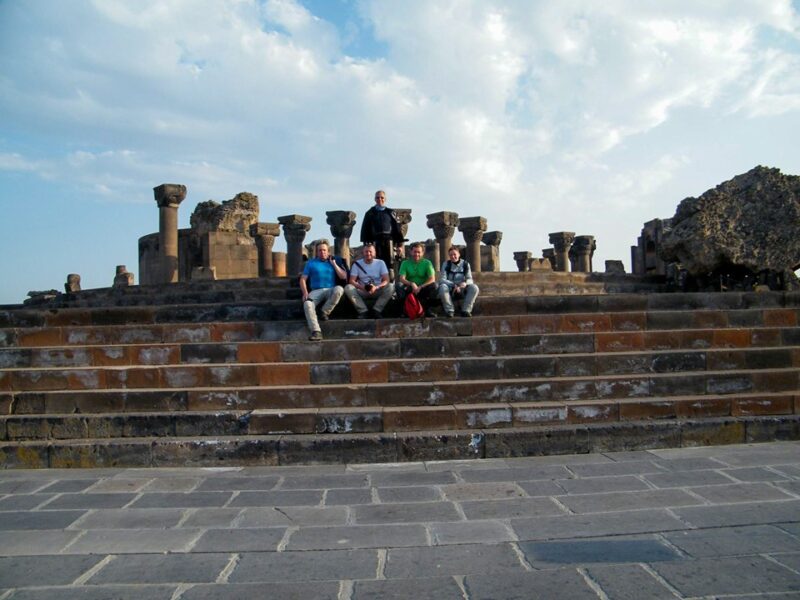
Not every religious site was quite as peaceful. At the ruins of Zvartnots Cathedral, we were running late and had only about twenty minutes before closing time. The woman at the entrance solved our problem by allowing us to ride the motorcycles directly into the archaeological complex. Exploring an ancient monument on a motorcycle was certainly a new experience. I also managed to lose my motorcycle keys there. Fortunately, Grzesiek found them. For someone supposedly travelling with experienced and organised companions, we were doing rather well at creating our own problems.
But Armenia was slowly winning me over. Despite the obvious poverty in many areas, I found the country fascinating. The landscapes were beautiful, people were often friendly and helpful, and the riding offered plenty of variety.
And then we headed for Nagorno-Karabakh.
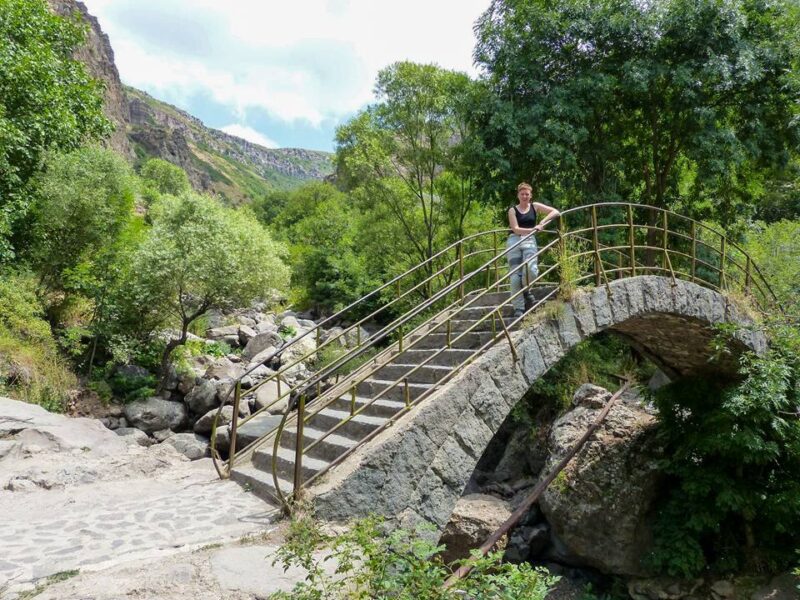
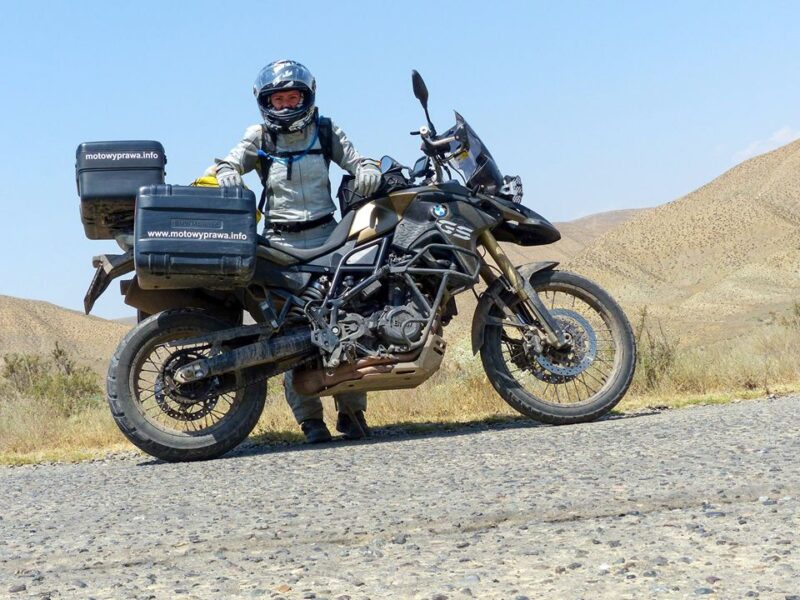
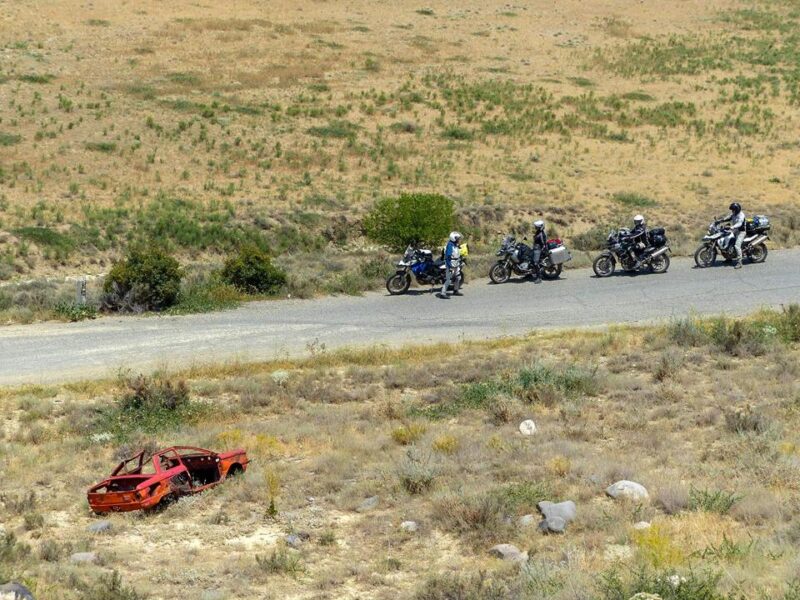
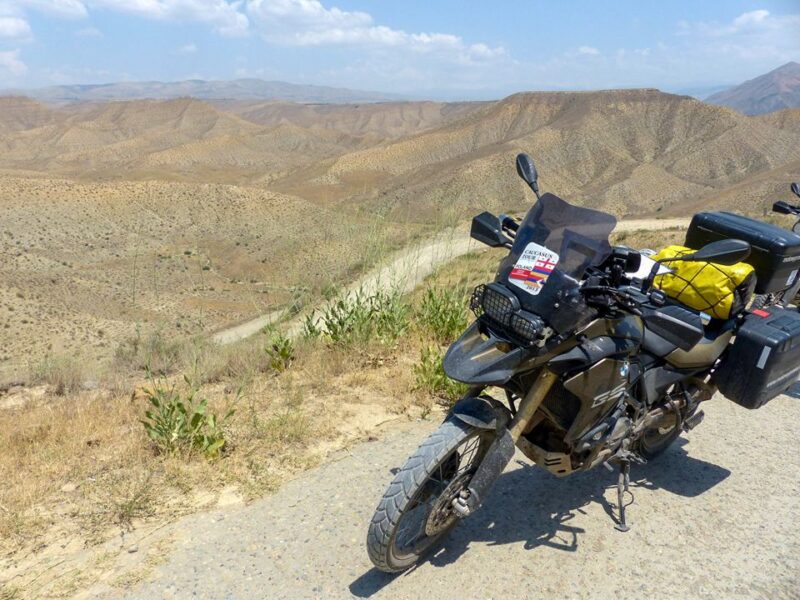
Nagorno-Karabakh: A Journey Into a Different Reality
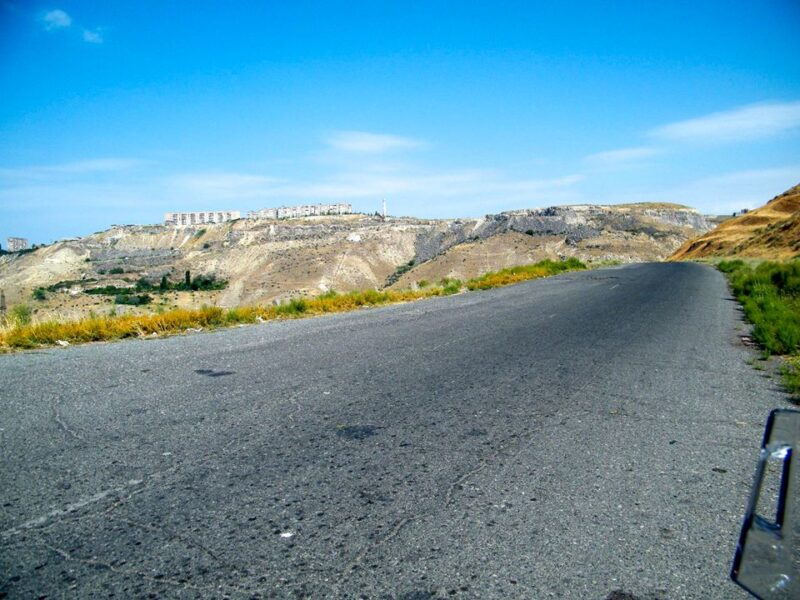
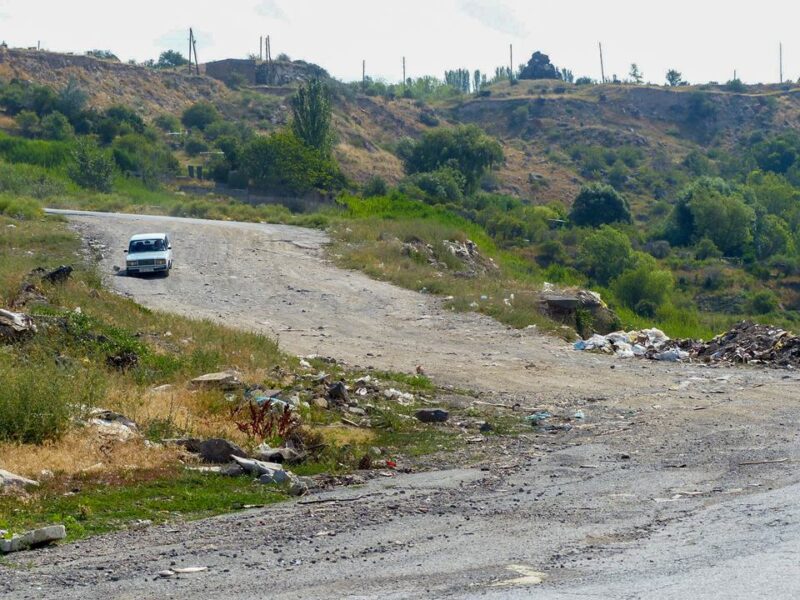
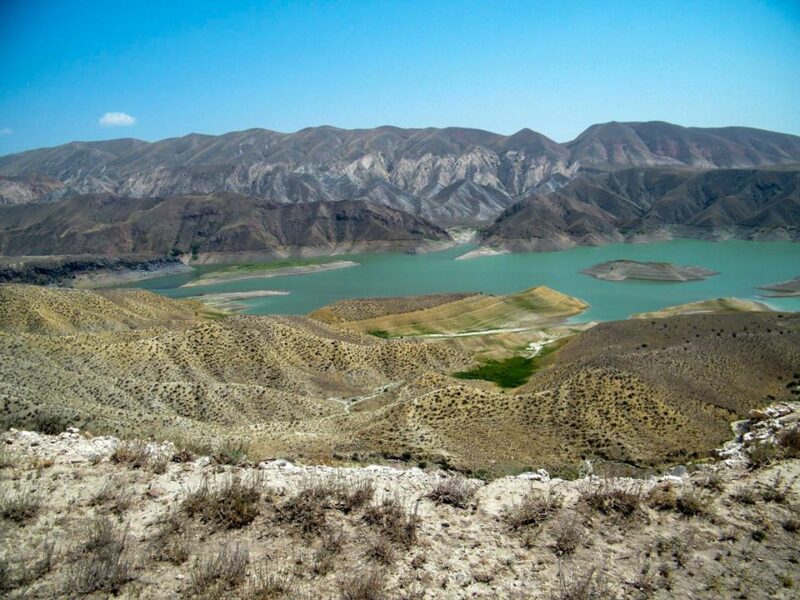
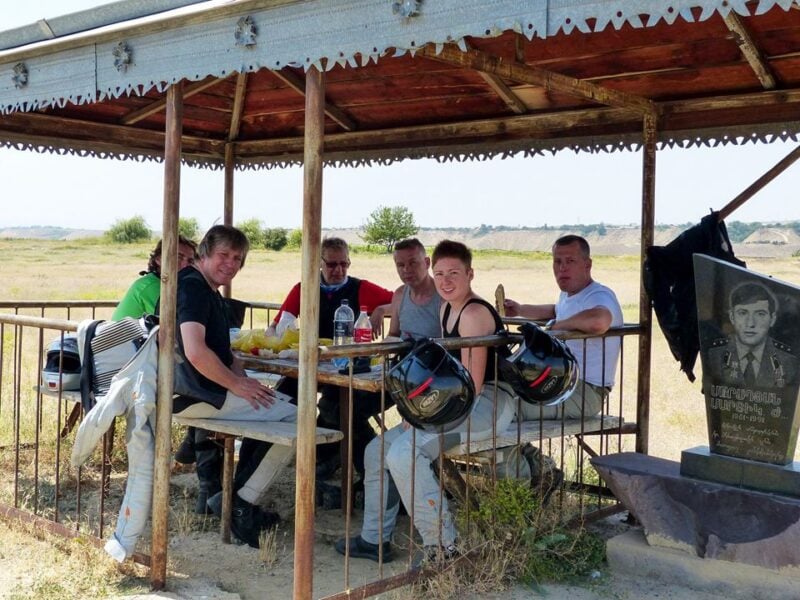
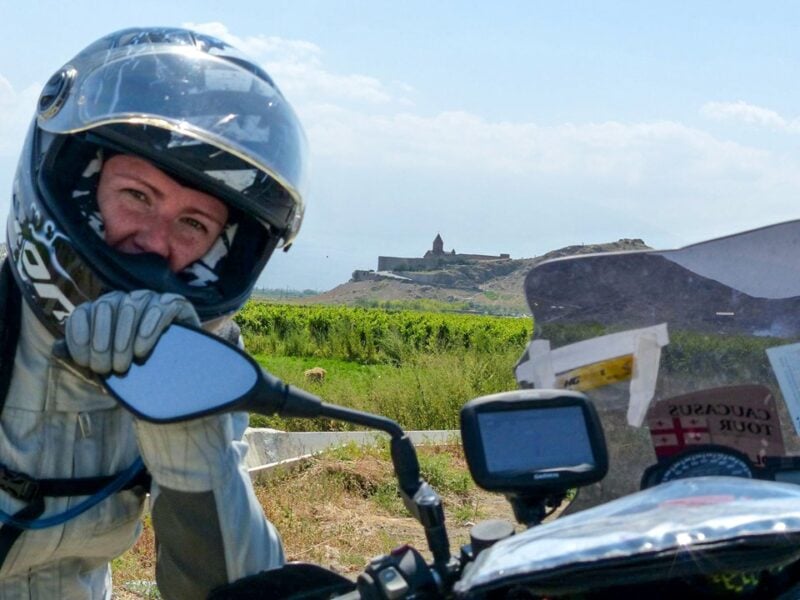
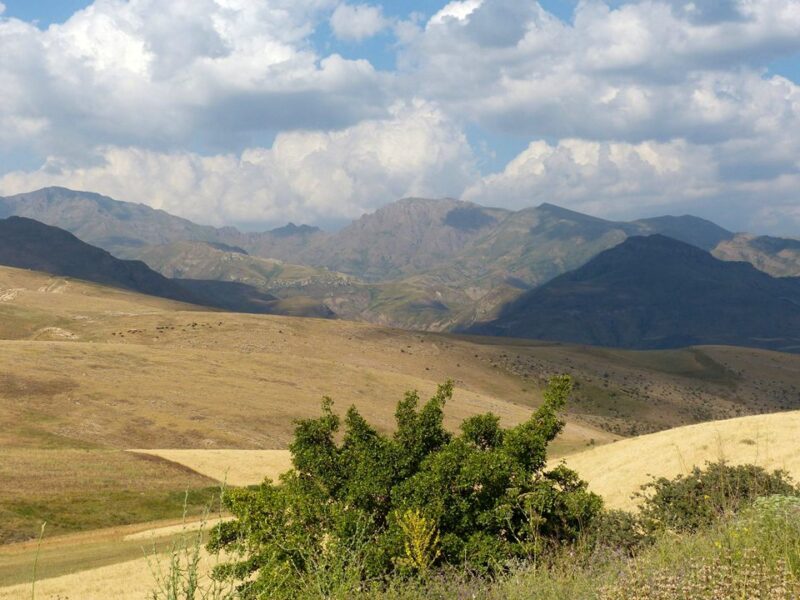
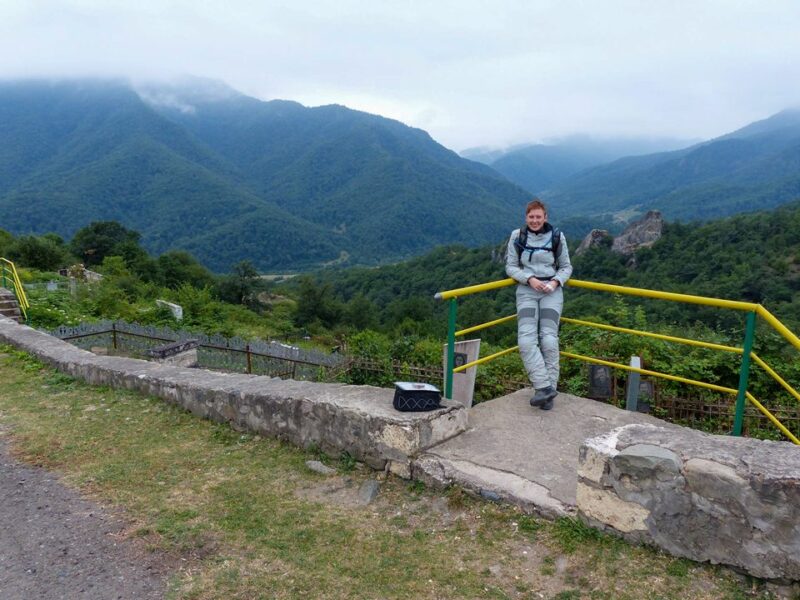
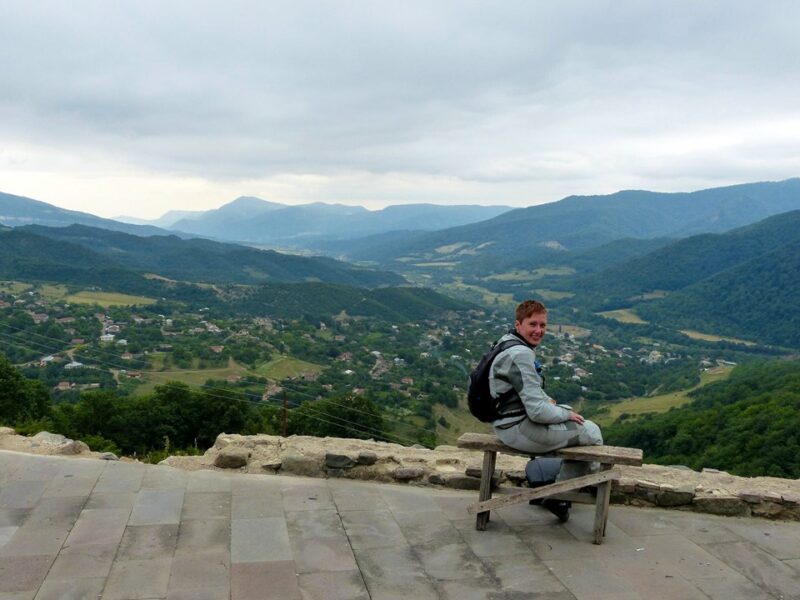
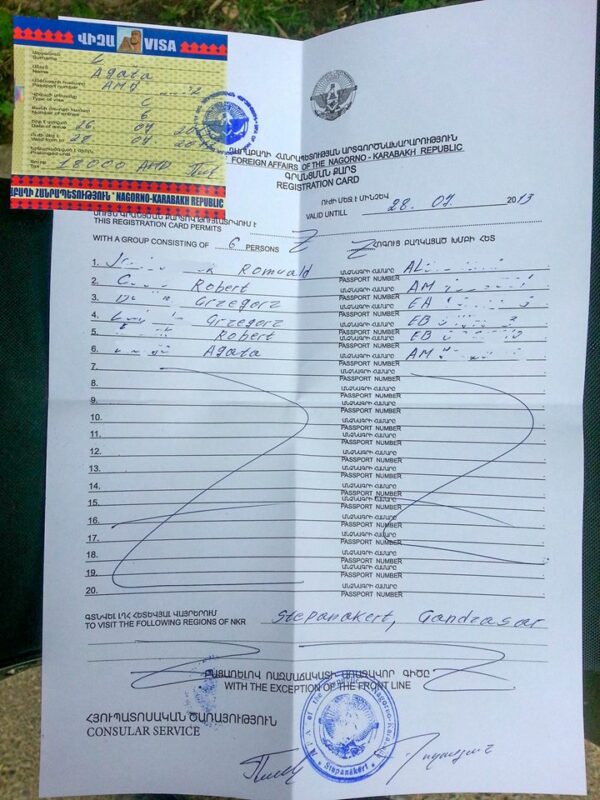
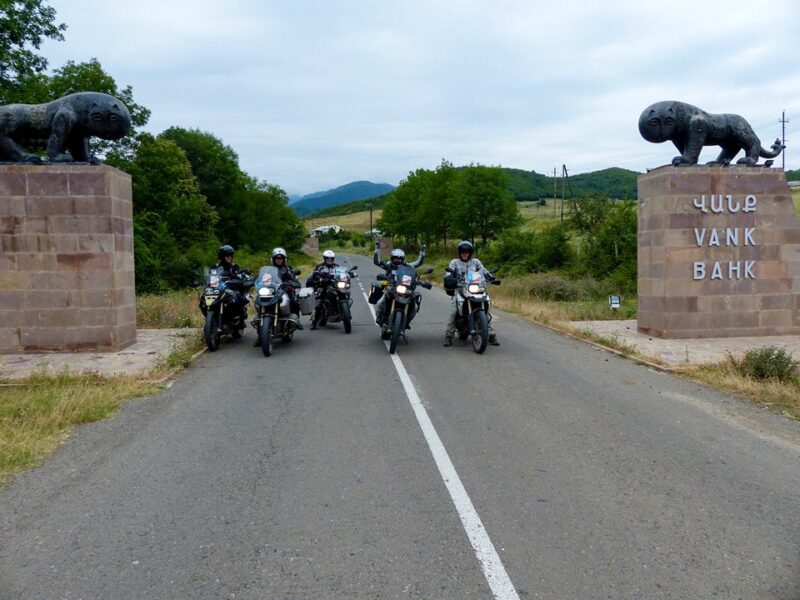
In 2013, Nagorno-Karabakh was a self-declared republic, governed by ethnic Armenian authorities but internationally recognised as part of Azerbaijan. Entering the region required formalities that were rather unusual by European standards. We crossed through a small checkpoint and then had to visit the Ministry of Foreign Affairs in Stepanakert to obtain our visas. Because it was Friday, we were in a hurry. Waiting until Monday wasn’t particularly appealing. We rode through some of the most beautiful landscapes we’d seen so far: green mountains, winding roads, open valleys and villages that seemed almost forgotten by the outside world. The problem was that we didn’t have time to stop for photographs. I was not happy about that.
At Stepanakert, a taxi driver helped us find the ministry, only for us to discover that everybody was on a lunch break. So we went looking for food ourselves. The first restaurant we considered was completely empty, apart from two men standing on a table changing a light bulb. We decided to look elsewhere. Eventually, we found a busy pizzeria, had lunch and returned to the ministry, where the visa procedure turned out to be surprisingly straightforward. The officials were friendly and spoke excellent English.
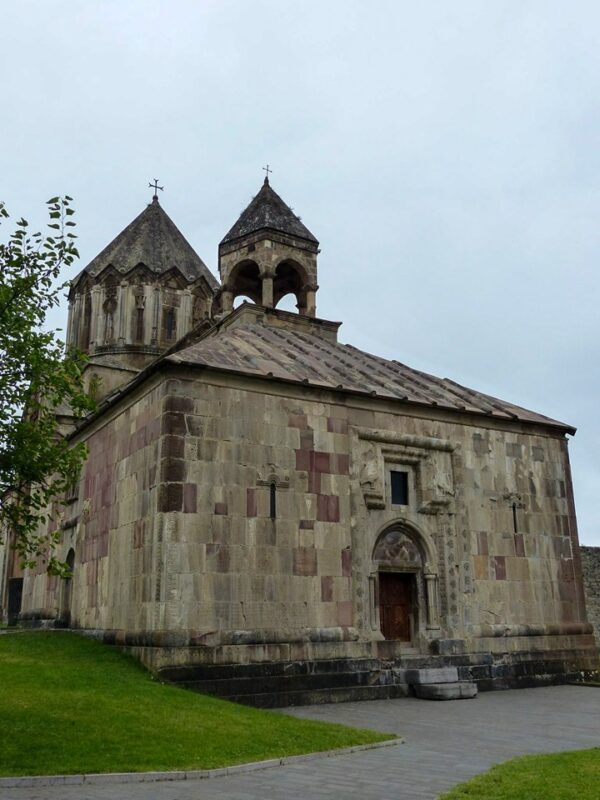
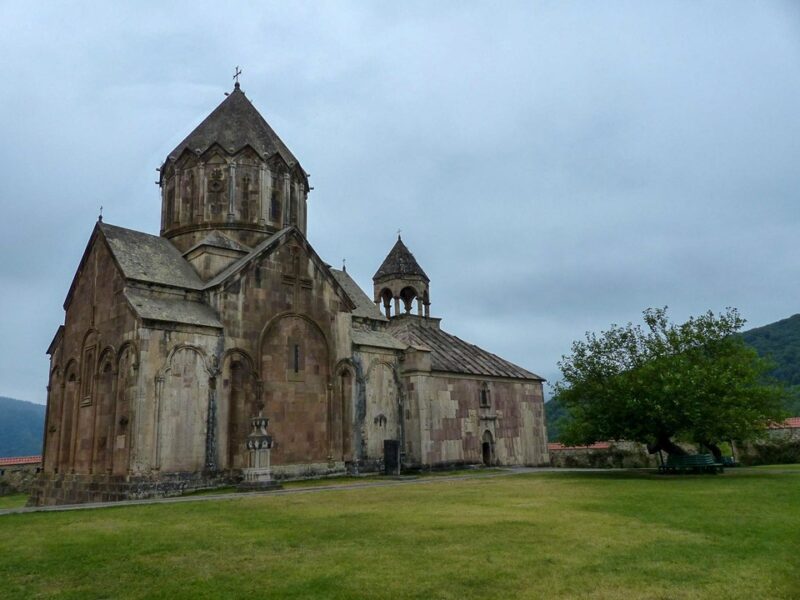
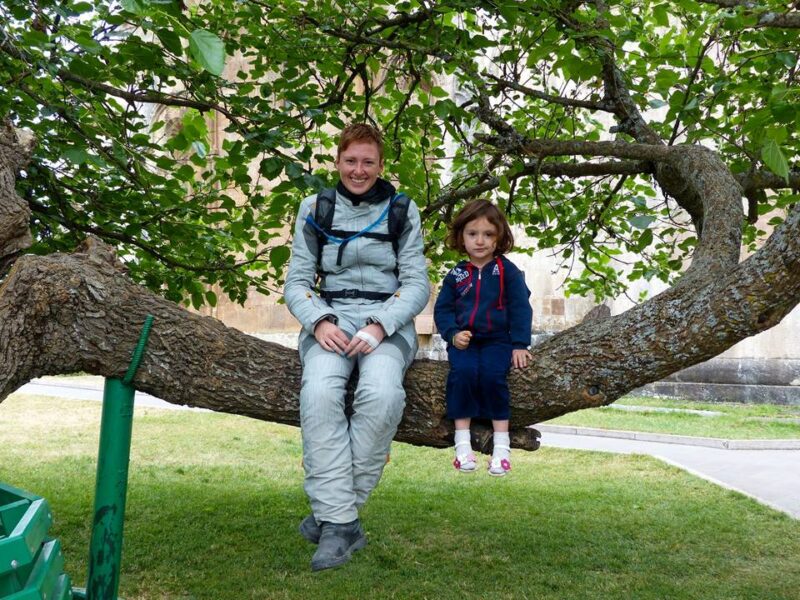
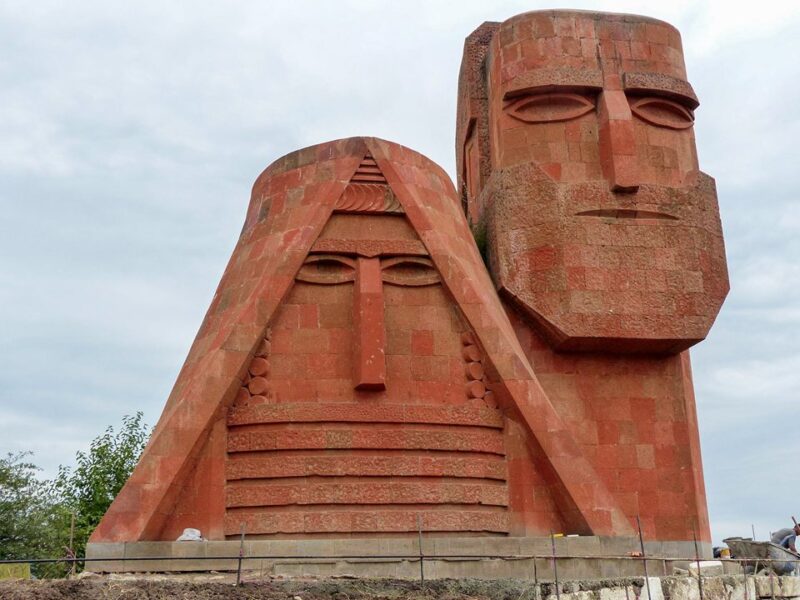
We continued towards Gandzasar Monastery, one of the most beautiful places we visited in the region. When we arrived, local children were playing football in the parking area. Our six motorcycles immediately became a more interesting attraction. We explained which bikes they could safely sit on and which ones should be left alone. Naturally, they climbed onto all of them. Inside the monastery, the atmosphere was wonderfully peaceful. We also met an Armenian woman living in the United States and her partner, a local businessman who recommended his hotel.
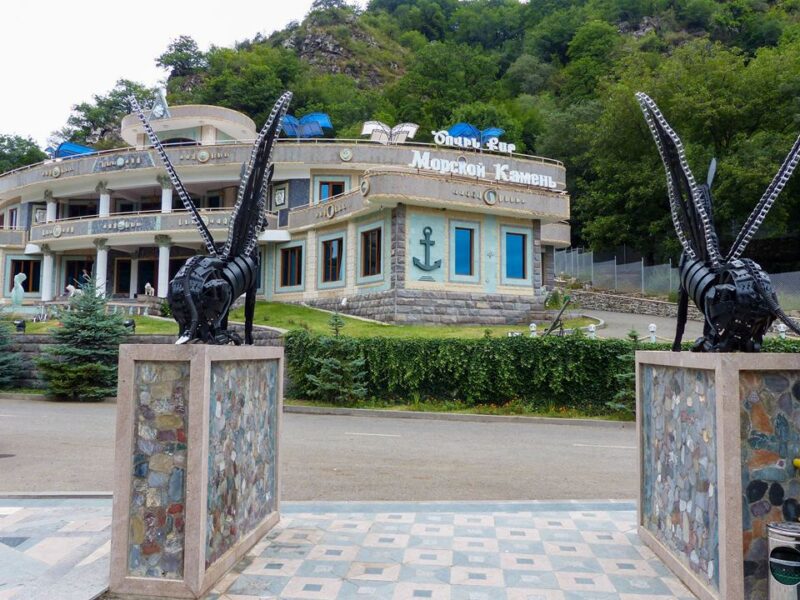
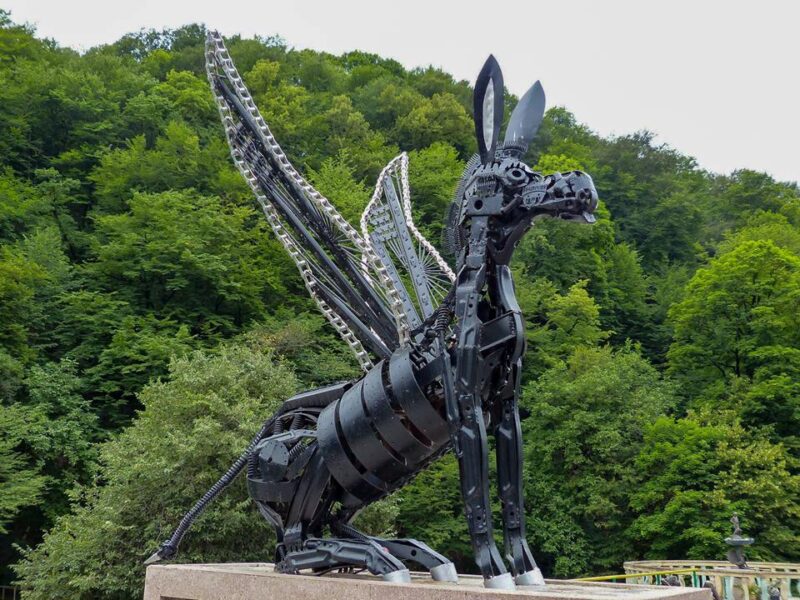
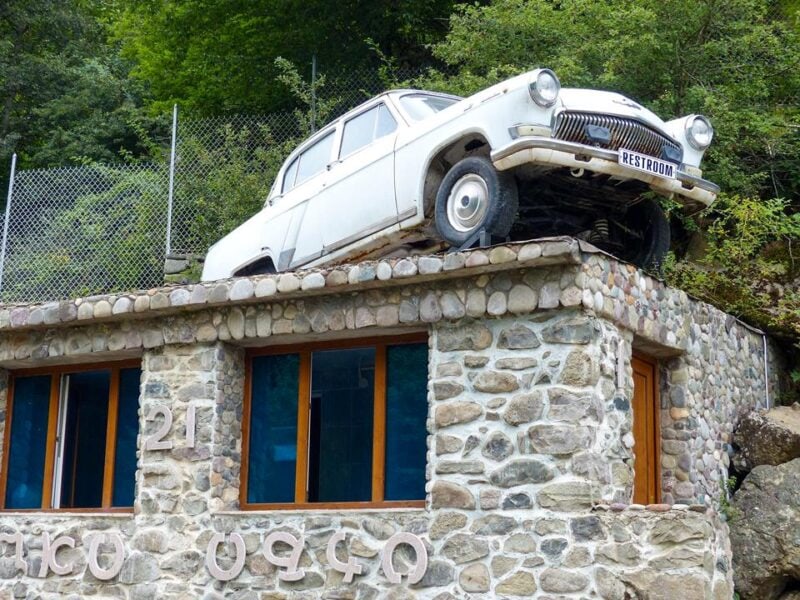
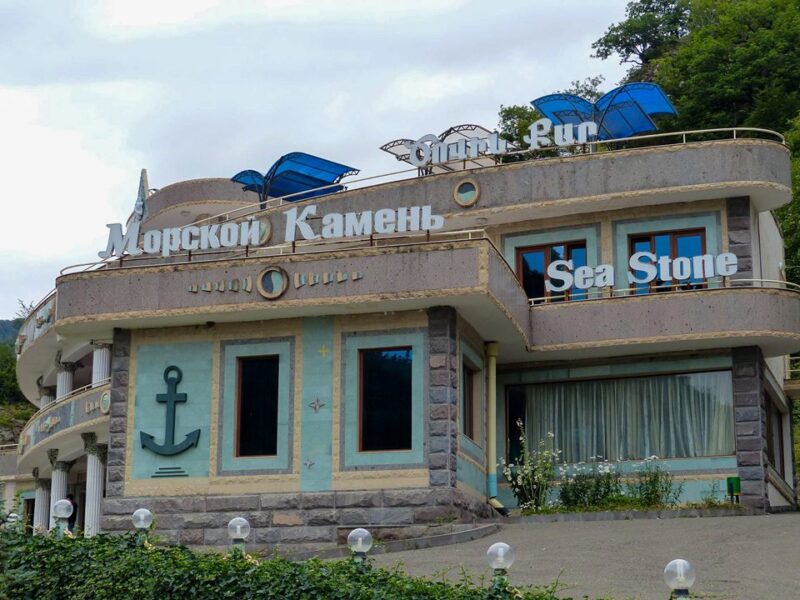
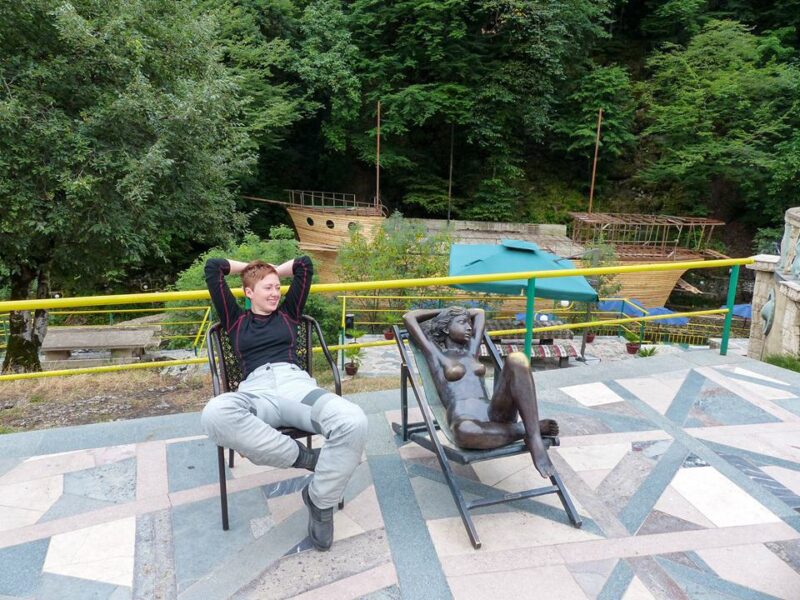
The hotel was an experience in itself. Hidden among the mountains, it was decorated with fountains, mythical creatures, an enormous stone lion that roared as people passed, and even a Noah’s Ark under construction in a stream. I wasn’t quite sure what to make of the place. It was called Sea Stone, which seemed particularly appropriate in a landlocked region.
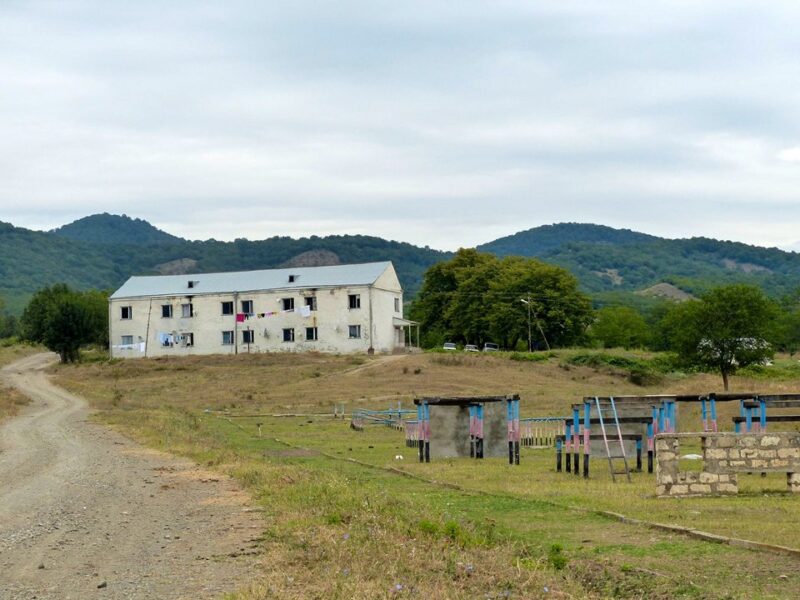
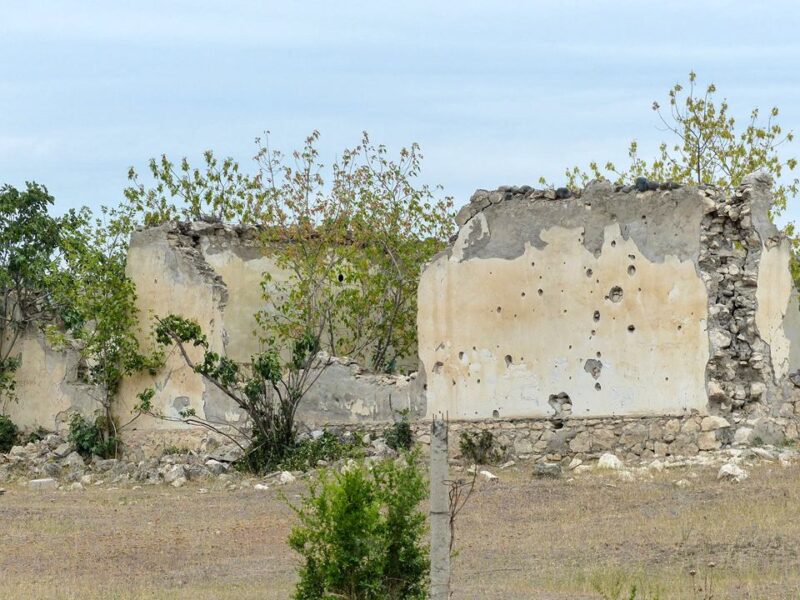
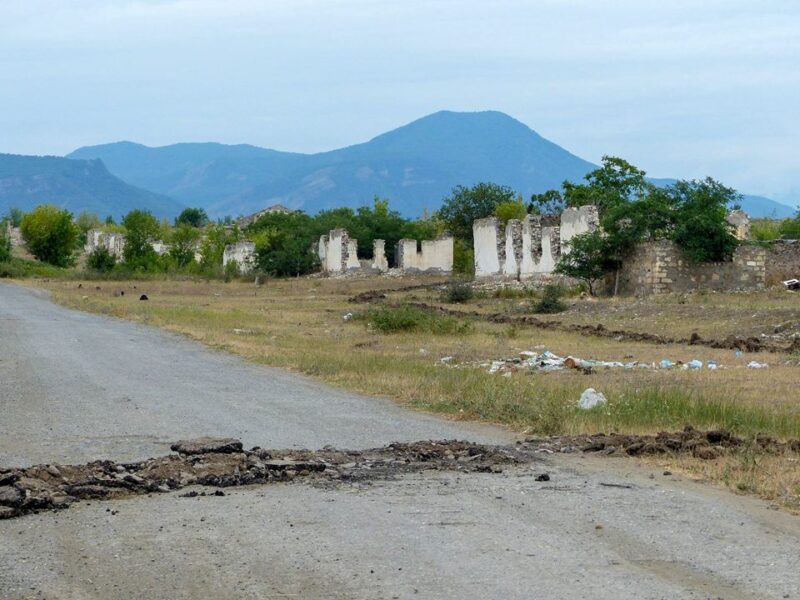
The following day revealed a much darker side of Nagorno-Karabakh. We rode towards Aghdam, a city devastated during the earlier war and largely abandoned. The landscape changed dramatically. There were destroyed villages, burnt-out vehicles, bunkers, trenches and military wreckage. Entire areas looked as if life had simply stopped. I remember the emptiness most of all. It was disturbing to see such extensive destruction in a place surrounded by beautiful mountains. We stayed on the roads, aware of the danger posed by possible landmines. At one point, we decided that what we could see from a distance was more than enough.
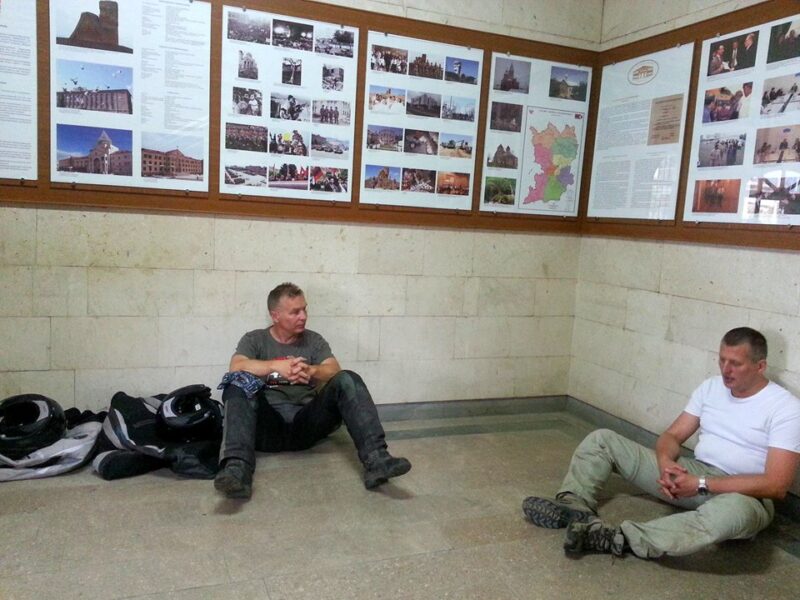
On our way back towards Stepanakert, two police officers stopped us. They wanted to know where we’d been. Apparently, we’d been riding behind the front line, in an area where tourists were not supposed to go. That was news to us. There had been no obvious signs or barriers. We’d passed soldiers who had waved at us, and naturally we’d waved back. Grzesiek explained our route and tried to convince the officers that we hadn’t intentionally entered a restricted area. The police examined our visa and then asked to see the photographs we’d taken. Some images, including photographs of military wreckage and ruins, were deleted. It was an uncomfortable reminder that this wasn’t simply another interesting motorcycle destination. The conflict was very real, even if the roads and landscapes sometimes made it easy to forget. We eventually continued without further trouble, but the experience stayed with me.
Looking back from today, this part of the journey has an entirely different meaning.
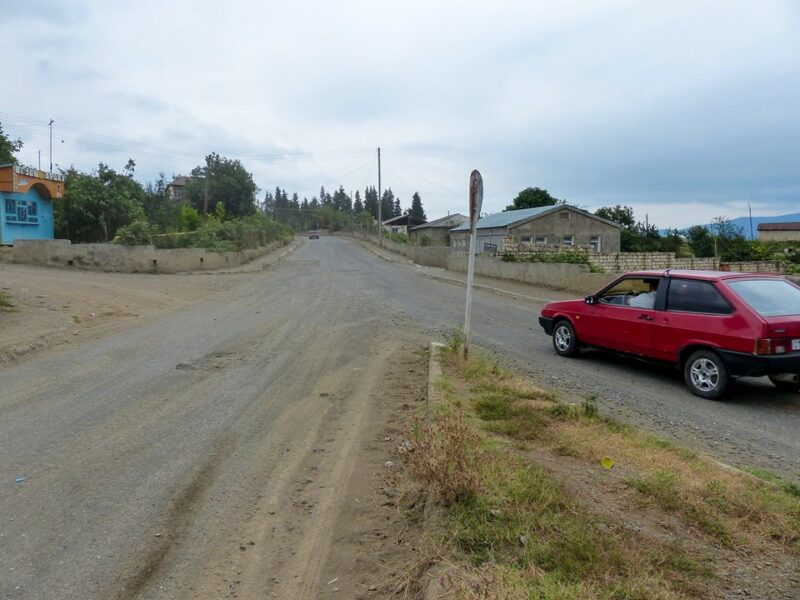
In September 2023, ten years after our visit, Azerbaijan took full control of Nagorno-Karabakh following a military offensive. More than 100,000 ethnic Armenians fled the region, and the self-declared republic ceased to function. The towns, villages and communities we encountered in 2013 are no longer part of the same reality. I still have my photographs and memories of those places: the mountain roads, Gandzasar, the children playing around our motorcycles, the strange hotel and the people we met. At the time, I simply considered Nagorno-Karabakh one of the most beautiful parts of our journey. I couldn’t have imagined how dramatically its future would change. 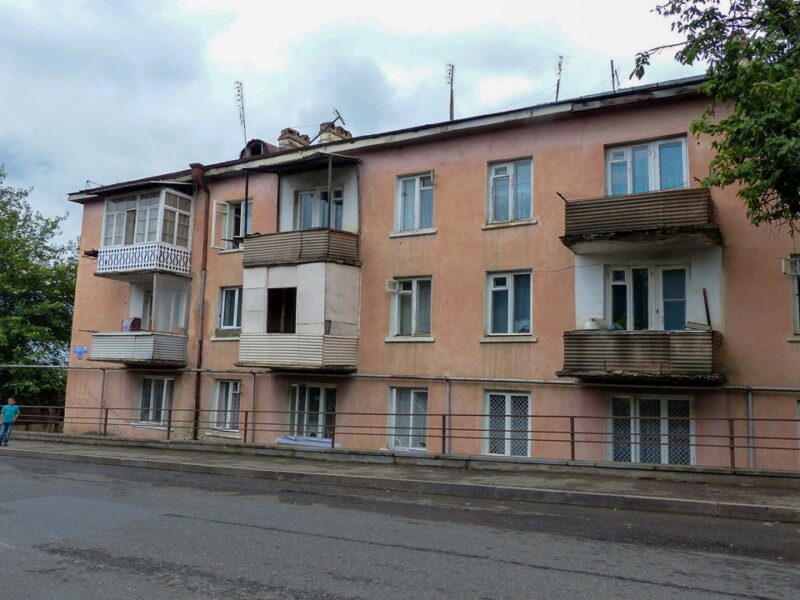
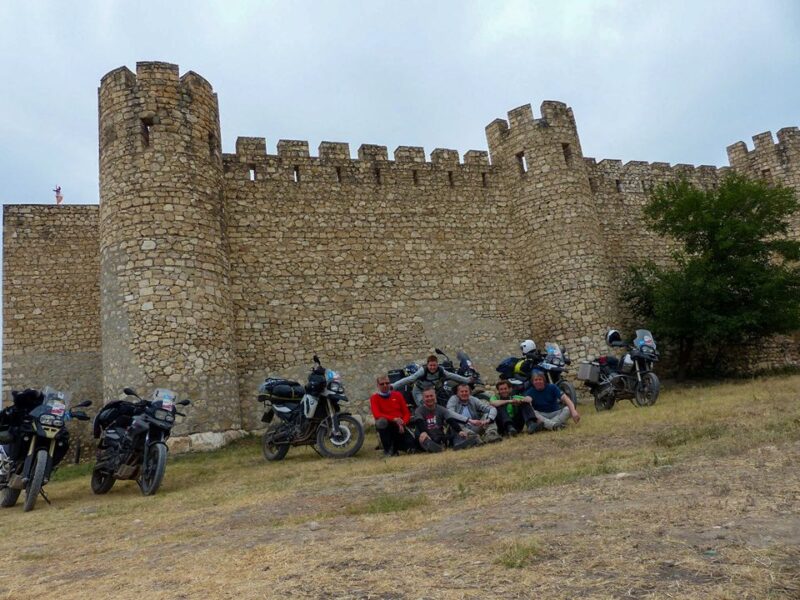
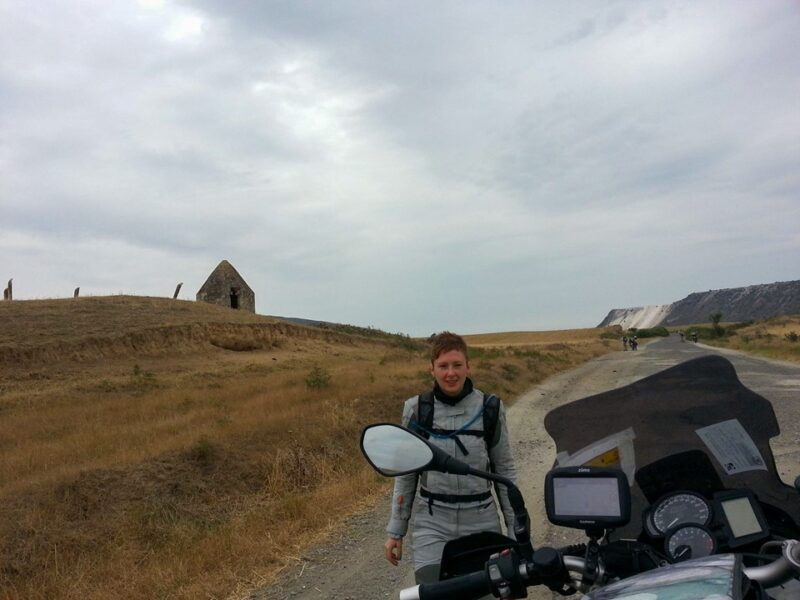
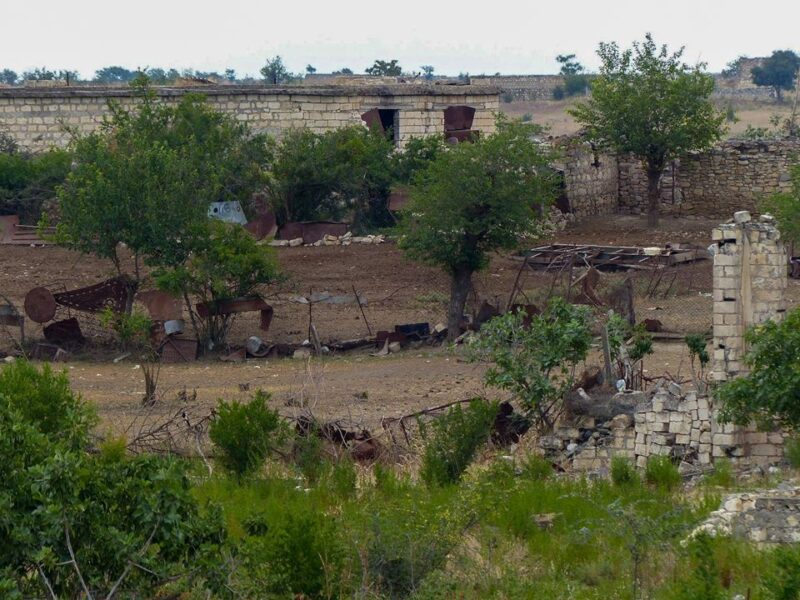
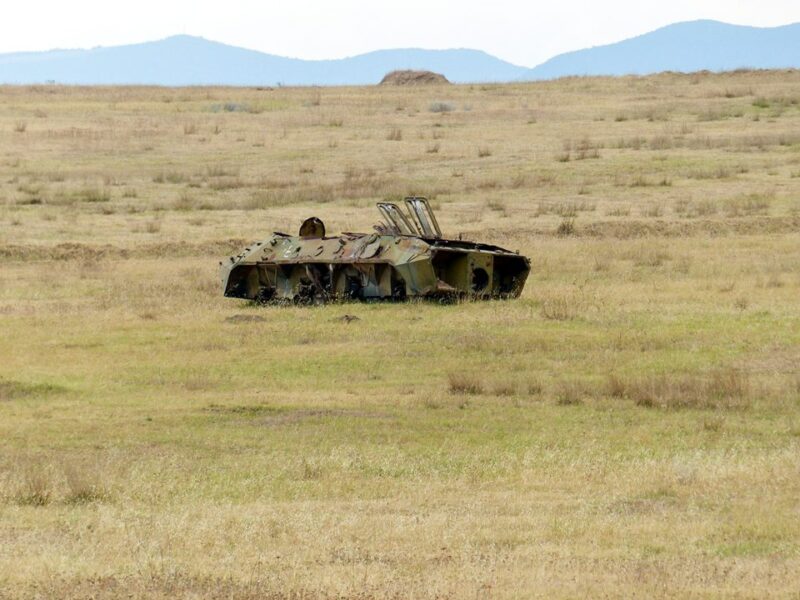
Mountains, Monasteries and Weather With a Sense of Humour
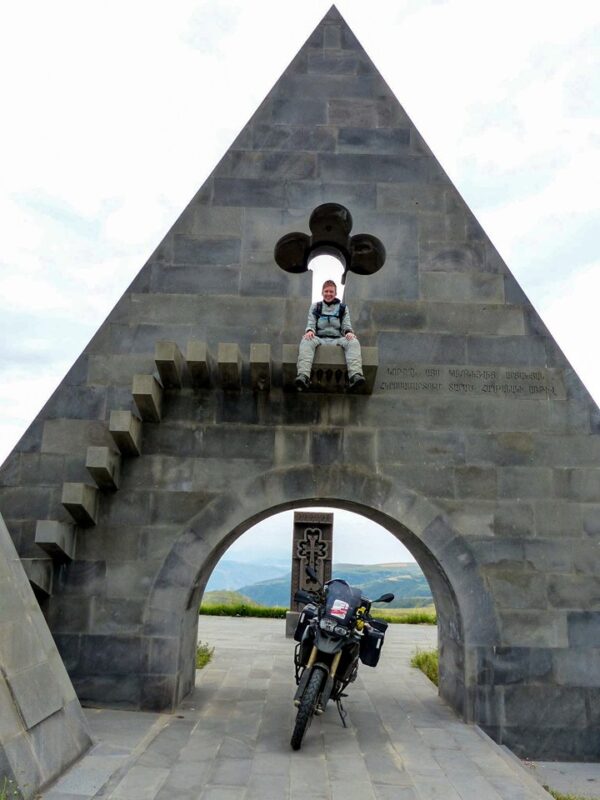
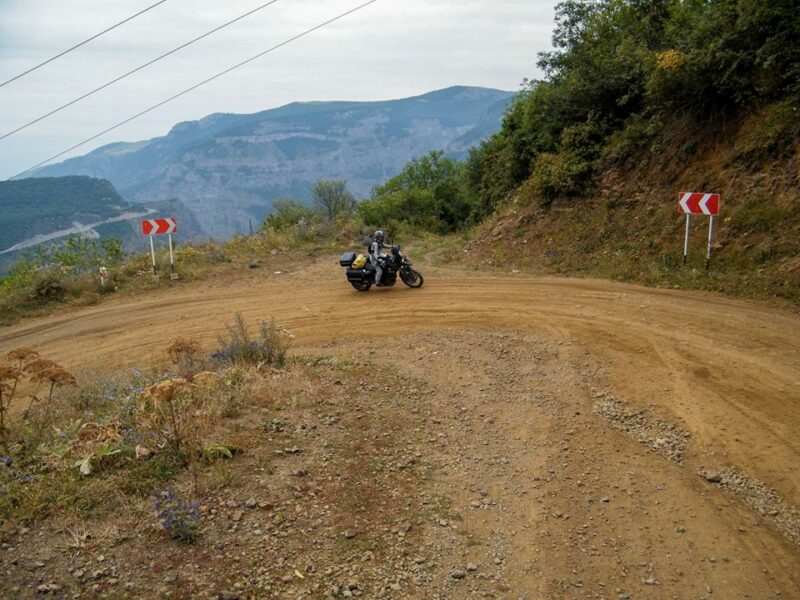
Back in Armenia, we continued exploring. The road to Tatev Monastery had been described as difficult, with gravel hairpins climbing steeply out of the valley. After hearing various warnings, we’d decided to stay overnight at the bottom and tackle the climb early the next morning.
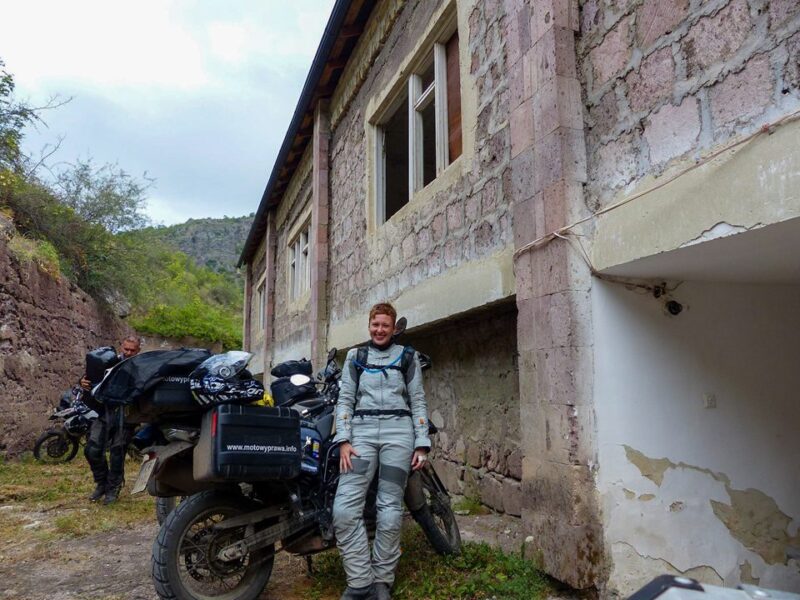
Our accommodation was memorable for all the wrong reasons. There was mould in the bathroom, parts of the building were unfinished, and the shower offered two temperature settings: freezing cold or boiling hot. Fortunately, the food was excellent. Sometimes that’s enough to save the evening.
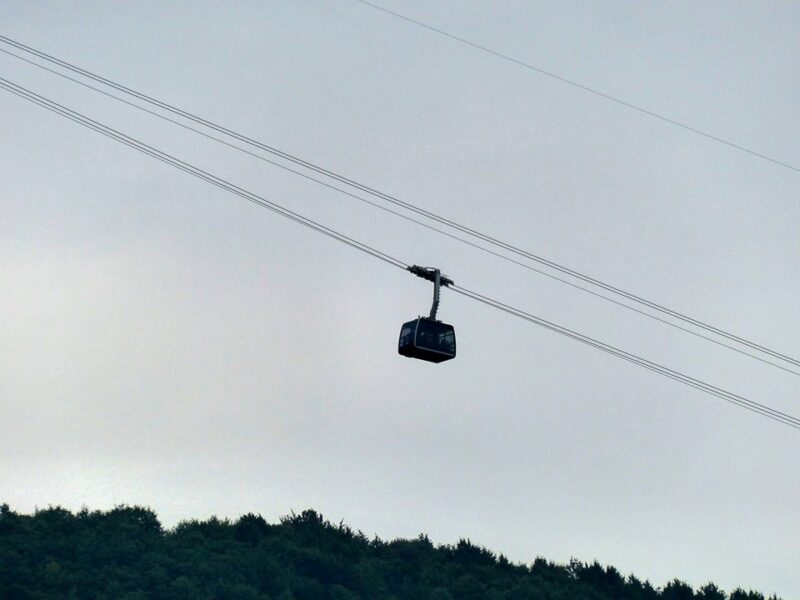
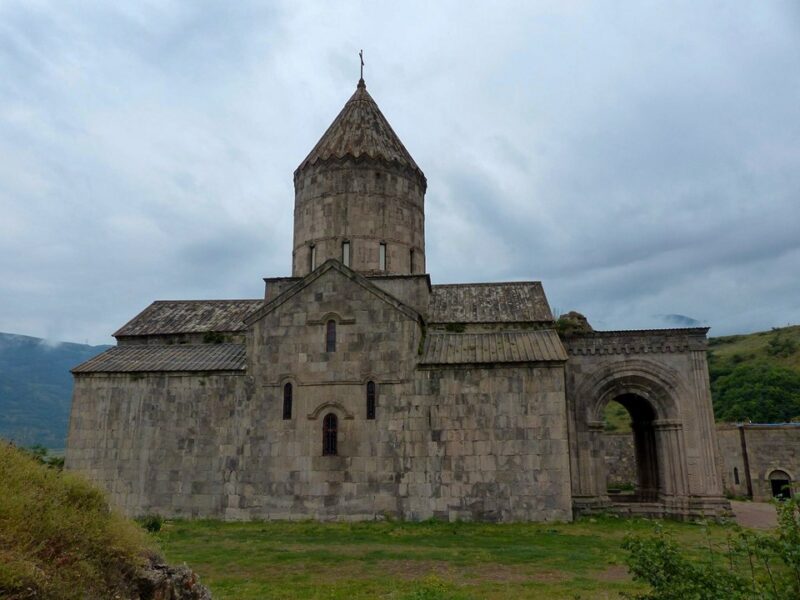
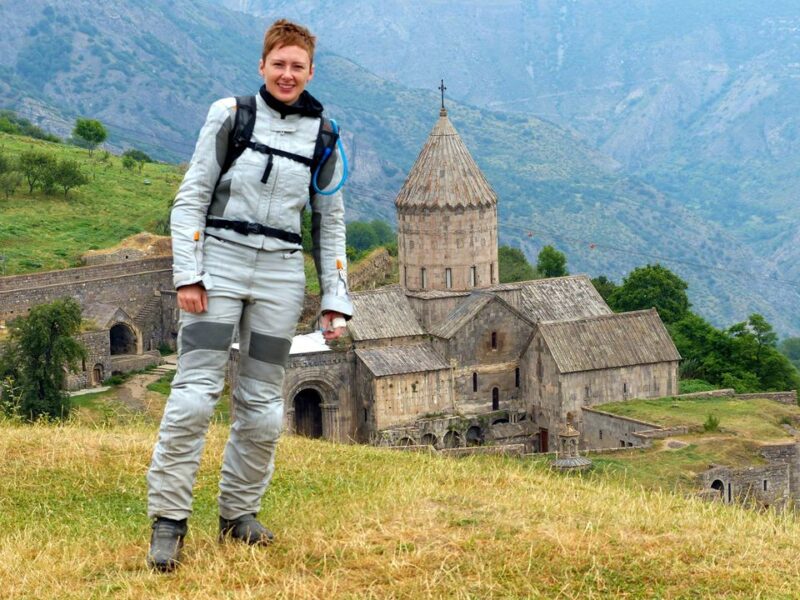
The next morning, the climb to Tatev turned out to be easier than expected. The road was wide enough, the surface manageable, and we reached the monastery without any major drama. We even had time to ride the Wings of Tatev cable car and enjoy the enormous views across the valley.
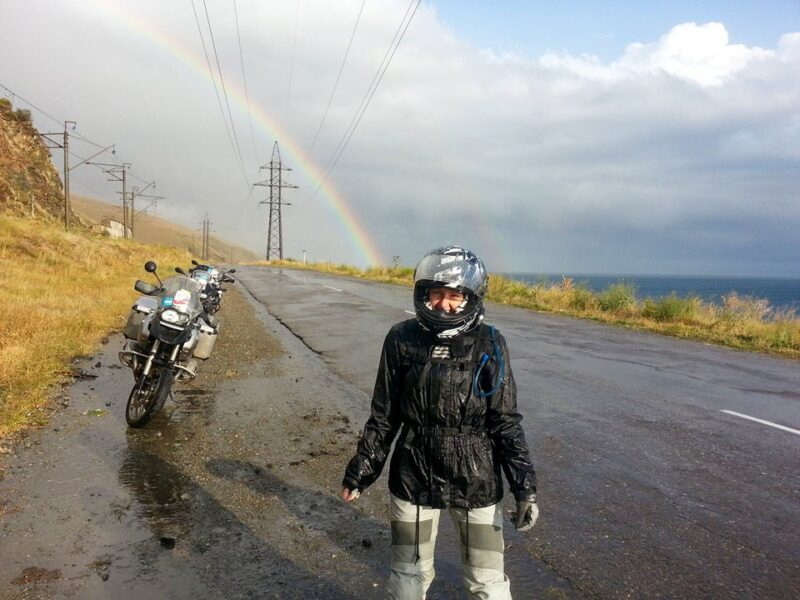
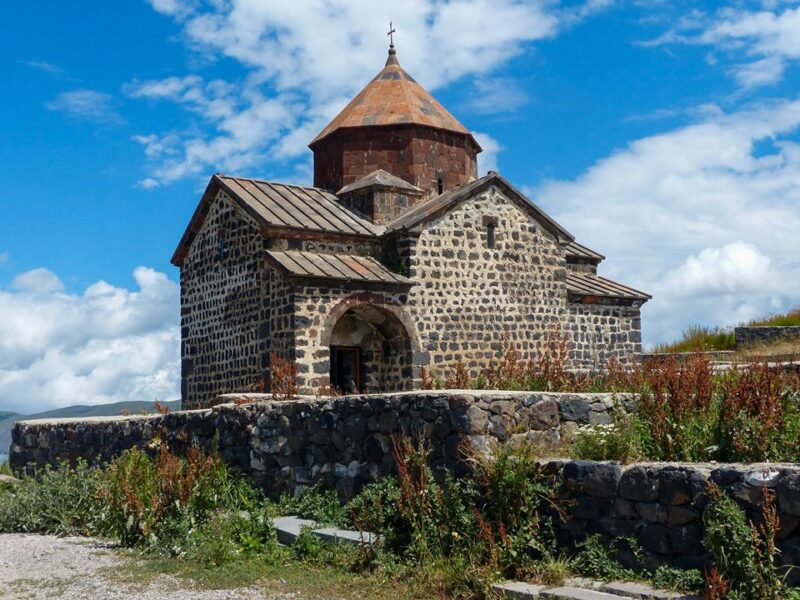
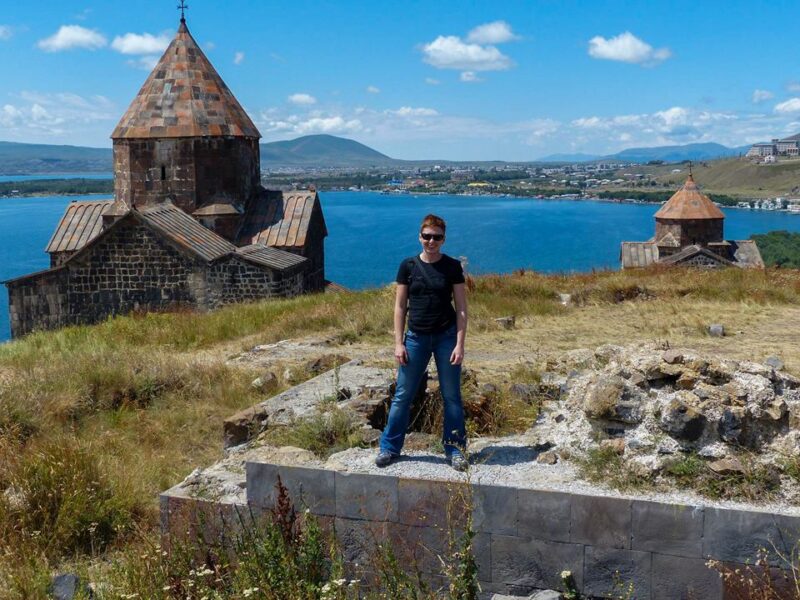
Then came Lake Sevan. Armenia had already provided us with temperatures ranging from chilly mountain mornings to exhausting heat. Around Sevan, the weather decided to demonstrate its full repertoire. We were riding along the less-developed side of the lake, looking for accommodation, when the skies suddenly opened. The temperature dropped to around ten degrees. Heavy rain turned into hail. Within moments, we were wet, freezing and desperately hoping to find somewhere warm.
Eventually, we reached a hotel on a peninsula near Sevan, where the owner, Valentina, welcomed us in a rather cheerful state that suggested she’d already been enjoying the local drinks. We weren’t particularly difficult guests to entertain at that point. A little Armenian brandy helped restore circulation, and an electric heater became the most important piece of equipment in our apartment.
The following day was dedicated to doing very little. No motorcycles. No difficult tracks. No racing to the next destination. Just a chance to rest. I didn’t realise quite how valuable that would become once we returned to Georgia.
Georgia Again: The Fun and the Frustration
Armenia had surprised me positively, but Georgia was a different story. I loved the landscapes. Some of the roads were fantastic, and the mountains were absolutely spectacular. But Georgian traffic was exhausting. The unpredictability, dangerous overtaking and complete disregard for what I considered basic road rules were getting on my nerves. The guys sometimes seemed to enjoy the freedom of driving in a place where almost anything was possible. I preferred knowing that the driver behind me wasn’t suddenly going to attempt an overtake on the inside of a corner. And that wasn’t the only thing testing my patience.
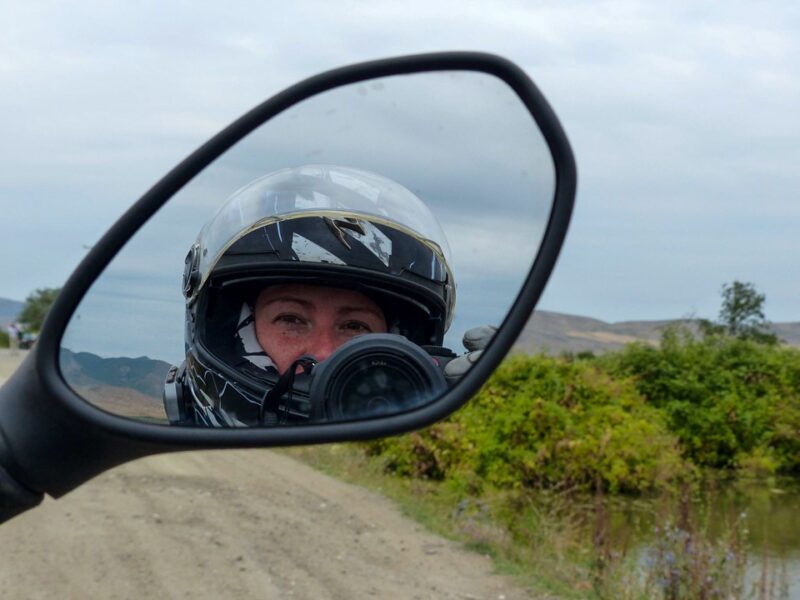
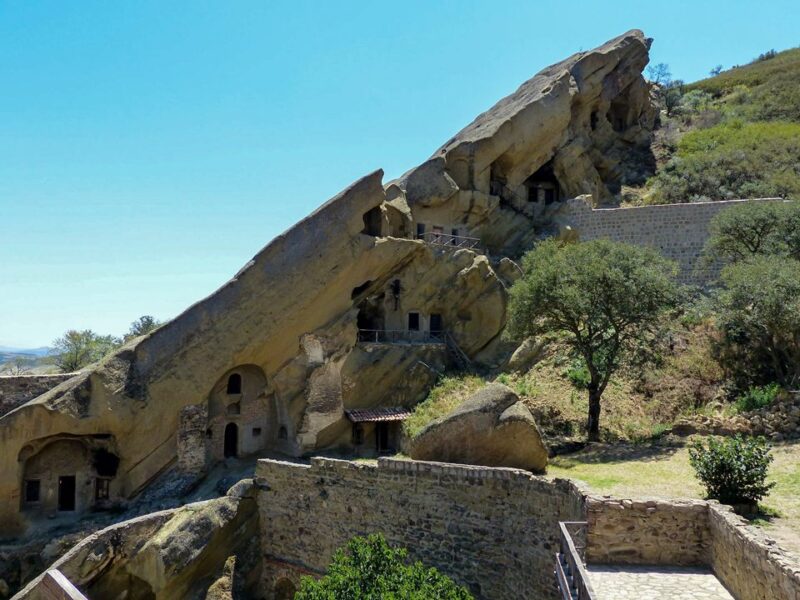
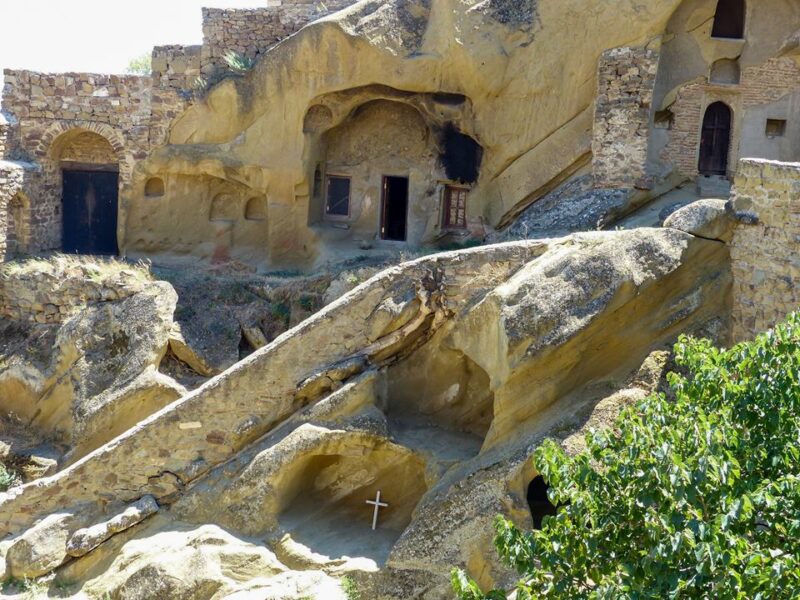
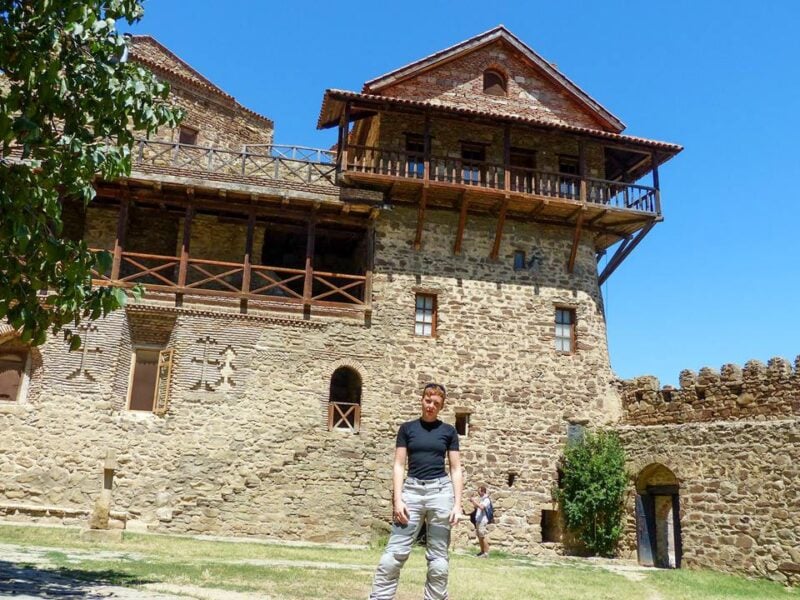
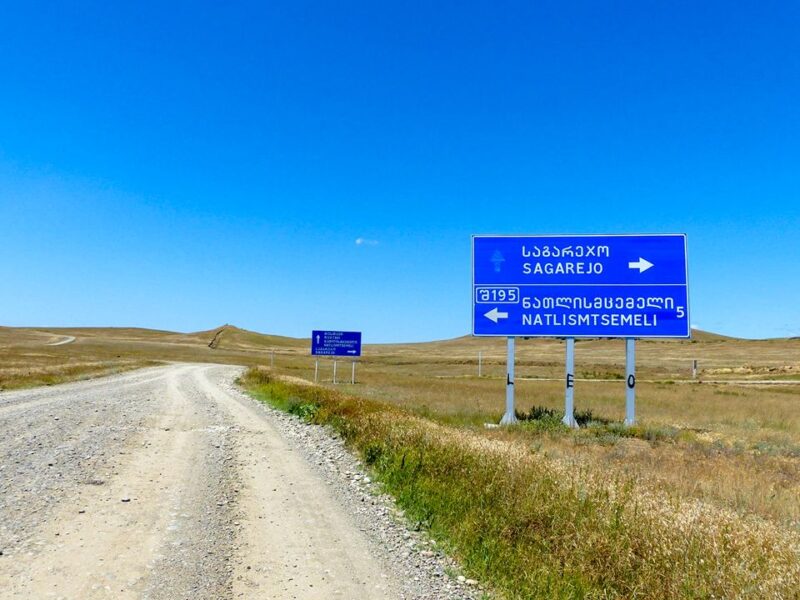
The off-road riding was becoming more challenging, and my confidence wasn’t always keeping up. One particularly difficult day took us towards the David Gareja monastery complex, near the Azerbaijani border. The landscape was extraordinary: vast, almost empty highlands with very little vegetation and views stretching far into the distance. The terrain, however, was covered with loose stones. At one point, my front wheel bounced off a rock, and I ended up in a thorny bush. Olivier was on his side. Again. I was angry with myself. Every difficult section reminded me of how much I still had to learn. I felt slow, clumsy and increasingly convinced that I was holding the others back. At one point, tears started running down my face inside the helmet. The worst part was that I couldn’t even enjoy the beautiful surroundings. I was so focused on my own mistakes that the scenery barely registered.
Later, another obstacle pushed me over the edge. A muddy puddle. Nothing particularly extraordinary, at least not compared with what we’d already ridden through. But I simply couldn’t convince myself to cross it. Przemek stayed with me, patiently trying to persuade me that I could do it. I refused. Eventually, he rode my motorcycle through for me. In a fit of frustration, I stepped into the puddle and managed to splash muddy water all over myself, including my face and the inside of my helmet. Excellent work.
Later, after another fall, I became so furious that I kicked Olivier. Not my proudest moment. The others were patient and helpful, but I was struggling with the fact that I needed help at all. I wanted to be capable, independent and confident. Instead, I was having one of those days when everything seemed to go wrong.
Fortunately, travelling has a way of balancing these moments. An excellent meal, some Georgian wine, a good laugh or simply a comfortable bed could make life seem much better again. And the next morning, there was always another road.
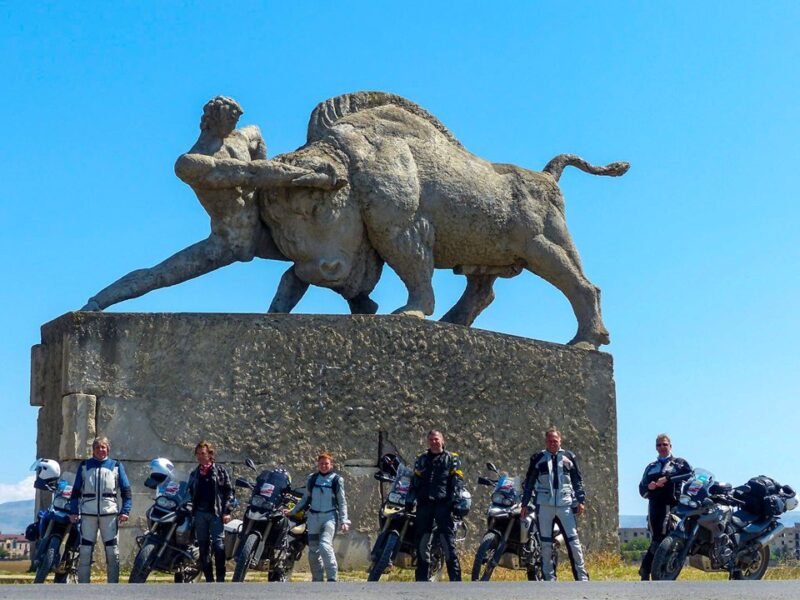
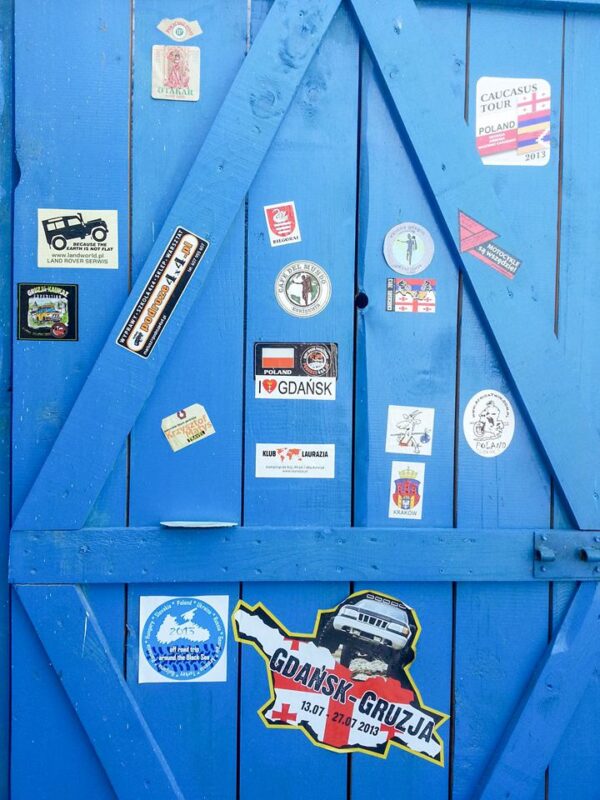
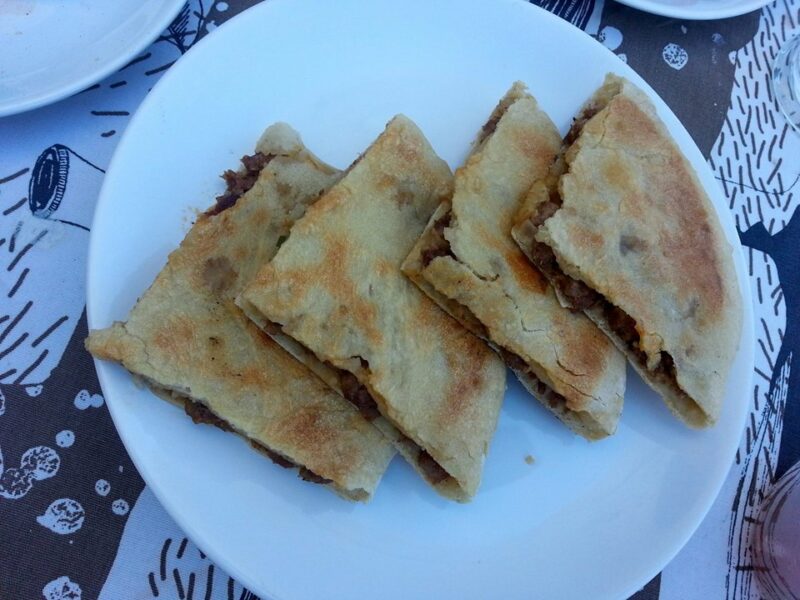
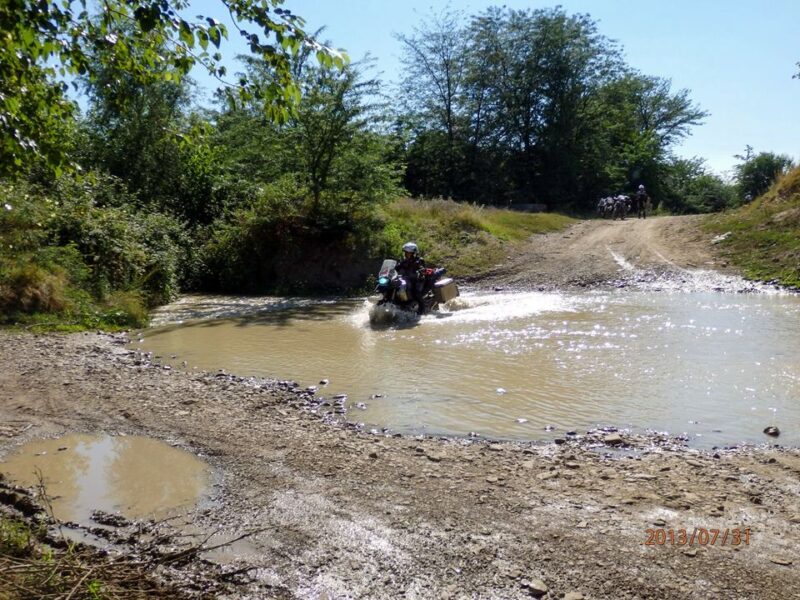
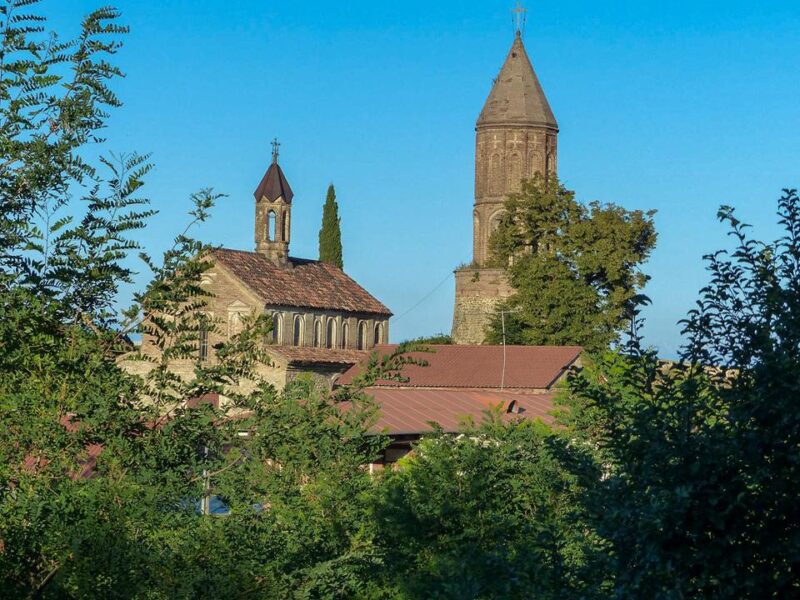
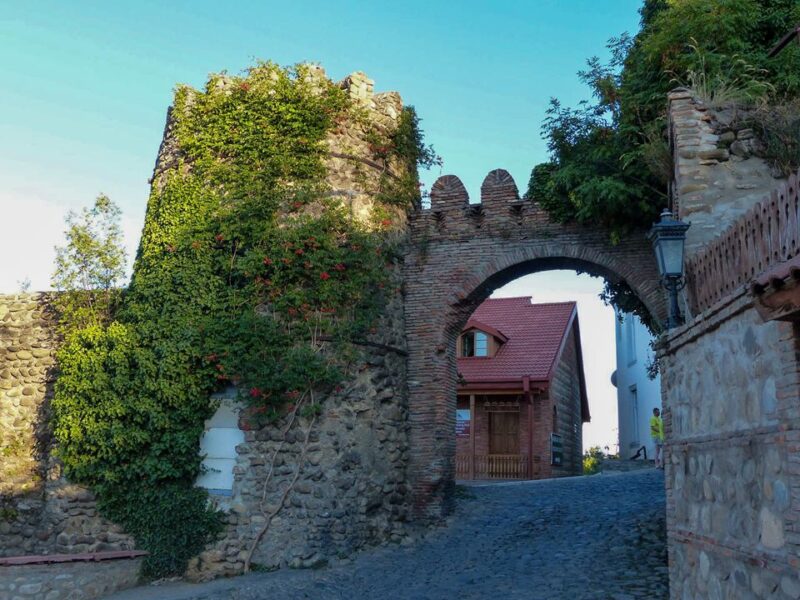
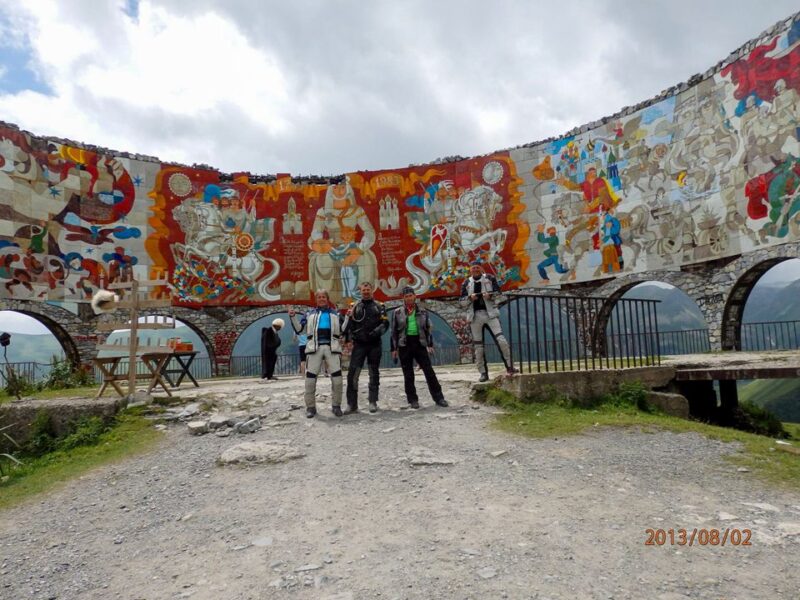
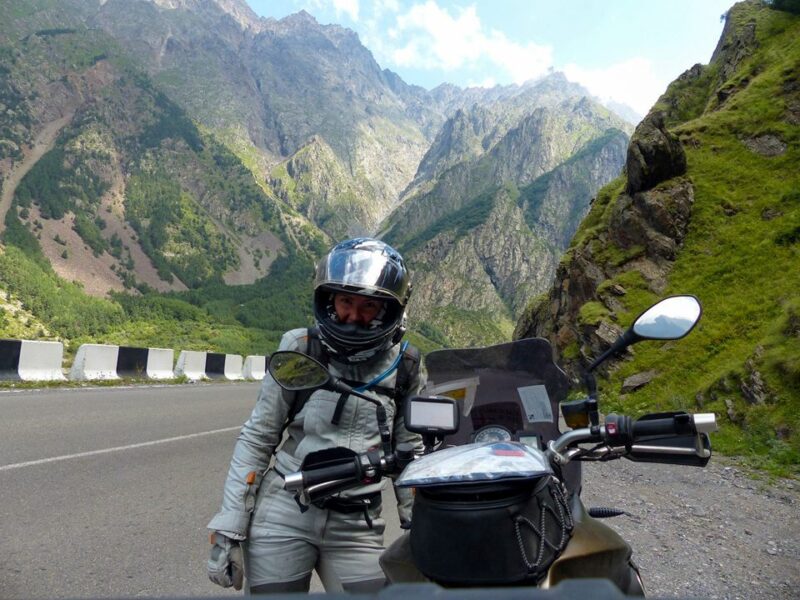
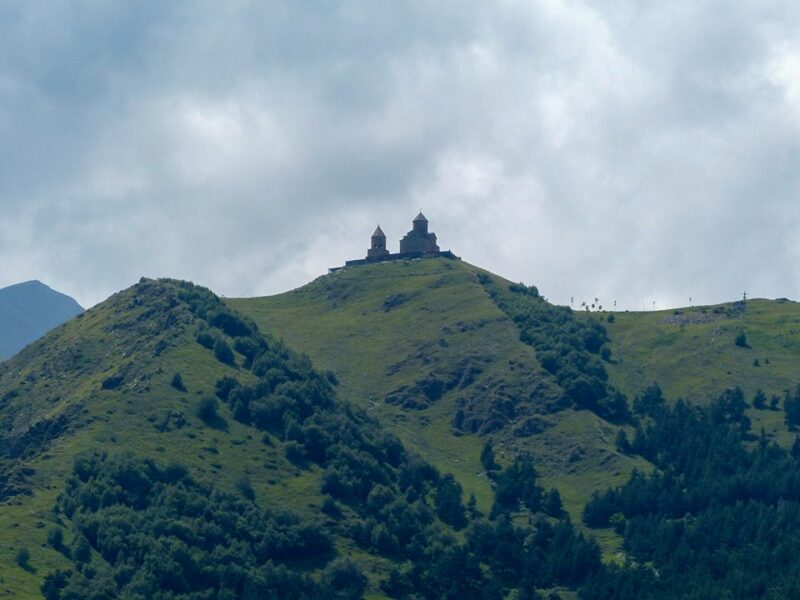
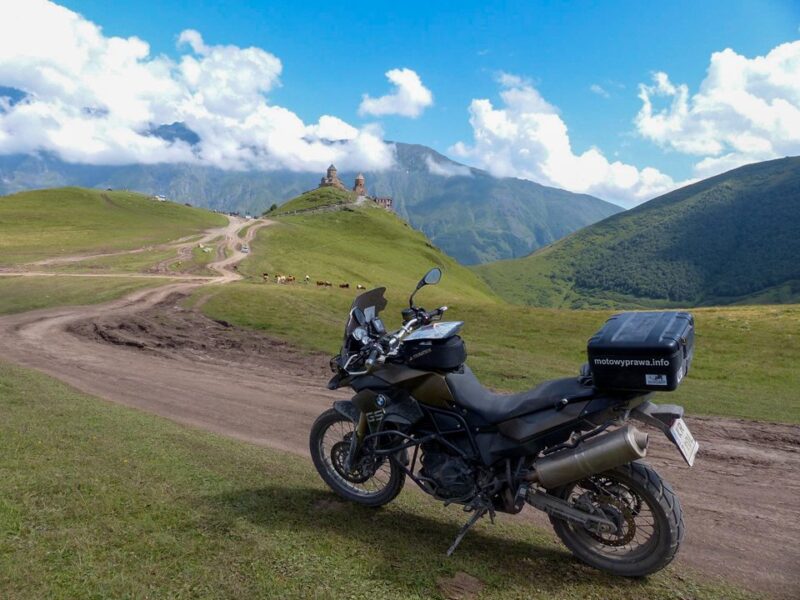
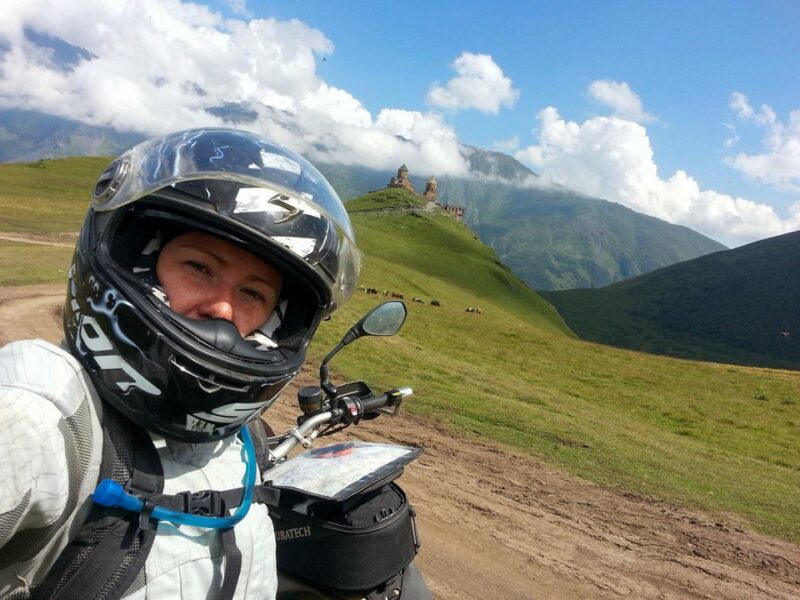
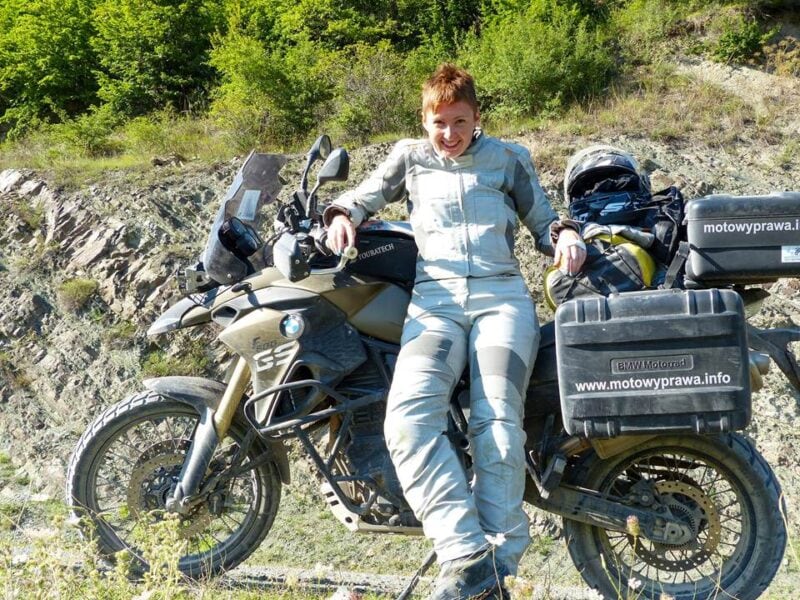 Some days were much more enjoyable. The ride along the Georgian Military Highway towards Kazbegi was particularly memorable. Despite roadworks, chaotic traffic, muddy tunnels and a few unpleasant surprises, the mountain scenery was magnificent. We rode towards the Russian border, then explored the area around Gergeti Trinity Church, perched high above the valley. The climb wasn’t easy, especially with a fully loaded bike, but I managed it. The descent included another fall, of course. Apparently, I wasn’t quite finished collecting those.
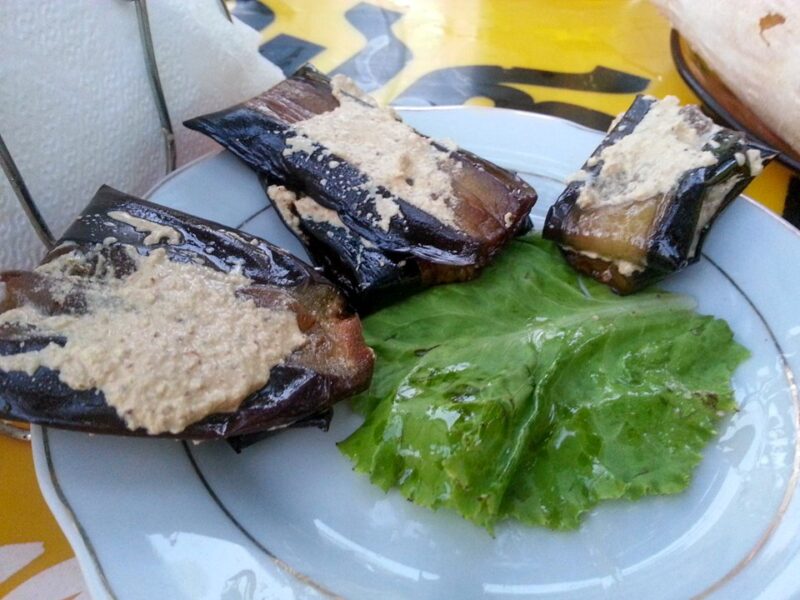
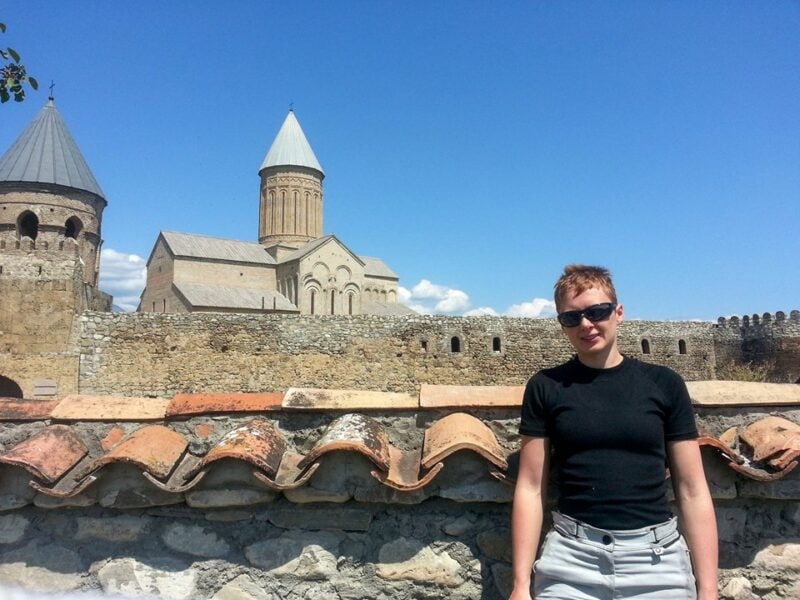
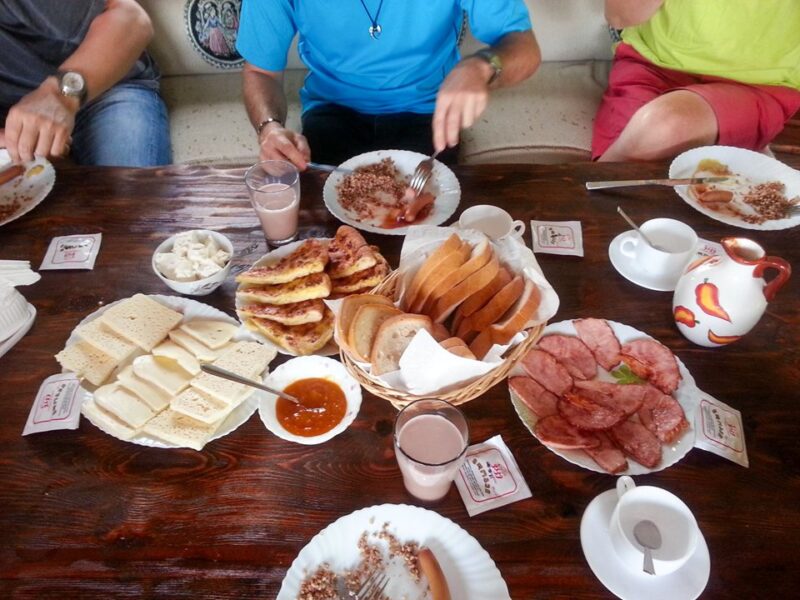
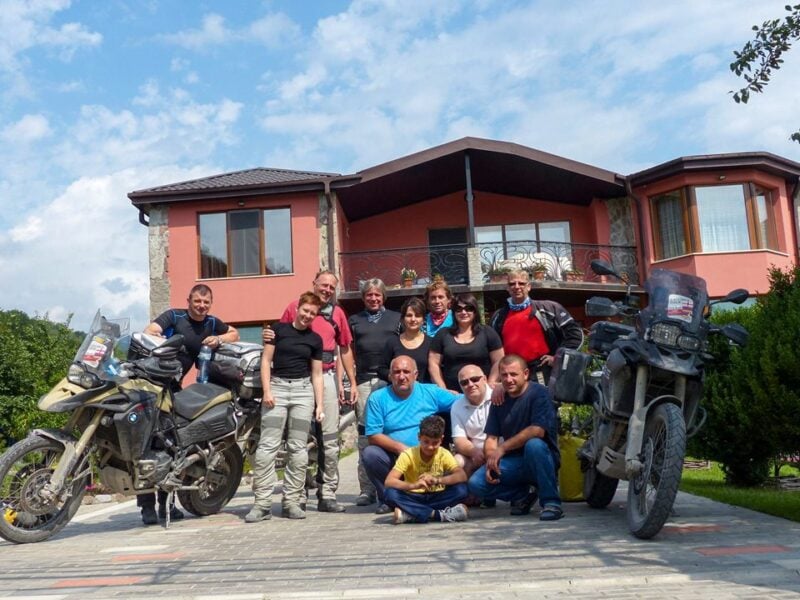
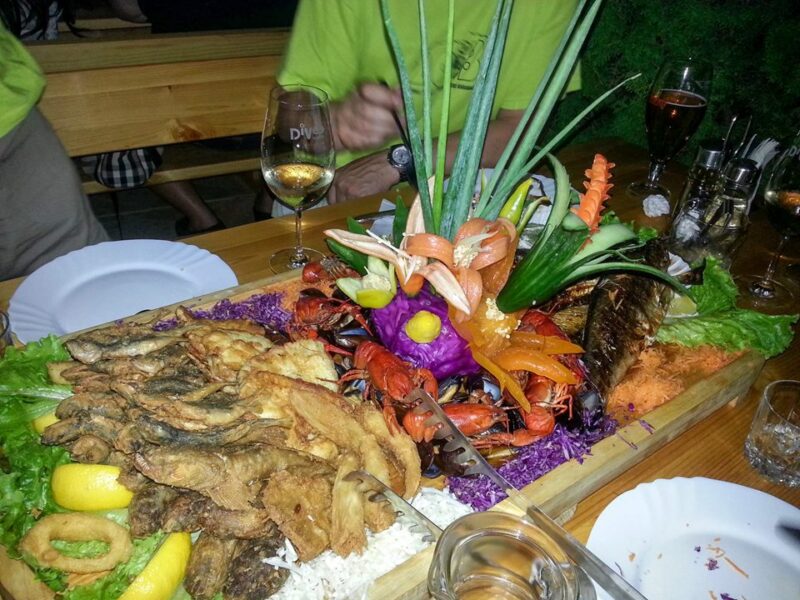
We also enjoyed wonderful Georgian hospitality, especially around Ananuri, where huge meals, local wine, chacha and elaborate toasts became an important part of the experience. The evenings were usually filled with jokes, conversations and attempts to plan the following day’s route. Somewhere along the way, our group had become quite comfortable together. We’d started the trip as near-strangers. By then, we’d shared enough adventures, mistakes and ridiculous situations to have plenty to laugh about. Not that everything was always perfect. Travelling in a group is an interesting exercise in patience and compromise, especially when riding abilities, personalities and expectations differ. And with the most difficult part of the journey still ahead, we would need a little more patience.
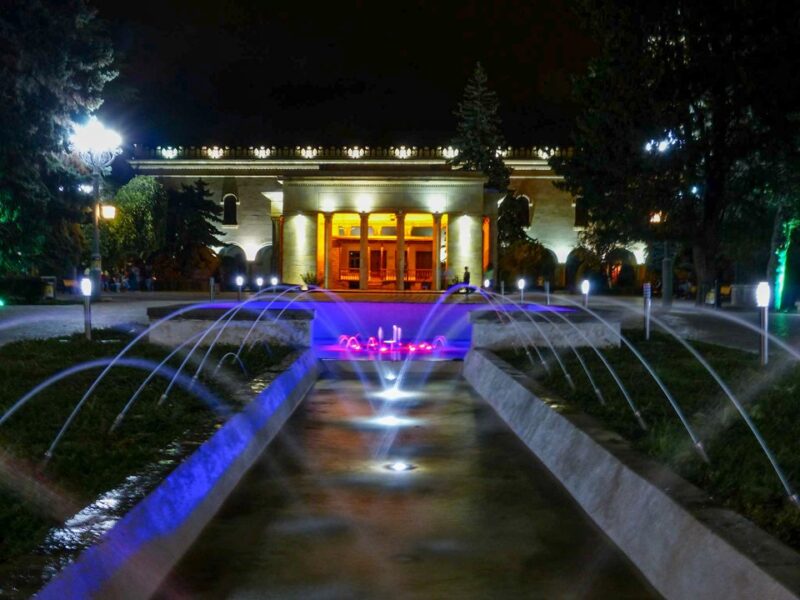
The Road to Ushguli: A Proper Test
Our route through the mountains from Lentekhi towards Ushguli and Mestia had been one of the major challenges planned for the trip. We’d read that the crossing could take ten or twelve hours. We were riding heavy adventure motorcycles, mostly on road-oriented tyres, and it had been raining in the mountains. Not exactly ideal conditions.
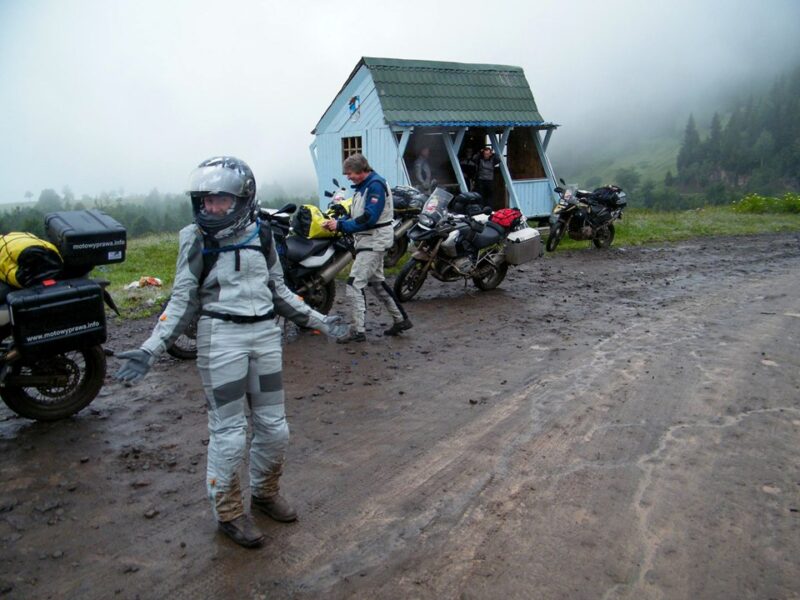
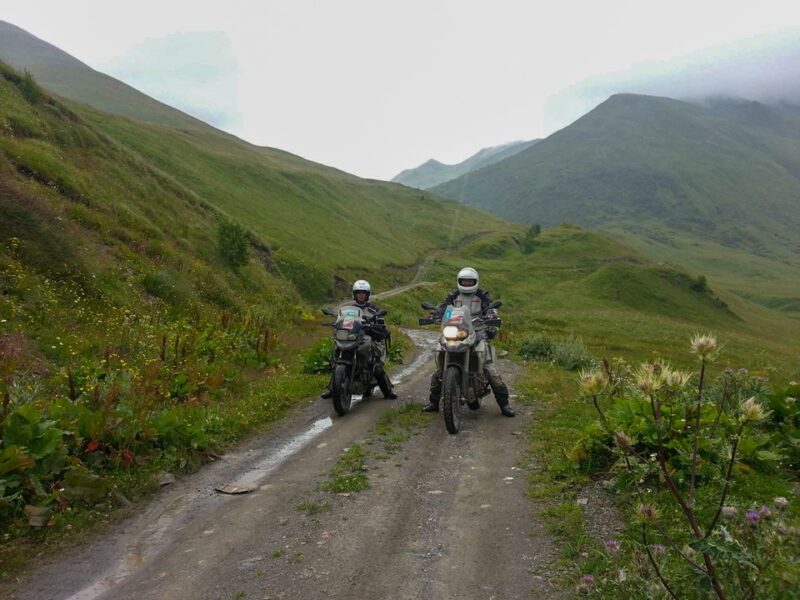
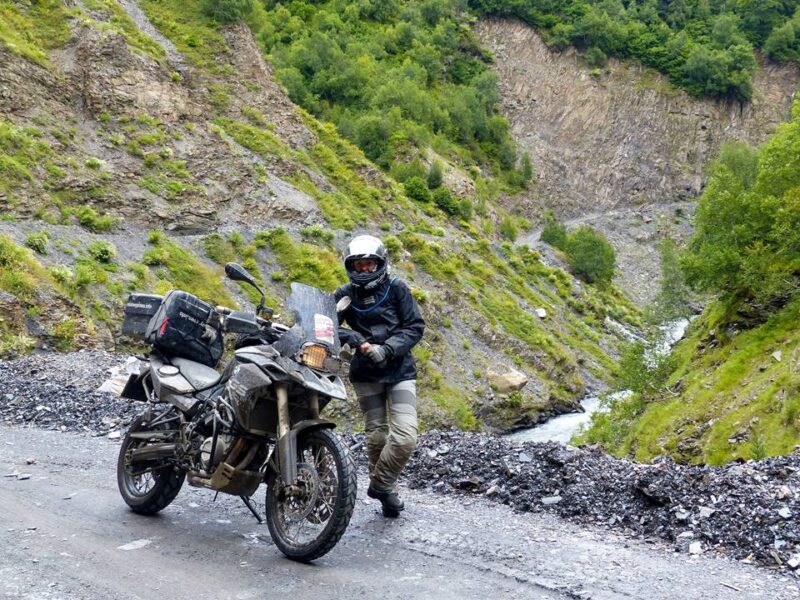
The road began innocently enough, with gravel running alongside a fast-flowing river. Then came mud. More mud. Ruts, stones, streams, water crossings and puddles of uncertain depth. At one particularly intimidating puddle, I stopped. I couldn’t do it. Witek rode Olivier through for me. I was grateful, but disappointed in myself.
The road continued climbing, and conditions became increasingly difficult. At one point, a Polish driver coming the other way told us that the route ahead would be even worse. Exactly the encouragement I needed. Not long afterwards, I hit a rocky rut that threw my motorcycle sideways. I landed hard. When I finally worked out which way was up, I realised that Olivier was still more or less intact, and so was I. My right pannier, however, was lying several metres away, badly damaged. That was going to complicate things. We managed to arrange for my luggage to be transported ahead to Ushguli, and continued the ride.
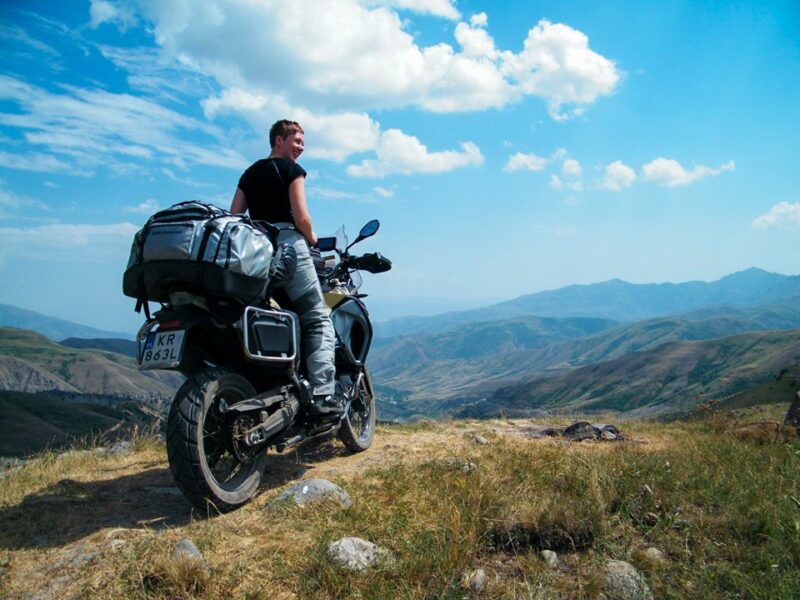
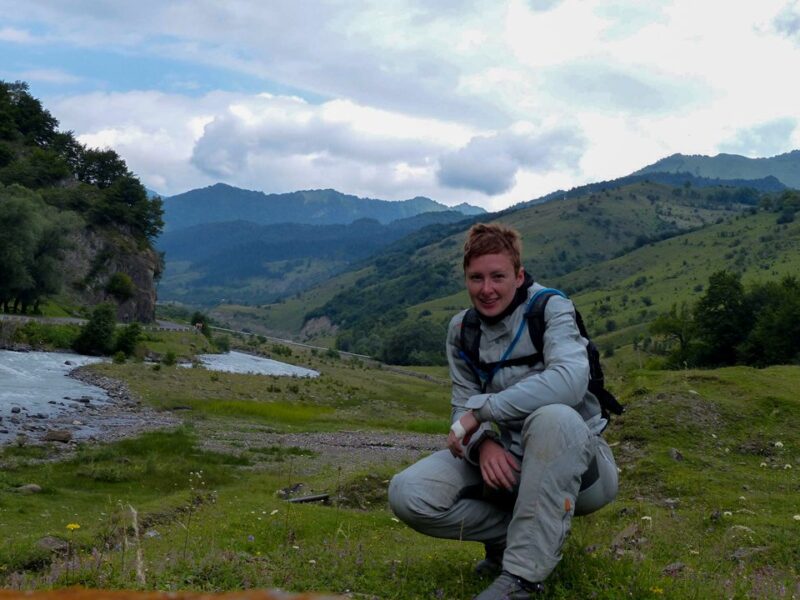
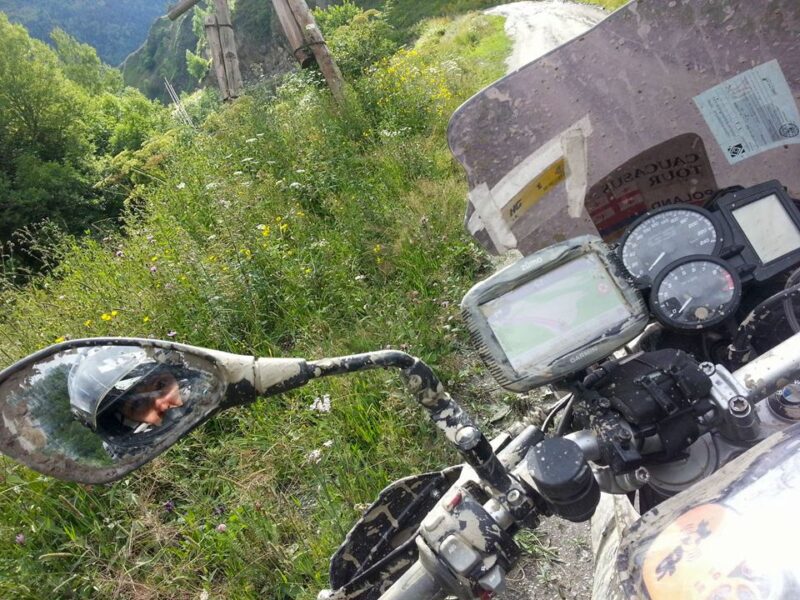
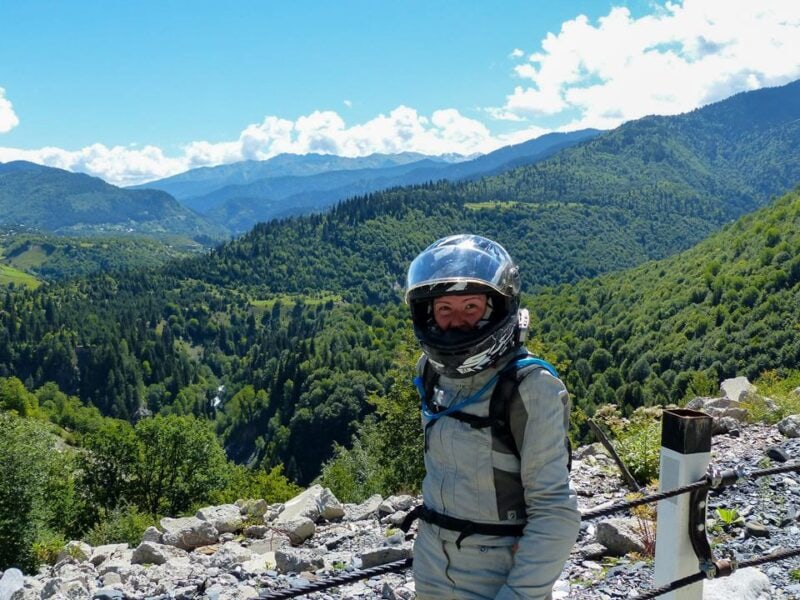
The route climbed above 2,600 metres, where the temperature dropped to around six degrees. The views were extraordinary. There were mountains, dramatic valleys and narrow tracks running through landscapes that seemed almost untouched. But enjoying them wasn’t always easy. When you’re concentrating on the next stone, the next rut or the next place where your motorcycle might fall over, you don’t have much attention left for admiring the scenery.
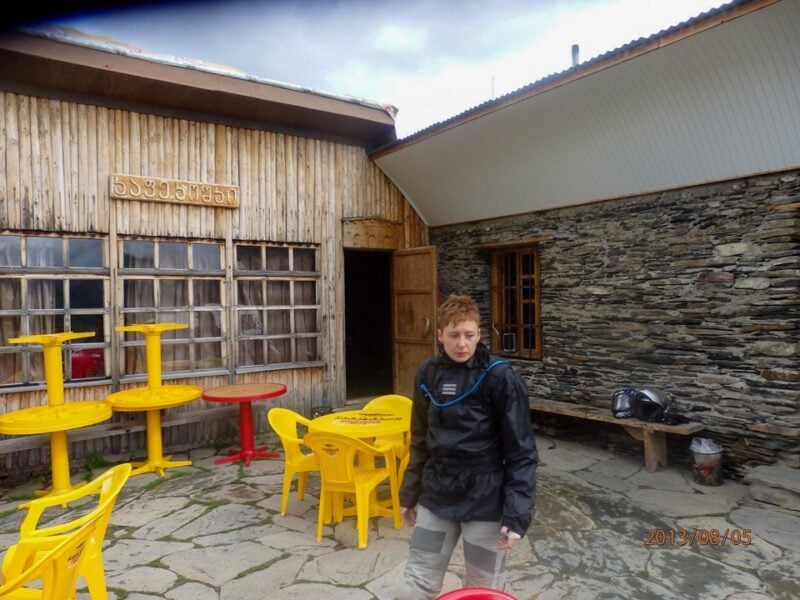
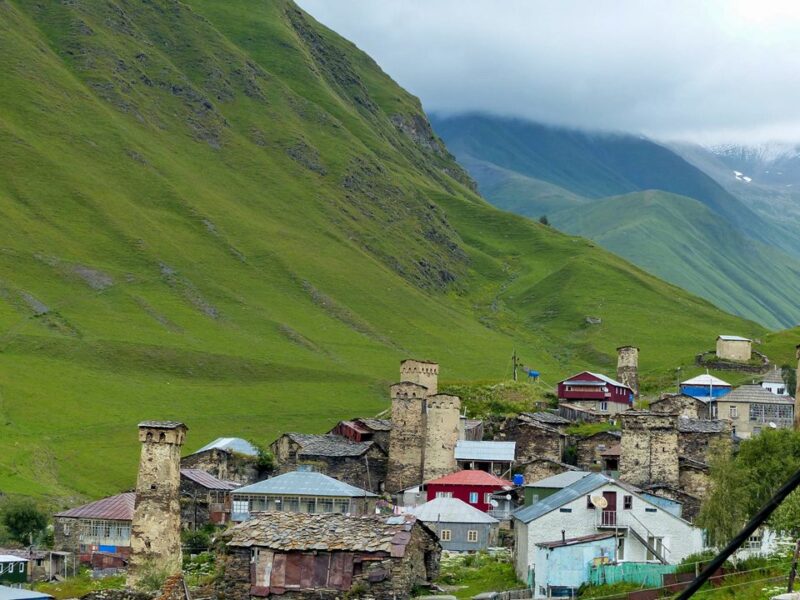
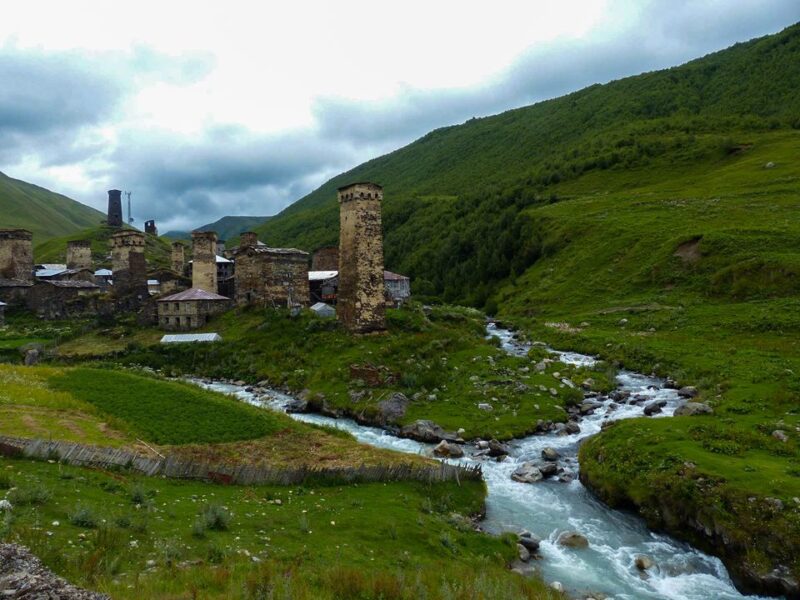
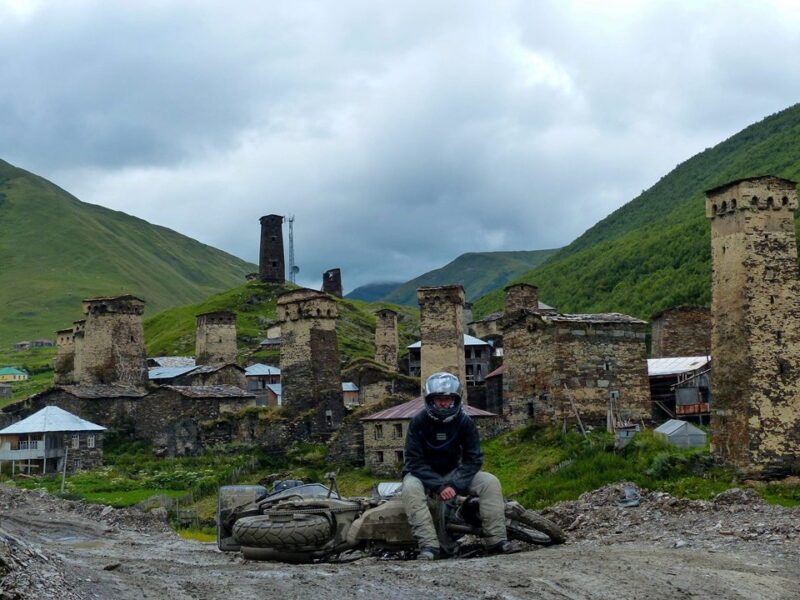
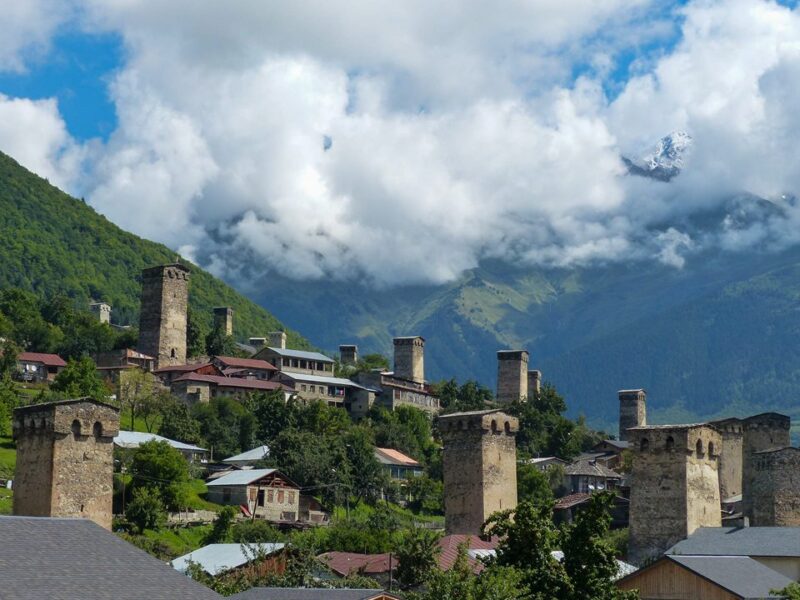
Eventually, we reached Ushguli, with its remarkable medieval defensive towers rising above the village. It was one of those places that looked almost unreal. For a moment, everything seemed worth the effort. But the ride wasn’t finished. The track towards Mestia still had plenty of mud, and I was struggling again.
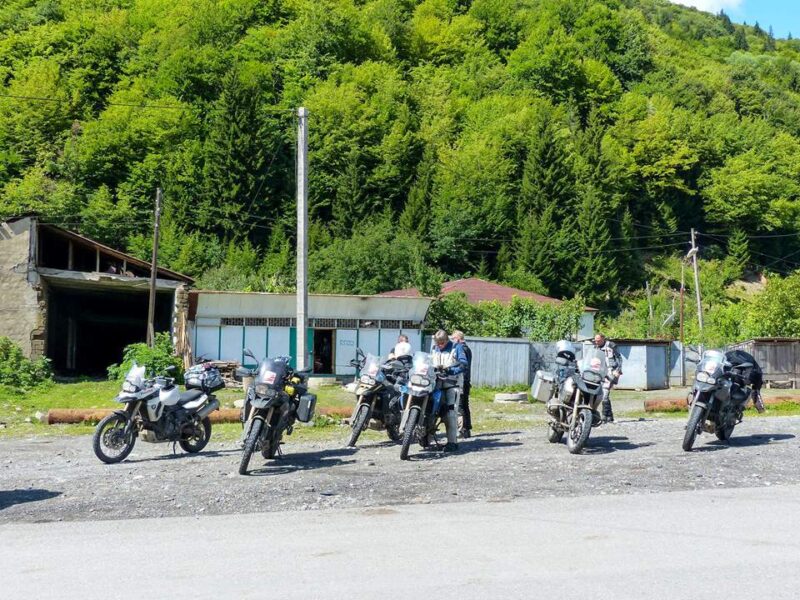
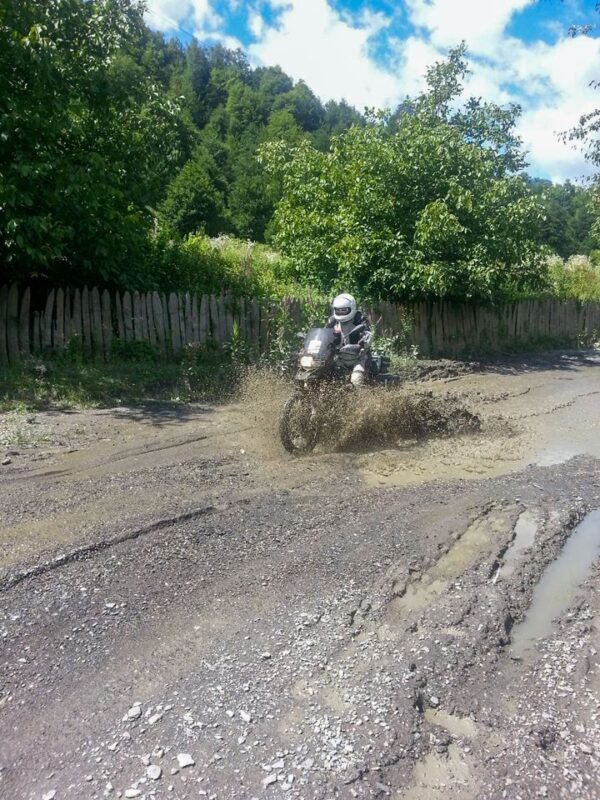
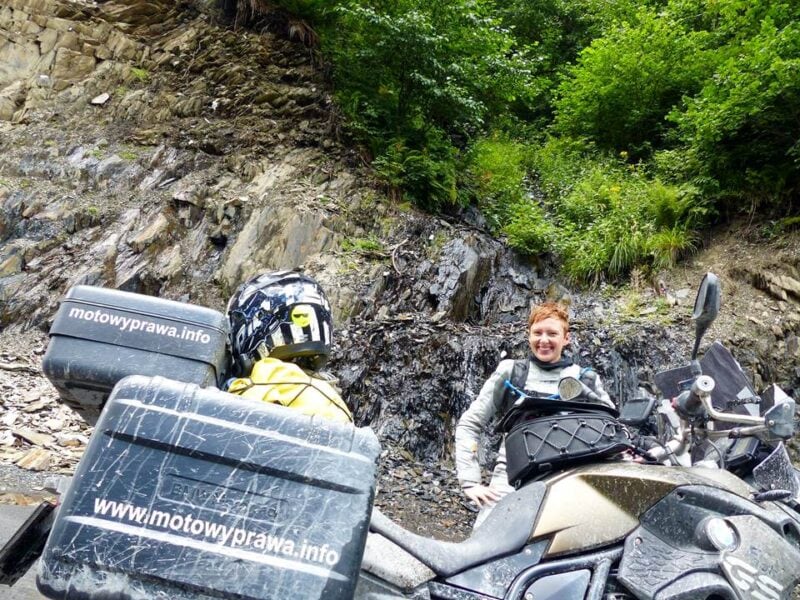
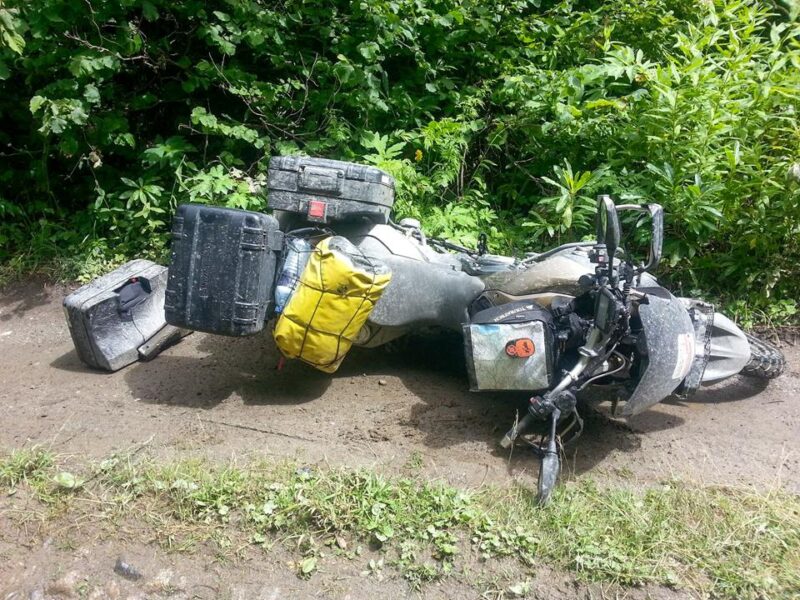
At another enormous muddy puddle, Witek offered to ride my bike through. This time, he fell straight into the brown mess. The motorcycle was lying awkwardly, and the mud was so slippery that we couldn’t get enough grip to lift it. Witek went to look for help, leaving me with Olivier. After a while, two minibuses arrived from the opposite direction. Tourists got out, dressed in spotless white trainers, and began taking photographs. Including photographs of me. Very helpful. Eventually, Witek returned, completely covered in mud. He’d fallen himself a little further along the track. The second attempt to lift my motorcycle was more successful, and we finally got moving again.
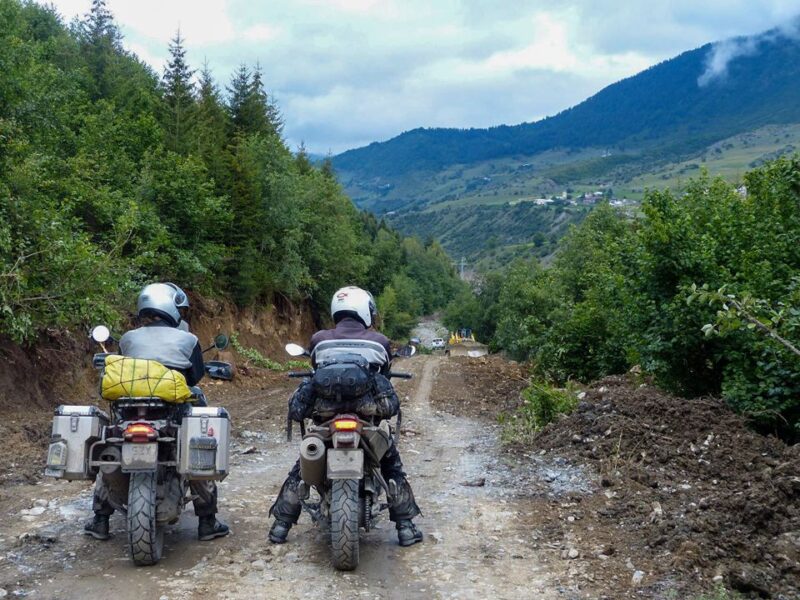
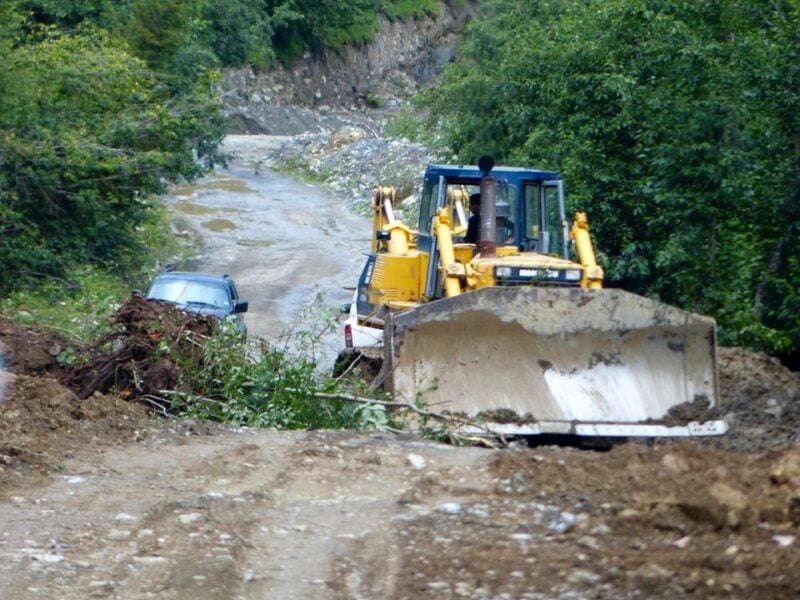
The next kilometres were hardly easier. There were more puddles, slippery tracks, construction machinery and muddy sections where even keeping the bike moving was a challenge. By the time we finally reached Mestia, I was exhausted. Not so much physically — I was reasonably fit and had prepared well for the journey — but mentally. I’d spent hours concentrating, worrying, getting frustrated and trying to keep going. I was angry with myself for the mistakes, for the times I needed help and for not being able to enjoy every moment of such an incredible route. At the same time, I was enormously relieved and happy. I’d made it. Maybe not elegantly, and certainly not without assistance, but I’d reached Mestia with the others. We’d crossed the mountains in conditions that were far from ideal for our motorcycles. And despite everything, I was proud.
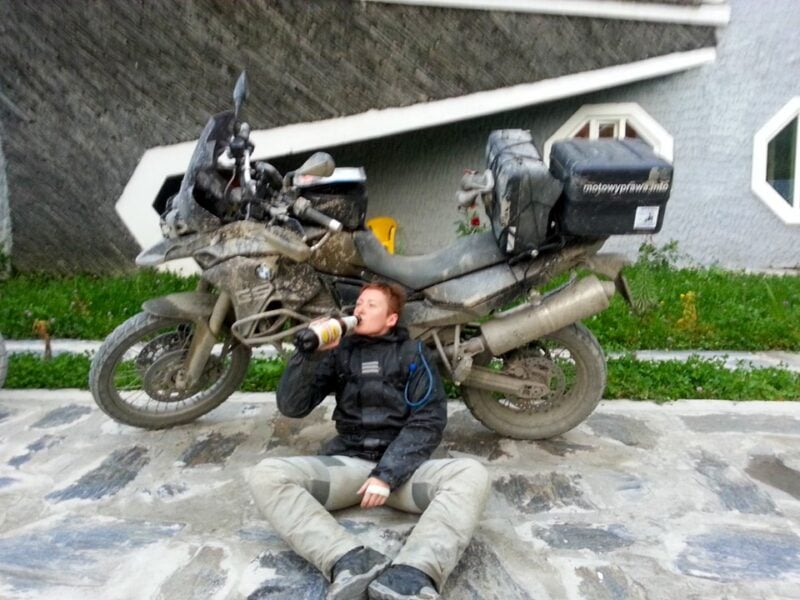
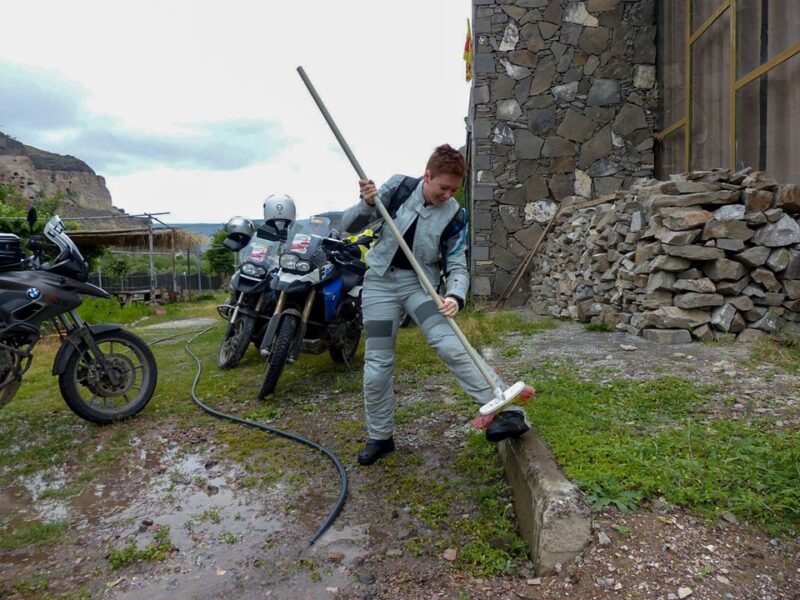
That evening, after washing some of the mud off ourselves and the bikes, I could finally relax. I knew that the hardest part of the journey was behind us. I also knew that this was probably the experience I’d remember most.
The Long Road Home
After Mestia, the ride back towards the Black Sea felt almost ridiculously easy. The roads were mostly paved, and even the rougher sections seemed harmless compared with what we’d experienced the previous day. Georgia, however, still had one more surprise for us. At one point, a police car stopped beside our group. The officers wanted to know where we were going. When we told them, they simply said, “Follow me!” And off we went. What followed was an extraordinary ride behind a Georgian police escort that seemed determined to break every traffic rule in the country. Overtaking in questionable places, crossing solid lines, speeding through villages — it was difficult enough to keep our group together. After several dozen kilometres, the police finally waved goodbye and continued on their way. We stopped to recover.
Turkey felt almost peaceful by comparison. We rode west along the Black Sea coast, covering long distances as we headed back towards Bulgaria. After the mountain adventures, endless stretches of asphalt were becoming rather boring.
I also noticed that I was getting tired of some aspects of group travel. We’d spent nearly three weeks together. Everyone had their own habits, expectations and ways of doing things. Occasional irritation was inevitable. I was no exception.
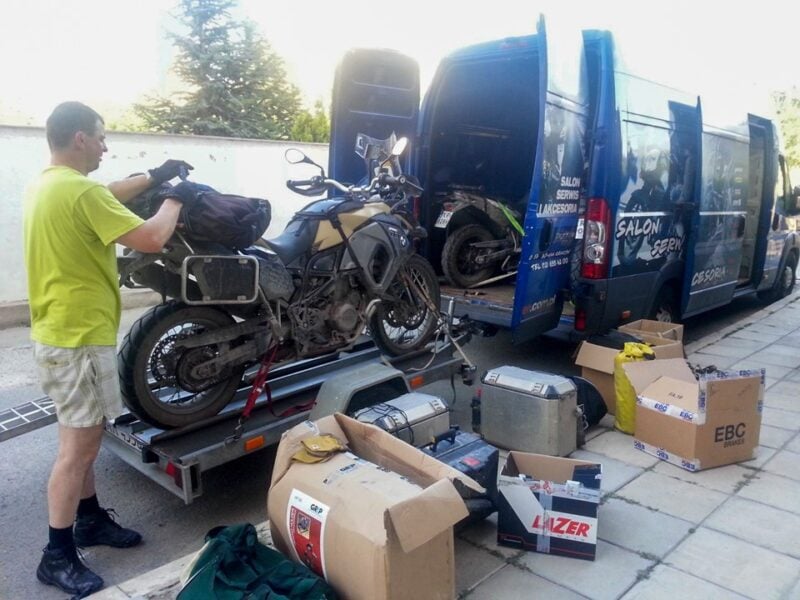
By the time we reached Bulgaria, I was ready for a little space, a comfortable bed and perhaps a day without wearing motorcycle boots. We eventually returned to Nessebar, where the bikes were loaded into the van for their journey back to Poland.
The last day was spent relaxing by the Black Sea. Then came the flight home. Three weeks after leaving Poland, the adventure was over.
More Than Just a Motorcycle Trip
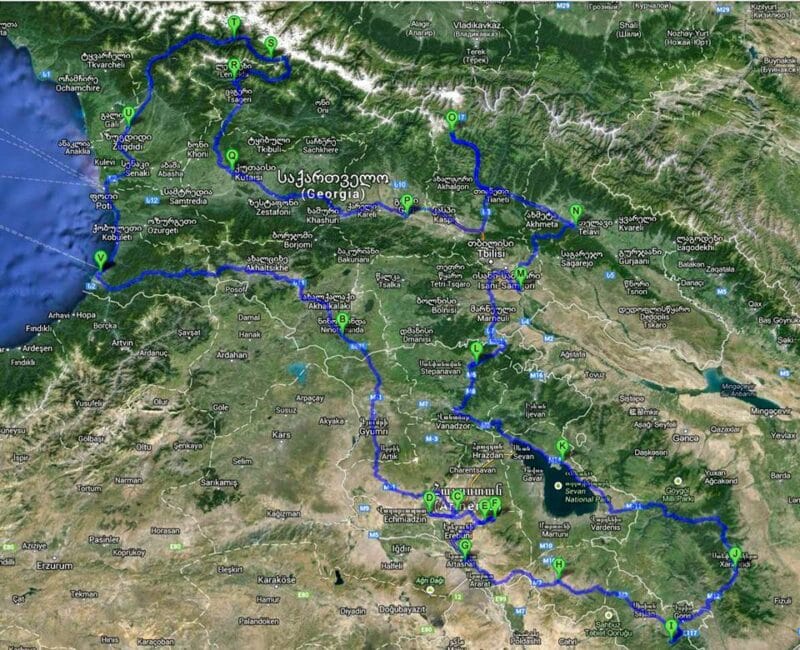
When I originally wrote about this journey, I described it as the trip of my life. And I meant it. We’d spent 22 days travelling, including three days without riding, and covered 6,506 kilometres.
There had been spectacular mountain roads, ancient monasteries, beautiful landscapes and wonderful encounters with people.
There had also been heat, rain, hail, mud, loose stones, broken luggage, questionable accommodation, occasional arguments and approximately twelve motorcycle falls. I’d ridden through conditions that tested my skills and confidence more than anything I’d done before. And I hadn’t always handled those challenges particularly well.
There were moments when I was genuinely angry with myself. Moments when I couldn’t enjoy the scenery because I was too busy worrying about the next obstacle. I’d wanted to prove that I could manage the journey, and sometimes I was probably far too hard on myself. But there were also moments when everything worked. When I found the right line through a difficult section. When I reached the top of a challenging climb. When the road opened into another extraordinary mountain landscape and I could finally relax enough to appreciate it.
And, of course, there was the group. I’d joined the trip without really knowing anyone. The guys had accepted me without knowing how I rode or whether I’d manage the route. It was a bit of an experiment for everyone. I don’t know whether they would all describe the experience in quite the same way I do. But I knew I could count on them when things became difficult. They helped me lift Olivier, rode my bike through obstacles when I couldn’t manage, waited for me when I was slow and put up with my occasional frustration. We also laughed a lot. And I finally learned what men talk about when they sit around drinking beer.
Would I do it again? Absolutely. Not because everything went perfectly, but precisely because it didn’t. I learned more during those three weeks than I could have learned from months of riding familiar roads. And although I came home with a damaged pannier, plenty of bruises and a slightly battered ego, I also came home knowing that I’d pushed my boundaries. Some time after returning, I showed photographs from the trip to other motorcyclists. One of them approached me afterwards and said something that meant a great deal. He’d recognised the mountain crossing towards Ushguli. His group had attempted the route but turned back. And he congratulated me for making it through. That was a rather lovely moment. Because for most of the journey, I’d been concentrating on the things I couldn’t do well enough. Suddenly, I was reminded of what I actually had managed to achieve. And if there was one thing I knew for certain after returning home, it was that I wanted to get back on the road. Preferably sooner rather than later.
Editor’s note: This story is adapted from my original Polish travel diary written during the summer of 2013. The experiences and impressions reflect that journey. Nagorno-Karabakh, internationally recognised as part of Azerbaijan, was under the control of a self-declared Armenian administration when we visited. Azerbaijan regained full control of the region in September 2023, and its ethnic Armenian population subsequently fled in large numbers. The region described in this article has changed profoundly since our visit. [Agata]